
What does a chemical pregnancy feel like? For many people, it feels like a period that starts early or hits harder than usual—cramping, pressure in the lower belly, and bleeding that may begin as spotting before turning into a heavier flow.
Some notice the pregnancy test line fading fast or a quick return to a negative result once bleeding begins.
Emotionally, it can be a jolt—shock, grief, guilt, or anxiety. (And sometimes relief shows up too.)
If bleeding is very heavy, pain is severe—especially if it’s one-sided—or you have fever or fainting, get urgent care.
| What it is | A chemical pregnancy is a very early pregnancy loss, often before ultrasound can confirm pregnancy (usually before ~5 weeks). |
| Typical timing | Bleeding often starts around when a period would be due after a positive test (commonly about a week later). |
| Common physical signs | Cramping (often similar to menstrual cramps), lower abdominal pressure, and bleeding that ranges from spotting to heavier flow. |
| Test clue | Pregnancy tests may fade fast or turn negative quickly as hCG drops. |
| When to seek help | Very heavy bleeding, severe one-sided pain, fever, or fainting. |
| Next steps | Clinicians may repeat blood hCG and/or serial urine tests until levels return to negative. |
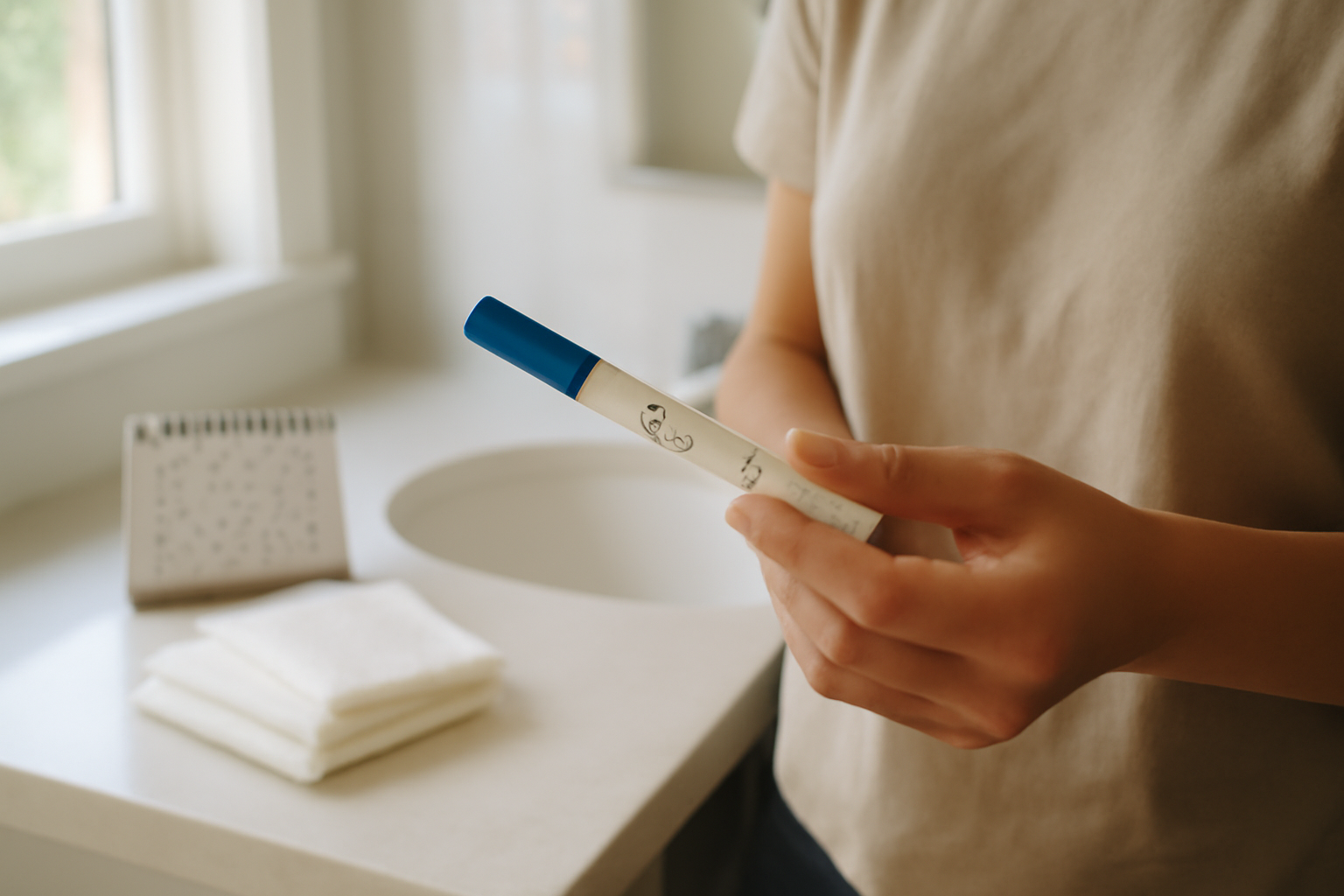
Early miscarriage vs. period: what your body may feel like
A chemical pregnancy is a very early pregnancy loss, often before an ultrasound can confirm pregnancy. Many people notice symptoms that look like an early period: cramping, lower abdominal pain, and bleeding that may start around when a period is due. Some also report heavier flow or passing small clots, but experiences vary a lot.
Timing is often what makes it confusing. A chemical pregnancy usually happens before about 5 weeks, so it can overlap with the window when you expect your period. If you had a positive test and then bleeding starts around the same time your period would normally arrive, your body may be signaling an early loss rather than a typical cycle.
Physically, the most common sensations include menstrual-like cramps, pelvic pressure, and changes in bleeding. Bleeding can start as light spotting and then feel more like a heavier period. Some people describe a steady ache; others feel cramps in waves. Still, symptoms alone can’t confirm a chemical pregnancy—periods, normal hormonal shifts, and other early pregnancy issues can feel similar (and stress can change how your body reacts, too).
Common symptoms after a positive test: bleeding, cramps, and discharge
After a very early positive test, a chemical pregnancy may show up as bleeding that starts as spotting and then becomes more period-like. Cramping can be mild to moderate and may come and go. Discharge may include white or pink fluid mixed with blood. If you’re tracking hCG, levels often drop as bleeding begins.
Bleeding often follows a familiar pattern: light spotting first, then a gradual increase. For some, it stays light but lasts longer. For others, it turns heavier quickly. If you notice “more than usual” flow, that can match what people describe after a very early loss—especially when bleeding ramps up within a day or two.
Cramping is usually described as similar to menstrual cramps, though it can feel stronger. Many people report lower abdominal pain that ebbs and flows instead of staying constant. Discharge can change as blood mixes with normal vaginal fluid. “Mixed” may look like pink-tinged mucus, watery white fluid with red streaks, or a shift toward brighter red blood as bleeding increases.
What to watch for (a quick checklist)
- Bleeding: spotting that turns into period-like flow (or a heavier-than-usual day 1).
- Cramps: menstrual-like pain, sometimes in waves.
- Discharge: white or pink fluid that looks blood-tinged.
- Test behavior: lines that fade quickly as bleeding starts.
How pregnancy test lines and hCG trends can match your symptoms
Many people first suspect a chemical pregnancy when pregnancy tests stop getting darker or turn negative sooner than expected. Because hCG rises early in pregnancy, a positive test followed by rapid line fading can line up with the start of bleeding and cramping. Clinicians can confirm with repeat blood hCG and/or serial urine tests.
Test lines aren’t a diagnosis by themselves, but they can be a useful clue. If you used home urine tests and the test line becomes faint faster than you expected, it often reflects hCG dropping rather than rising. In a chemical pregnancy, hCG typically declines quickly in early loss—so the test may turn negative sooner than it would in a continuing pregnancy.
Serial testing helps you see the trend. A repeat urine test over about 48 hours can show whether hCG is moving in the right direction (rising) or fading. Clinicians may use blood hCG for a more precise measurement and repeat it until levels return to negative. Ultrasound usually can’t detect a chemical pregnancy because it’s often before the fifth week, when an embryo may be too small to visualize.
What emotional symptoms are normal—and what deserves urgent care
Emotionally, a chemical pregnancy can feel like a sudden loss: shock, grief, guilt, or anxiety—especially if you didn’t expect to miscarry. You might also feel relief or numbness. If you’re dealing with symptoms, seek urgent medical advice for very heavy bleeding (for example, soaking pads rapidly), severe one-sided pain, fever, or fainting.
Early pregnancy loss can hit hard even when it happened quickly. Some people grieve even if they only saw a positive test for a short time. Others feel guilt (“Did I do something wrong?”) or confusion (“Why did my body react this way?”). Mixed emotions are common—grief can sit alongside relief, especially if symptoms were frightening.
Safety comes first. Call urgent care or a clinician right away if you have very heavy bleeding (like soaking through pads quickly), severe pain—especially on one side—fever, or fainting. These can be signs that need prompt evaluation, including concerns like infection or other pregnancy-related complications. And yes, it’s okay to feel upset while you’re getting help.
When to contact a clinician urgently
- Very heavy bleeding: soaking pads rapidly or passing large clots repeatedly.
- Severe pain: especially one-sided pelvic or abdominal pain.
- Fever: any fever along with bleeding or pain.
- Fainting or near-fainting: dizziness that doesn’t settle.
Recovery timeline: bleeding duration, next period, and when to try again
After a chemical pregnancy, bleeding often lasts several days, but the exact timeline varies. Your next period may come earlier or later than usual because the cycle can be disrupted by the early loss. Many clinicians suggest waiting until bleeding has stopped and you feel physically and emotionally ready; some recommend avoiding trying immediately if you’re still having symptoms.
Bleeding duration varies from person to person. For many, it settles within a few days. Others need longer. If bleeding lingers, becomes heavy again, or comes with worsening pain, follow up with a clinician. Recovery isn’t only about the physical timeline—emotional healing can take longer, and it’s normal if you don’t feel “back to normal” right away.
Your next period may be off-schedule. Ovulation can be delayed after an early loss, and cycle length can shift. That means you may not be able to rely on your usual calendar. When it comes to trying again, guidance is often tailored based on your symptoms, follow-up results, and whether you need additional testing.
Practical considerations while you recover
- Use pads instead of tampons if bleeding is active and you’re monitoring flow.
- Track symptoms (pain, bleeding level, discharge) so you can describe patterns to a clinician.
- Give yourself permission to grieve and rest—your timeline matters.
When to get follow-up tests: recurrent loss, risk factors, and causes
Most chemical pregnancies are one-time events and don’t mean something is wrong with you. Follow-up may be considered if you’ve had repeated early losses, if bleeding lasts longer than expected, or if you have risk factors (such as certain hormonal or uterine conditions). A clinician may review your history, check hCG until it’s negative, and discuss possible causes such as chromosomal abnormalities.
Chemical pregnancies are common in very early pregnancy, and many people never learn the exact reason. Studies report a wide range of estimates because they define and detect very early loss differently. Even so, the overall message is consistent: one chemical pregnancy usually doesn’t mean your body “failed,” and it doesn’t automatically predict future infertility.
Follow-up matters more when losses are recurrent or when symptoms don’t resolve. A clinician may repeat blood hCG until it returns to negative, confirm that bleeding is improving, and consider whether additional evaluation is needed. Causes often discussed for very early miscarriage include chromosomal abnormalities in the developing embryo, along with certain uterine or hormonal factors in some cases—your clinician can help sort what applies to you.
Helpful external references
For additional medical background on miscarriage and early pregnancy loss, you can review guidance from trusted health organizations such as the NHS on miscarriage and the ACOG FAQ on miscarriage. For broader context, see the WHO overview of miscarriage. If you want a plain-language definition, the Chemical pregnancy overview can help you understand the term.
FAQ
Comment savoir si c’est une grossesse chimique ou simplement mes règles ?
Look for a pattern: a positive test that later fades quickly, then bleeding that starts around when your period would be due. Timing and symptoms often overlap with a normal period, so confirmation usually requires repeat testing (serial urine tests and/or repeat blood hCG) until hCG returns to negative.
Quel type de crampes et de saignements sont typiques lors d’une grossesse chimique ?
Cramping is often similar to menstrual cramps, sometimes mild to moderate and coming in waves. Bleeding may begin as spotting and then become period-like, with possible blood-tinged discharge. Some people notice heavier flow or small clots, but the range is wide.
Pourquoi un test de grossesse devient-il négatif après avoir été positif ?
A home pregnancy test turns negative when hCG drops. In a chemical pregnancy, hCG rises early enough to trigger a positive result, then declines quickly as the very early loss occurs, so the urine test line can fade or return to negative sooner than expected.
Quand faut-il consulter après une grossesse chimique (saignement, douleur, fièvre) ?
Contact a clinician urgently for very heavy bleeding (soaking pads rapidly), severe pain—especially one-sided—fever, or fainting. If bleeding is prolonged, worsening, or you’re unsure what’s happening, follow up is also appropriate.
Combien de temps dure le saignement après une grossesse chimique ?
Bleeding often lasts several days, but it varies. Many people improve within a few days, while others have a longer course. If bleeding continues to be heavy, painful, or doesn’t seem to settle, get medical advice.
Est-ce qu’une grossesse chimique peut arriver sans symptômes ?
Yes. Some people have minimal or no symptoms beyond a positive test that later becomes negative. Others notice light spotting or mild cramps, but the experience can be very different from person to person.
Key takeaways
- A chemical pregnancy often feels like a period that starts around the expected date, sometimes with heavier bleeding and cramping.
- Bleeding can begin as spotting and progress, while discharge may include blood-tinged fluid—patterns vary a lot.
- Rapidly fading or negative pregnancy tests alongside bleeding can be a clue, but follow-up testing confirms the situation.
- Seek urgent care for very heavy bleeding, severe pain (especially one-sided), fever, or fainting.
- Expect your next period to be off-schedule; recovery timelines differ, and emotional reactions are normal.
- One chemical pregnancy usually doesn’t mean you can’t have a healthy pregnancy—consider follow-up if it’s recurrent or symptoms persist.
- If you’re unsure, contact a clinician for guidance and repeat hCG testing until levels return to negative.
If you’re still wondering what does a chemical pregnancy feel like for you specifically, here’s the simplest way to think about it: the biggest clue is often the combination of bleeding timing plus test behavior, not symptoms alone. When in doubt, repeat testing and medical guidance are the safest next steps.