
How long does croup cough last? Most kids have a barking, “seal-like” cough for about 3–7 days.
The toughest breathing symptoms usually show up in the first 1–2 days, then ease up over time.
Even when breathing improves, the cough can hang around for a few more days—airway irritation takes longer to settle.
Adults and older children may look different, so keep an eye on breathing effort and the overall trend. (If you’re unsure, it’s okay to call for advice.)
| Typical total cough duration | About 3–7 days for most cases |
| Worst breathing symptoms | Often the first 1–2 days |
| Nighttime coughing | May be more noticeable even as overall symptoms improve |
| When the cough lingers | Several days after peak due to airway irritation |
| Key reassurance sign | Symptoms steadily improve day by day |
| Urgent care triggers | Hard breathing, stridor at rest, dehydration, worsening after improvement |
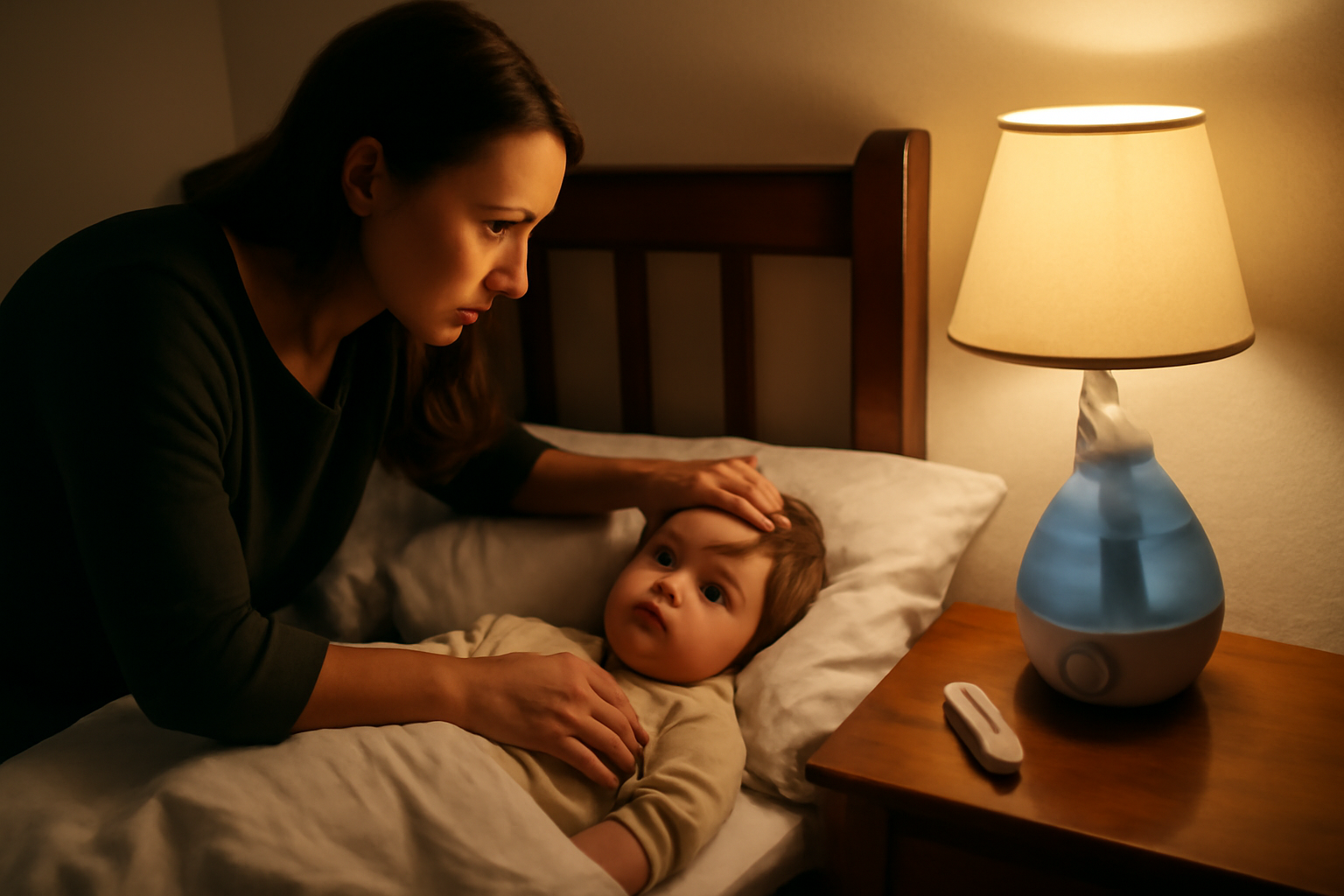
Typical croup cough duration: what day-by-day looks like
Croup coughs often hit hard early, then ease up gradually. Many children have a barking “seal-like” cough for about 3–7 days, and nighttime coughing can last a bit longer. The first 1–2 days can feel roughest for breathing, even though the cough may still be the main thing you notice.
Most croup starts like a typical upper respiratory infection: a runny nose, mild fever, and then the cough shows up. As airway swelling increases, the barking quality often becomes more obvious. The pattern usually looks like a quick rise early on, followed by a steady decline—not a sudden switch to “normal.”
Over the next days, you may see fewer coughing fits, less visible effort to breathe, and a gradual drop in intensity. Still, the cough can linger after fever and congestion start to fade. (Parents often notice this right away: your child seems better, but the bark returns at bedtime.)
Timelines vary. One child may look noticeably better within 48 hours, while another stays rough closer to the 5–7 day end of the range. Age, baseline health, and how quickly treatment starts when needed can all shift the curve.
Day-by-day expectation (typical course)
- Day 1–2: Cough begins, and breathing symptoms may feel most intense.
- Day 2–3: The barking cough is often at its most noticeable; nighttime coughing can spike.
- Day 3–5: Gradual improvement—fits get shorter, breathing effort eases.
- Day 5–7: A residual cough may remain, especially after colds or at night.
How long does the barking cough linger after the worst is over?
Even after fever and breathing trouble improve, airway irritation can keep the cough going. A lingering barking cough for several more days is common—especially when the original cold keeps inflaming the upper airway.
If the cough is improving day by day, that’s a good sign. If it’s getting worse again, or new breathing difficulty appears, it’s time to reassess.
Why does it last? Croup involves swelling and irritation around the larynx (voice box) and the upper airway. Those tissues don’t “reset” the moment the fever drops. Inflammation may calm, but the cough reflex can stay extra sensitive for a while.
In real life, many caregivers notice a pattern: daytime breathing looks better first, then the cough is more noticeable at night. That’s frustrating—so it makes sense to ask how long does croup cough last. Often, the answer is longer than the worst day itself.
Watch the trend. Lingering cough is usually okay when your child is drinking, peeing normally, sleeping a bit better, and showing less work to breathe over time. If the cough suddenly worsens after a clear improvement, treat it as a reason to contact a clinician.
Croup cough in adults and older children: is the timeline different?
Croup is most common in young children, but older kids and adults can still get similar upper-airway infections. When it happens, the course may still peak early and improve over days. The difference is that adults often don’t have the classic barking sound, and severity can vary a lot.
Because croup is mainly a pediatric condition, adult cases are less common—and that can make them harder to recognize. Some adults describe throat tightness or a persistent cough instead of a clear “bark,” and the overall picture can be different from what you see in kids.
Older children can also have a more muted pattern. That’s why the timeline matters less than the overall trajectory: breathing effort, comfort speaking or swallowing, hydration, and whether symptoms keep improving steadily.
If an adult or older child isn’t following the usual improvement pattern—or if breathing is significantly difficult—get evaluated promptly. Clinicians also consider other causes of upper-airway symptoms (for example, other infections or airway inflammation conditions).
What changes the duration: treatment, severity, and triggers
The course can be shorter or longer depending on severity and how well treatment works. Kids who receive appropriate therapy for croup (often including corticosteroids when indicated) tend to improve faster than those managed with supportive care alone. Ongoing viral exposure, allergies, or repeated infections can also prolong coughing by keeping the upper airway irritated.
Severity at the start often predicts how long the cough lasts. A child with more intense breathing symptoms may need medical treatment to reduce airway swelling sooner. When clinicians use corticosteroids for moderate to severe croup, it can reduce inflammation and speed recovery for many families.
Triggers matter too. If your child keeps getting exposed to viruses at home or daycare, you may see a “second wave” of upper-airway irritation. Allergies and post-nasal drip can add extra cough signals, making the croup cough feel longer than expected.
And response time varies. Some children improve after the first day of appropriate care. Others need a little more time for the airway to fully settle. The practical goal is a steady improvement trend—rather than a specific day on the calendar.
Common factors that can shorten or extend the cough
- Early medical treatment when indicated: can reduce inflammation faster.
- Baseline severity: more swelling often means a longer recovery.
- Ongoing viral symptoms: can keep the upper airway irritated.
- Repeated exposures: daycare or household spread can prolong symptoms.
- Smoke or irritant exposure: can worsen airway irritation.
For official guidance on croup evaluation and management, see Mayo Clinic’s croup overview and NHS guidance on croup.
When to worry: signs the cough is not “just croup”
Most croup coughs improve within about a week, but some signs mean you should seek urgent care. Get help right away if breathing is hard (retractions, fast breathing, trouble speaking/feeding), if stridor is present at rest, if the child is unusually drowsy or dehydrated, or if symptoms worsen after initially improving. A persistent high fever or a “toxic” look also deserves evaluation.
Most cases are self-limited, yet not every barking cough follows the same easy course. Clinicians worry about severe croup when breathing effort increases, oxygen levels drop, or airway narrowing is enough to cause symptoms even at rest.
Worsening after improvement is a red flag. If your child seemed better for a day, then the cough intensifies and breathing looks harder again, that can point to progression, a complication, or an alternative diagnosis.
Also watch for dehydration or unusual lethargy. If your child isn’t drinking, has fewer wet diapers/urination, or seems unusually sleepy, don’t wait it out.
Urgent care checklist (seek help)
- Stridor at rest (noisy breathing even when calm)
- Retractions (skin pulling in around ribs/neck during breathing)
- Fast breathing or persistent difficulty breathing
- Trouble feeding, swallowing, or speaking
- Unusual drowsiness or signs of dehydration
- Symptoms worsen after initially improving
- Persistent high fever or “toxic” appearance
If you want broader respiratory infection context, you can review CDC upper respiratory infection guidance and WHO acute respiratory infection information (search within those sites for croup or airway infection guidance).
Home care and comfort measures while the cough runs its course
Home care is about comfort and monitoring. Keep your child calm, offer fluids, and use humidified air if it helps them feel better. Avoid irritants like smoke. If a clinician prescribed medication (for example, steroids or nebulized treatments), follow the plan. Check breathing effort, hydration, and whether symptoms keep improving day by day.
Most families can manage mild croup at home with supportive care. The aim is simple: reduce stress, keep your child hydrated, and watch the breathing trend. Panic makes everything harder—so a calm environment matters more than people expect.
Hydration is a big deal because breathing discomfort can kill appetite. Offer small, frequent sips. If your child is old enough, warm liquids may feel soothing, but don’t push intake if swallowing is difficult.
Air comfort can help some children. Humidified air is often used, and gentle exposure to cool mist or steamy bathroom air may provide temporary relief. (If you try anything, prioritize safety and avoid burns.)
What to do at home
- Use comfort-first positioning: keep your child upright if it helps breathing.
- Offer fluids frequently: aim for normal urination and moist mouth.
- Reduce irritants: no smoke exposure, strong fragrances, or vaping aerosols.
- Follow prescribed treatment: give steroids/nebulized meds exactly as directed.
- Monitor the trend: check breathing effort and energy level every few hours.
Medication and fever basics
If your clinician recommends fever relief, use the medication and dosing schedule they provide. Don’t combine products that contain the same ingredient. If you’re unsure, call your pediatrician or pharmacist—clear instructions prevent mistakes.
Keep the goal in mind: steady improvement. If how long does croup cough last starts to feel longer than expected, that doesn’t automatically mean something is wrong. What matters is whether the cough and breathing are trending better, not worse.
FAQ
How long does a croup cough last at night?
Nighttime coughing can be more noticeable for several days. Many children still have barking cough episodes at night even after daytime breathing improves, with the overall croup cough often lasting about 3–7 days.
What day does a croup cough usually peak?
For many children, coughing and breathing symptoms peak early, often around day 1 to day 2 of the illness, with nighttime symptoms sometimes looking worst during this early period.
How long should a child have a barking cough before seeing a doctor?
If breathing looks hard, stridor is present at rest, or the child is not drinking well, seek care right away. For milder cases, contact a clinician if symptoms are not clearly improving within a few days or if the cough lasts beyond about 7 days.
Why does croup cough get worse at night or when lying down?
When a child lies down, mucus and airway secretions can shift, and airway swelling can feel more pronounced. The upper airway is also more reactive when the child is calm and asleep, which can make the barking cough show up more at night.
How long is croup contagious after symptoms start?
Croup is caused by viral infections, so contagiousness is highest early. Many sources describe the period of greatest spread during the first few days after symptoms begin. If your child has fever or active respiratory symptoms, limit close contact and practice good hand hygiene.
Is it normal for the cough to last longer than other croup symptoms?
Yes. Fever and more severe breathing symptoms often improve first, while the cough can linger for several more days due to ongoing irritation and sensitivity in the upper airway.
Key takeaways
- Most croup coughs last about 3–7 days, with the worst symptoms often early in the illness.
- A barking cough can linger for several days after breathing symptoms improve due to ongoing airway irritation.
- Adults and older children can have variable presentations, so breathing difficulty and lack of improvement matter more than the “bark” alone.
- Appropriate medical treatment when indicated can shorten the course for moderate to severe croup.
- Seek urgent care if breathing is hard, stridor is present at rest, symptoms worsen after improving, or the child looks very unwell.
- At home, focus on comfort, hydration, avoiding smoke, and monitoring whether symptoms steadily trend better day by day.
When you’re trying to figure out how long does croup cough last, the most useful answer is the trend: early peak, gradual improvement, and a cough that can stick around even after the rest of the illness eases. If the pattern breaks—especially with breathing difficulty—get medical help.