
Double ovulation means more than one egg release in the same menstrual cycle—more than just a couple of positive ovulation tests.
Exact numbers are hard to pin down. A lot of people infer it from LH surges, but true confirmation usually needs ultrasound and/or lab correlation.
“Twice in a month” can throw you off. The real question is whether two ovulations happen within the same cycle.
If two eggs release, fraternal twins are possible—but pregnancy is never guaranteed.
| Criteria | What it usually indicates |
|---|---|
| Multiple LH test peaks | Hormone patterns that may suggest multiple fertile surges |
| Confirmed double ovulation | Two egg releases in the same menstrual cycle (typically needs ultrasound/lab correlation) |
| Fertile cervical mucus | Often marks the fertile window, not the number of eggs |
| BBT rise | Confirms ovulation timing after it happens, not egg count |
| Fertility treatments | Can increase developing follicles, making multiple ovulatory events more likely |
Double ovulation sounds rare and confusing, so the practical question—double ovulation how common is it—depends on what you mean by “double.” Home kits mostly track hormone signals. True double egg release is a different standard and usually requires clinician monitoring. Let’s sort out what’s real, what’s inferred, and how this affects fertility planning. (And yes, the internet often blurs those lines.)
What “double ovulation” really means (and what it doesn’t)
Double ovulation usually means releasing more than one egg during the same menstrual cycle—either from one ovary or both. That’s different from “multiple positive ovulation tests,” which can reflect hormone patterns (LH surges) without confirming two separate egg releases. Clinically, confirmation typically involves ultrasound and/or lab correlation.
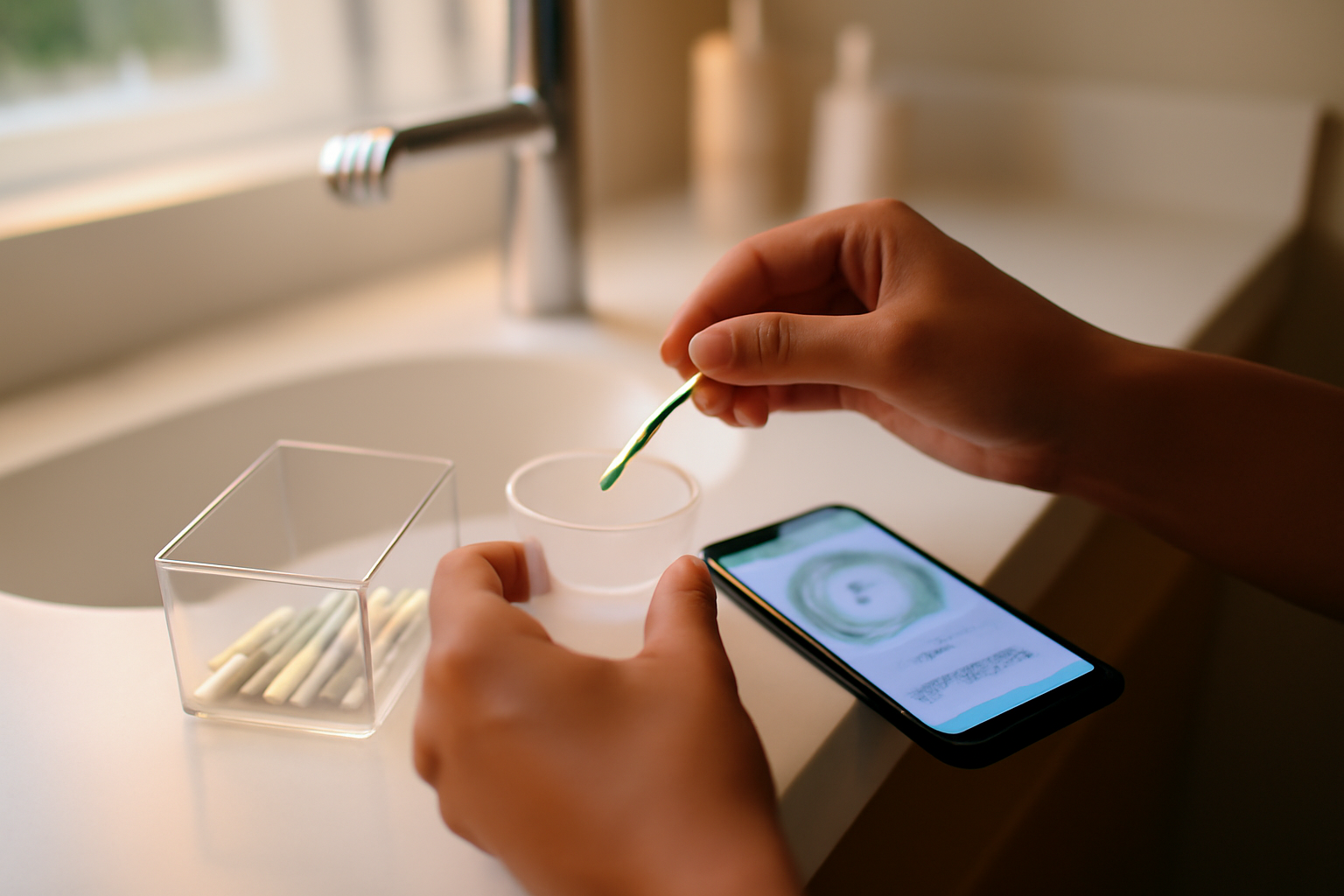
Home ovulation prediction kits (OPKs) are built to detect an LH surge. That LH rise suggests ovulation may be coming, but it doesn’t directly count eggs. So if you see two strong test lines, it can mean your body had more than one fertile-day hormone pattern—possibly even more than one ovulatory event, but not automatically two egg releases.
Clinicians separate terms like double ovulation, hyperovulation, and repeated LH surges because the mechanisms and confirmations differ. True double ovulation is about how many eggs are released. Hyperovulation is often used more broadly in fertility contexts when multiple follicles may ovulate. Repeated LH peaks can show up for lots of reasons, including irregular timing, cycle variability, or how your body responds that month.
Double ovulation vs. hyperovulation vs. repeated LH surges
- Double ovulation: two egg releases within the same menstrual cycle (confirmed with monitoring).
- Hyperovulation: a fertility-related concept often linked to multiple developing follicles and potential multiple ovulatory events.
- Repeated LH surges: OPKs show more than one LH peak, but that alone doesn’t prove two separate egg releases.
Timing matters too. In many cycles, ovulation happens once, and LH peaks are brief. If your tests show a second peak after you expected ovulation, it could point to delayed ovulation, a second fertile-window pattern, or just differences in test interpretation (like urine dilution or test timing).
How common is double ovulation in one cycle?
True double ovulation is considered uncommon, but exact rates are difficult to estimate. Many cases are inferred from hormone tests rather than directly observed. Studies that use ultrasound-based monitoring suggest it may happen in a minority of cycles, while most people ovulate once per cycle. If you suspect it, targeted tracking usually beats guessing.
Why the prevalence is so unclear comes down to measurement. If you define “double ovulation” as two OPK peaks, you’ll count more cases than if you require two confirmed egg releases. Ultrasound can show follicle development and sometimes ovulation timing more directly, but it isn’t how most people track at home.
Most clinical guidance still treats one ovulation event per cycle as the default pattern. That doesn’t mean multiple hormone peaks are “fake.” They can be real signals of fertility. They just aren’t the same as confirmed egg release. (That’s where many online stories go off track.)
Why estimates vary
Some research suggests multiple follicle development may be more common than people assume, especially when follicles grow at different rates. Still, follicle growth doesn’t always lead to two ovulations. The confirmation method changes the numbers.
- Ultrasound-based monitoring: can track follicle changes across days more closely.
- LH kit-based inference: counts hormone patterns that may or may not lead to separate egg releases.
- Different cycle definitions: “cycle” timing varies, especially with irregular periods.
Can you ovulate twice in one month vs. twice in one cycle?
“Twice in a month” is common online, but the biologically meaningful question is whether two ovulations occur within one menstrual cycle. A menstrual cycle is usually counted from the first day of bleeding to the next period. Two true ovulations in one cycle would require conditions that support two egg releases close together, which is less typical than having two separate cycles with single ovulation.
“One month” is a calendar label, not a hormone event. Many menstrual cycles fall somewhere around 21–35 days, but real life is messier—stress, illness, travel, and hormone shifts can move timing around. So what looks like “two ovulations in one month” may actually be ovulation late in one cycle plus ovulation early in the next.
Irregular cycles make this even harder to interpret. If your period dates drift, your tracking window shifts too. A second set of OPK positives could belong to a different cycle than you think, even if it falls within the same 30–31 day span.
What counts as “two ovulations in the same cycle”?
- Ovulation timing falls between the first day of bleeding and the next period.
- There’s evidence of two separate ovulatory events (not just two LH peaks).
- Ideally, BBT shifts and/or clinician monitoring align with two ovulation moments.
If you’re trying to conceive, the takeaway is straightforward: track consistently and interpret patterns using cycle boundaries, not calendar labels. (It saves a lot of confusion.)
Symptoms and signs: what you might notice (and what’s misleading)
Some people notice stronger or longer fertile-phase symptoms—more cervical mucus, multiple peaks on ovulation tests, or brief ovulatory pain. Still, these signs can also come from normal variation, rising LH, or delayed ovulation. The most useful home indicators are consistent patterns across several days, ideally paired with temperature tracking or clinician confirmation when fertility planning depends on accuracy.
Let’s separate what you might notice from what it proves. Fertile cervical mucus is common during the fertile window, but it doesn’t confirm how many eggs were released. Mild one-sided twinges can happen around ovulation, yet timing can shift if ovulation is delayed.
OPK peaks can be especially misleading. A second peak can mean your first “surge” didn’t lead to ovulation yet, or it can reflect a second fertile signaling pattern. Either way, it’s not an egg counter. If you’ve ever stared at a test line and wondered, “Is this it?”—you’re not alone.
Possible signs
- Cervical mucus changes: more slippery, stretchy, or clear mucus.
- Ovulation test peaks: more than one strong line or peak value.
- Mild pelvic discomfort: twinges or brief cramps around expected ovulation.
- Libido changes: some people notice a shift during fertile days.
Common false alarms
- Repeated LH surges: multiple OPK positives can occur without two egg releases.
- PCOS-related patterns: irregular ovulation and multiple follicles can change how LH tests behave.
- Timing and urine concentration: testing too late in the day or with diluted urine can distort peaks.
A practical way to interpret signals without spiraling is to look for consistency over several days. Pair OPKs with basal body temperature (BBT) to confirm that ovulation timing happened after the surge. BBT can confirm that ovulation occurred, but it still won’t reliably tell you how many eggs were released.
Why it may happen: causes, risk factors, and hormone patterns
Double ovulation is more plausible when multiple follicles develop and LH signaling supports more than one ovulatory event. Hormone dynamics—like repeated or broader LH surges—and conditions that affect follicle development can increase the chance of multiple ovulatory events. Fertility treatments (when used) can also raise the likelihood of multiple egg release, though spontaneous double ovulation remains less common.
To understand the “why,” think about the follicle stage. Eggs develop inside ovarian follicles. In most cycles, one follicle becomes dominant and ovulates. In some cycles, more than one follicle may grow toward maturity. When the hormonal environment supports more than one ovulatory event, double ovulation becomes more likely.
Hormone patterns matter. OPKs detect LH surges, and repeated or extended LH signaling can suggest your body is trying to trigger ovulation more than once—or that ovulation timing is shifting. Fertility care can amplify this by increasing the number of developing follicles.
Common contributors
- Fertility medications: these can increase follicle development, raising the chance of multiple ovulatory events.
- Cycle irregularity: delayed or shifting ovulation can create multiple LH peaks.
- PCOS: linked with irregular ovulation and multiple follicle development, which can change LH test patterns.
- Genetic/biologic variation: some people naturally develop more than one follicle in a cycle.
Multiple peaks on tests don’t automatically mean two eggs. Sometimes the body’s first attempt at ovulation doesn’t finish, and the surge pattern repeats later. That’s why clinician-grade confirmation matters when fertility planning depends on accuracy.
If you’re exploring fertility questions, you can review general guidance from NHS on infertility causes and the broader overview from WHO on infertility.
What it means for pregnancy chances and fertility (including twins)
If two eggs are released in the same cycle, fertilization of both can increase the chance of fraternal (non-identical) twins. The overall effect on pregnancy rates is usually modest, because conception still depends on sperm timing, egg quality, and implantation. If you’re trying to conceive, focus on accurately identifying your fertile window. If you’re using fertility care, clinicians can monitor follicle number and ovulation timing.
Here’s how twins fit in. Fraternal twins happen when two separate eggs are fertilized. Double ovulation can create the “two eggs available” situation in the same cycle. Identical twins come from one fertilized egg splitting, which isn’t determined by releasing two eggs.
Even with two eggs, pregnancy isn’t guaranteed. You still need sperm present at the right time, and fertilization plus implantation depend on many factors. The best fertility strategy stays consistent: cover the fertile window and confirm ovulation timing when possible. (That part is within your control.)
Practical next steps
- Trying to conceive naturally: track your fertile window using OPKs and/or cervical mucus, then have intercourse on the fertile days.
- If you suspect double ovulation: consider temperature tracking (BBT) to confirm ovulation timing after the LH surge.
- If it matters clinically: ask your clinician about ultrasound monitoring—especially if cycles are irregular or you’re using fertility treatment.
Clinician guidance on ovulation and fertility can help you set expectations. For example, ACOG’s ovulation and fertility FAQ offers a clear framework for understanding how ovulation timing affects conception.
FAQ
How common is double ovulation in one cycle?
True double ovulation is considered uncommon, and exact rates are uncertain because many reports rely on hormone patterns rather than ultrasound-confirmed egg releases.
How can I tell if my ovulation test means double ovulation?
Multiple positive OPK peaks usually reflect LH surges, not confirmed egg release. To know whether two eggs were released, you typically need temperature patterns plus clinician monitoring such as ultrasound and/or lab correlation.
Why do I get two LH peaks but only one confirmed ovulation?
Your first LH surge may not have led to full ovulation (for example, due to delayed timing), or the second peak may represent repeated fertile signaling. BBT shifts can confirm ovulation timing after the fact, even when LH peaks are more than one.
When does double ovulation happen during the menstrual cycle?
When it occurs, it happens within the same menstrual cycle window—between the first day of bleeding and the next period. The exact days vary, especially with irregular cycles, and confirmation requires monitoring rather than OPK timing alone.
How many days apart would two ovulations be in the same cycle?
There is no single universal number. If two egg releases occur in one cycle, the timing depends on how follicles develop and the pattern of LH signaling. In practice, clinicians rely on monitoring to determine whether two ovulatory events truly occurred.
Is it possible to get pregnant from double ovulation, and does it increase the chance of twins?
Yes, pregnancy is possible if sperm meets the eggs and implantation occurs. Double ovulation can increase the chance of fraternal twins because two eggs may be available for fertilization, but it does not guarantee pregnancy.
Key takeaways
- Double ovulation means more than one egg release in the same cycle—not just multiple LH test positives.
- Exact prevalence is uncertain because most data rely on hormone patterns rather than direct ultrasound confirmation.
- “Twice in a month” can be misleading; the key is whether two ovulations occur within the same menstrual cycle.
- Symptoms like mucus or ovulation-test peaks can vary normally and don’t reliably prove two eggs.
- Multiple follicle development, repeated LH signaling, and fertility treatments can make multiple ovulatory events more likely.
- If two eggs release, it can increase the chance of fraternal twins, but it doesn’t guarantee pregnancy.
- If it affects your fertility planning, use consistent tracking (and consider clinician monitoring) rather than guessing from one cycle.
So, double ovulation how common is it? True double egg release appears to be uncommon, and real-world numbers are fuzzy because home kits measure LH surges, not egg count. If you’re seeing “extra” peaks, treat them as a clue to track carefully—then confirm with ultrasound or clinician guidance if you need certainty for pregnancy planning.
External references: Ovulation prediction kit (OPK) overview, WHO on infertility, NHS on infertility causes, and ACOG ovulation and fertility FAQ.