
Quick Take: A period that’s shorter than usual is often just normal variation—especially if it matches your usual pattern. But if the change is new, noticeably bigger, or comes with warning signs, it can point to pregnancy, hormone shifts, stress, or another medical issue.
Use timing and symptoms to decide whether to take a test or contact a clinician.
| Criterion | Value |
|---|---|
| Typical period duration | About 3–7 days (varies by person) |
| Common “cycle length” range | Often discussed as 21–35 days |
| When to test for pregnancy | If pregnancy is possible and timing is unusual |
| Red flags | Very heavy bleeding, severe pain, dizziness, bleeding after sex |
| Most useful tracking | Bleeding days + symptoms across 2–3 cycles |
When you ask why is my period shorter than usual, you’re usually trying to understand a change you can feel in your body. Sometimes it’s just your normal pattern shifting. Other times it’s hormones, pregnancy, or a health issue sending a signal—even if the bleeding looks “lighter.”
(And yes, it’s okay to trust your instincts.) Your job is to notice what’s different; a clinician’s job is to sort out the cause.
How long is a “normal” period, and when does short duration become a red flag?
A typical period lasts about 3 to 7 days, but “normal” depends on your personal baseline. If your period is consistently much shorter than usual (for example, dropping by several days) or you develop warning signs—very heavy bleeding, severe pain, dizziness, or bleeding after sex—contact a clinician to rule out causes.
For most people, “normal” is a range, not one fixed number. A shorter bleed can still be normal if it matches your baseline and your symptoms stay similar. The problem is when duration changes suddenly or keeps changing in a way that’s clearly different for you.
Also separate two things that often get mixed up: cycle length (how often you bleed) and bleeding duration (how many days you bleed). Your cycle can stay in the typical 21–35 day window while your bleeding days shift—or your bleeding can shorten while cycle timing stays steady.
Warning signs that deserve medical evaluation
- Soaking through pads/tampons very quickly (for example, multiple per hour) or passing large clots
- Severe pelvic pain, faintness, or dizziness
- Bleeding between periods or bleeding after sex
- Short bleeding that happens with pregnancy risk or new, concerning symptoms
Pregnancy and early bleeding: could a shorter period be implantation or a miscarriage?
Some people mistake early pregnancy bleeding for a “short period.” Implantation bleeding can be lighter and shorter, while a miscarriage can involve heavier bleeding and cramping. If there’s any chance of pregnancy—especially with unusual timing—take a home pregnancy test and repeat or get testing if symptoms continue.
Early pregnancy bleeding can look like a period, but timing and flow matter. Implantation bleeding is often brief and may be lighter than a typical period. Still, bleeding patterns overlap—so duration alone can’t confirm pregnancy status.
Miscarriage can come with bleeding that increases over time and may include stronger cramping or passage of tissue. If bleeding is heavy or pain is severe, you may need urgent evaluation to stay safe and rule out complications.
Practical testing guidance
- If pregnancy is possible, start with a home pregnancy test.
- Tests are most reliable after a missed period, but earlier testing can be negative even if you’re pregnant.
- If the first test is negative and bleeding stays unusual, repeat in a few days or contact a clinician for blood testing.
For official guidance on pregnancy tests timing, see ACOG: Pregnancy Tests.
Hormone shifts that shorten bleeding: birth control, ovulation changes, and perimenopause
Hormonal changes are a common reason periods become shorter. Starting, stopping, or switching birth control can change bleeding patterns quickly. Irregular ovulation (often seen with stress, weight changes, or PCOS) can also affect how long bleeding lasts. In perimenopause, cycles and flow often become unpredictable—and sometimes shorter.
Birth control is one of the most frequent explanations for “why is my period shorter than usual.” Oral contraceptives, hormonal IUDs, implants, and injections can all change bleeding duration. In many cases, the shift happens within the first few cycles after you start or switch.
Ovulation is the hinge. When ovulation is delayed or doesn’t happen regularly, the hormonal signals that build and stabilize the uterine lining can shift. That can mean lighter or shorter bleeding—even if your cycle timing seems close to normal. (It’s frustrating, but it’s common.)
Perimenopause: not just an age story
Perimenopause often begins in the 40s, but timing varies. During this transition, ovulation becomes less consistent, which can shorten bleeding or make it irregular from month to month. The pattern matters more than the calendar.
How different contraception can affect duration
- Pills (combined or progestin-only): can change withdrawal bleeding length and intensity
- Hormonal IUD: commonly leads to shorter, lighter bleeding over time
- Implant and injections: may cause unpredictable spotting or shorter periods
- Stopping birth control: can temporarily shift cycles as your body recalibrates
Stress, sleep, weight change, and intense exercise: how lifestyle can affect period length
Your brain and hormones are tightly connected. Significant stress, poor sleep, rapid weight loss or gain, or intense exercise can reduce or delay ovulation. When that happens, your period may be shorter or lighter. Look at changes from the last 1–3 months, since hormone effects often show up in later cycles.
Here’s the pathway in plain terms: stress and low energy availability can alter the hormones that regulate ovulation. If ovulation shifts, the uterine lining may not build the same way, and the bleeding days can shrink.
Sleep loss and heavy training can also change appetite and energy balance. Rapid weight changes—whether from dieting, illness, postpartum changes, or big life events—can affect reproductive hormones and contribute to menstrual irregularity.
Common lifestyle triggers to review
- High stress: exams, caregiving, major relationship strain, workplace changes
- Poor sleep: short nights or irregular schedules
- Calorie restriction: dieting or skipping meals
- Overtraining: increasing volume/intensity without enough recovery
If you’re trying to connect the dots, check patterns across multiple cycles—not just one odd bleed. Hormone changes often show up in the next cycle(s), not always immediately. So ask yourself: did anything big shift recently?
Medical causes to consider: thyroid problems, PCOS, uterine issues, and infections
When short periods are new or come with other symptoms, it’s worth considering medical causes. Thyroid disorders can affect cycle timing and flow. PCOS can cause irregular or less frequent bleeding. Uterine issues (like fibroids or polyps) and infections can also change bleeding patterns. If short duration keeps happening, is new for you, or comes with pain, a clinician can evaluate with history and tests.
Medical causes often show up as a mix of clues: bleeding changes plus something else. For example, thyroid dysfunction can cause lighter or irregular bleeding, while PCOS often brings ovulatory irregularity—which can affect both cycle length and bleeding duration.
Structural issues in the uterus—such as fibroids or polyps—can change bleeding amount and pattern. Infections can also affect bleeding, sometimes along with pelvic discomfort, unusual discharge, or fever.
Match symptoms to likely categories
- Endocrine/hormonal: thyroid symptoms (fatigue, heat/cold intolerance), PCOS features (irregular cycles, acne, excess hair growth)
- Structural uterine: heavier or irregular bleeding, cramping changes, pressure sensations
- Infectious: abnormal discharge, burning with urination, pelvic pain, fever
- Bleeding after sex: can be linked to cervix or vaginal irritation and may require evaluation
For a broad overview of menstruation and cycle physiology, you can also reference Menstruation (overview), and for menstrual health context, see WHO: Menstrual health.
When to seek care and what to expect: tests, timelines, and self-checks
Get medical care if your period is consistently much shorter than your usual baseline, you have heavy bleeding, severe pain, bleeding between periods, bleeding after sex, or you might be pregnant. A clinician may ask about contraception, stress, weight changes, and symptoms, then consider pregnancy testing, STI screening, and bloodwork (often including thyroid and hormone tests).
Think “watch versus call.” If your short period is a one-off and you feel well, monitoring may be reasonable. If it keeps happening, ramps up, or comes with red flags, don’t wait it out.
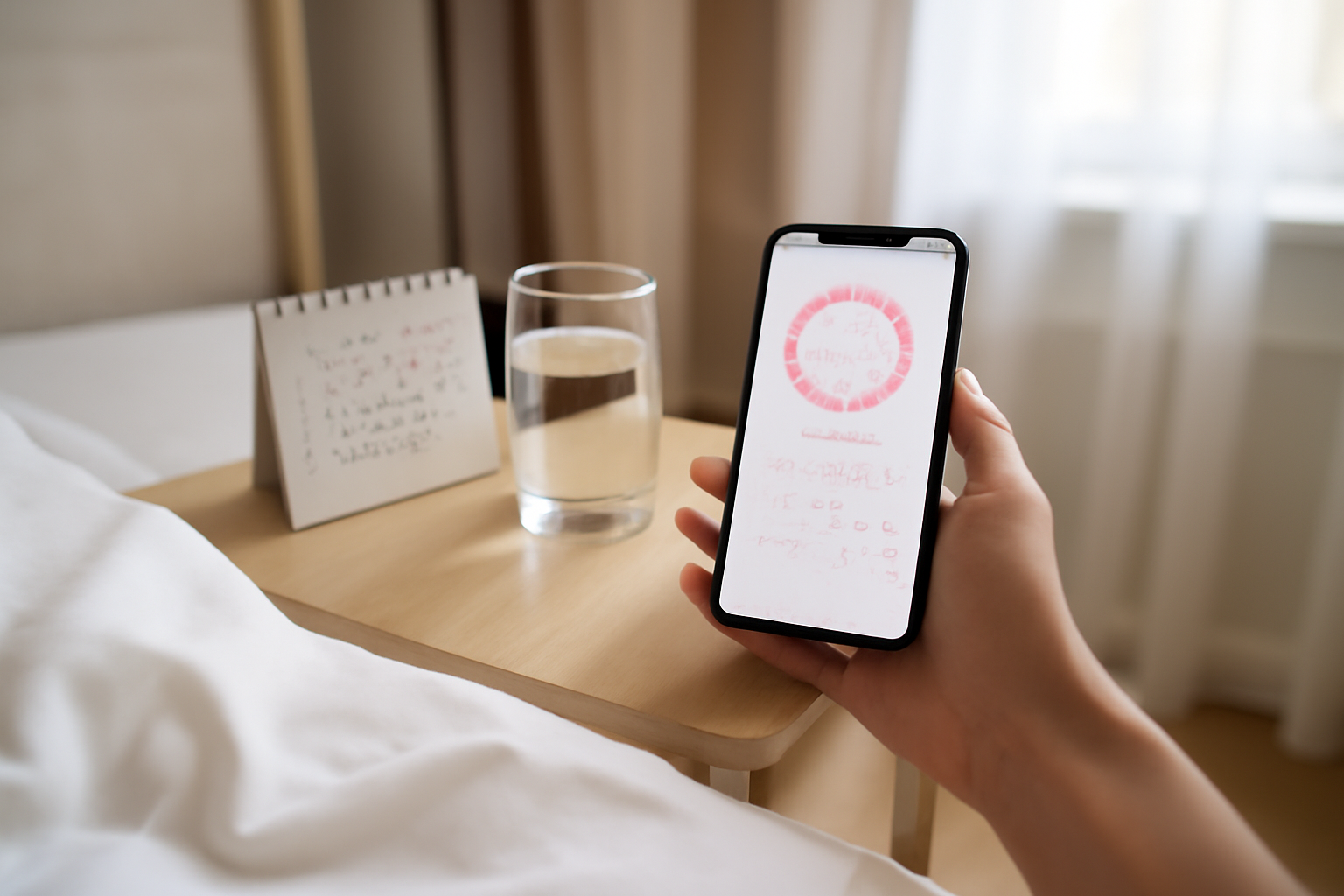
To speed things up, track specifics: cycle start date, number of bleeding days, flow level (light/medium/heavy), clots, pain level, and any spotting between cycles. Those small details help clinicians connect symptoms to likely causes.
What evaluation often includes
- History: contraception use, pregnancy risk, stress, sleep, weight change, exercise, and symptom timeline
- Pregnancy test: usually the first step when timing is off and pregnancy is possible
- STI screening: considered when there’s abnormal bleeding, pelvic symptoms, or risk factors
- Bloodwork: may include thyroid testing and hormone-related labs depending on your situation
- Imaging: sometimes used if uterine structural issues are suspected
When to act quickly
For general guidance on unusual periods, see NHS: When your periods are unusual.
FAQ
Why is my period shorter than usual but not lighter?
A shorter period with the same flow can happen when the bleeding stops sooner than your usual pattern, even if the intensity feels similar. Common causes include hormonal shifts from birth control changes, ovulation timing differences, recent stress or sleep changes, or normal month-to-month variation. If it’s new for you or keeps repeating, consider pregnancy testing (if relevant) and a clinician evaluation.
What does it mean if my period is only 1–2 days?
A 1–2 day period is shorter than the typical 3–7 day range. Sometimes it’s related to hormone changes (including birth control), delayed or irregular ovulation, or perimenopause. If pregnancy is possible, test. If the short duration keeps happening, is painful, or comes with abnormal symptoms (like bleeding after sex), get medical advice.
Can stress make your period shorter, and how long does it last?
Yes. Stress can affect ovulation and the hormones that regulate the uterine lining, which can shorten or lighten bleeding. The effect may show up in subsequent cycles, not necessarily right away. If your stress level changes, cycle patterns often settle over 1–3 months, but ongoing changes deserve a check-in with a clinician.
How soon should I take a pregnancy test if my period is shorter than normal?
If pregnancy is possible and your timing is unusual, take a home pregnancy test as soon as you can. Home tests are most reliable after a missed period, but earlier testing can be negative even when pregnant. If negative and bleeding stays unusual, repeat in a few days or ask a clinician about blood testing.
When should I see a doctor for a short period or spotting?
See a clinician if short bleeding is consistently much shorter than your baseline, if you have heavy bleeding, severe pain, dizziness or fainting, bleeding between periods, bleeding after sex, or if pregnancy is possible. Also seek care if symptoms suggest infection or if you have risk factors that require screening.
Is it normal for my period to be shorter on birth control?
Often, yes. Hormonal contraception can change bleeding patterns, and shorter or lighter periods are common—especially in the first few cycles after starting or switching. Still, if you have severe pain, very heavy bleeding, or persistent unexpected bleeding, contact a clinician to confirm it’s expected for your specific method.
Key takeaways
- Start with your own baseline: a “short” period is only concerning if it’s a clear change for you.
- If pregnancy is possible, treat unusual timing as a reason to test—short bleeding can still be pregnancy-related.
- Birth control changes are a common, usually temporary cause of shorter or lighter periods.
- Stress, sleep loss, rapid weight change, and intense exercise can reduce ovulation and shorten bleeding.
- Persistent short periods—especially with pain, heavy bleeding, or bleeding after sex—should be medically evaluated.
- Track cycle dates, bleeding days, and symptoms for 2–3 cycles to help your clinician pinpoint the cause.
- When in doubt, seek care: early evaluation can rule out thyroid issues, PCOS, infections, and uterine causes.
If you’re still wondering why is my period shorter than usual after comparing your baseline, start with the simplest checks: pregnancy testing if there’s any chance, review recent stress or contraception changes, and watch for red flags. Your body often tells the truth—your job is to listen closely and act when something feels off.