
Quick Take: A positive ovulation test means your urine detected an LH surge—not that ovulation has already happened. Ovulation often follows about 24–36 hours after the first positive. On strip tests, compare the test line to the control line; on digital tests, rely on the brand’s on-screen message. For extra confidence, pair LH testing with cervical mucus and/or basal body temperature.
| What a positive ovulation test shows | Usually an LH surge in urine |
| When ovulation is expected | Often ~24–36 hours after first positive |
| Strip test rule | Test line as dark as or darker than control line |
| Digital test rule | Follow the brand’s on-screen fertility message |
| Best practice | Test at consistent times; confirm with other signs if needed |
| Contraception note | Do not rely on ovulation tests alone |
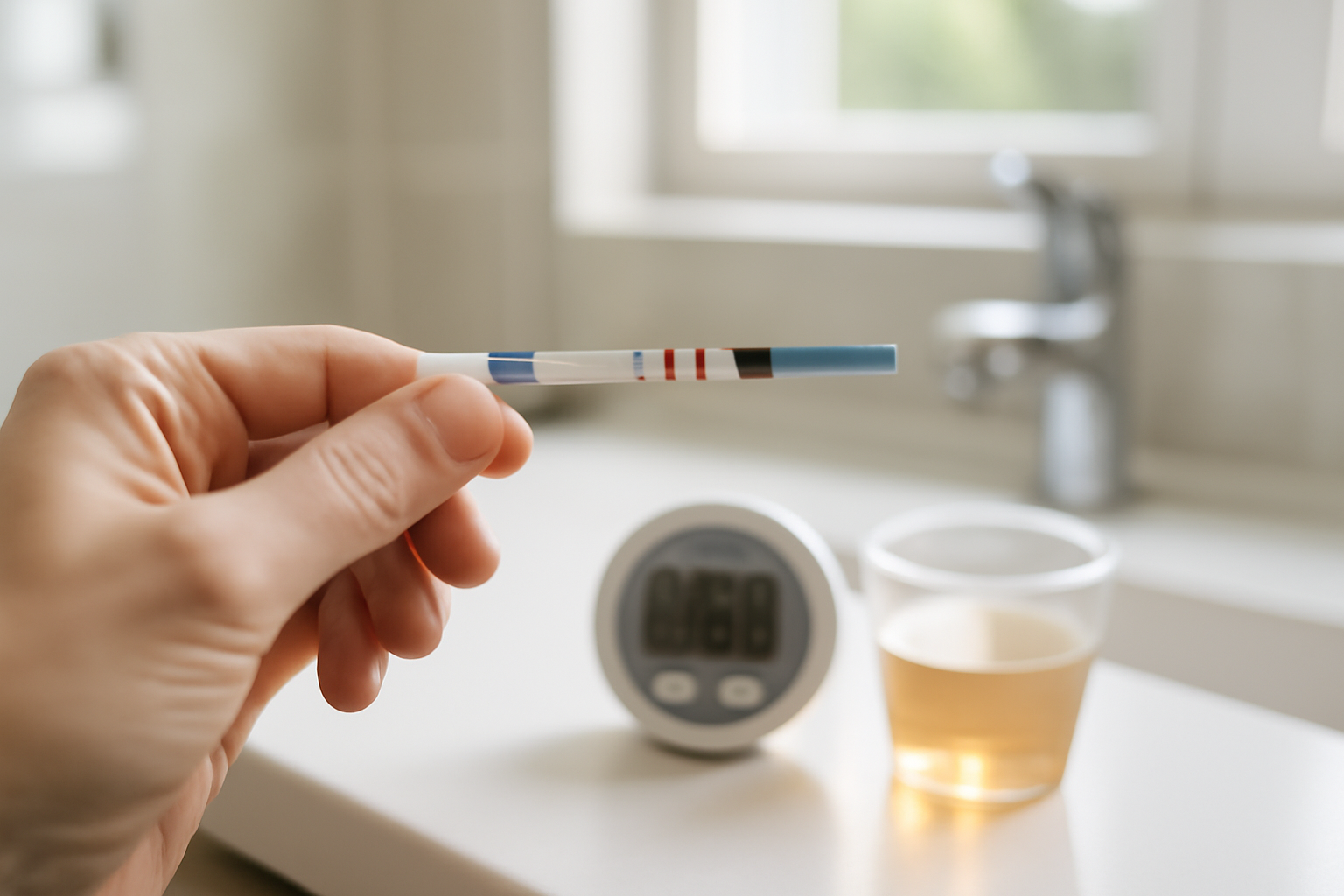
Understanding what is a positive ovulation test starts with one key idea: these tests detect a hormone shift, not the exact moment an egg is released. A positive result usually points to an LH surge, which typically comes before ovulation. Once you know what “positive” really means, you can act at the right time. (And yes, it’s easy to overthink the timing—so let’s make it clearer.)
What a positive ovulation test actually measures (LH surge vs. ovulation)
A positive ovulation test detects a rise in luteinizing hormone (LH) in urine. That LH surge usually happens before ovulation, but it doesn’t directly confirm that the egg has already been released. Think of it as a fertility window signal that helps you time intercourse or fertility tracking more accurately.
Most home ovulation tests focus on LH, the hormone that pushes the body toward ovulation. When LH rises, it sets off the chain of events that leads to an egg being released from the ovary. Your test is essentially catching that LH increase as it shows up in urine.
Here’s the crucial difference: a positive test means “LH surge detected,” while ovulation confirmed means “the egg was released.” Ovulation is often expected within about 24–36 hours after an LH surge, but it’s a helpful estimate—not a guarantee. Urine-based testing can also shift with hydration and timing, which is why consistent testing habits matter.
At a high level, you’ll usually see two formats. Strip tests (lateral flow) show lines you compare, while digital tests display a fertility-related message based on internal interpretation. Both detect LH in urine, but the “readability” is different: lines require comparison; digits follow the screen cue.
Quick practical aside: if you’re used to pregnancy tests, the logic is different. LH tests are predicting your fertile window, not confirming pregnancy.
Timing after a positive result: when ovulation is most likely
After you get a positive ovulation test, ovulation is most likely to occur within roughly 24–36 hours. For many people, the best timing is sex on the day of the positive and the following day. If you keep testing, the surge often peaks and then the test line starts to fade.
Use the first positive like a clock. The first positive (often the first day the test line clearly meets the positive threshold) is usually your main timing anchor. Since ovulation commonly follows the LH surge within about a day, intercourse on the positive day and next day covers the most likely release window.
Real life rarely looks perfectly linear. You might see multiple positives in a row, or a strong positive followed by lighter lines. If you get more than one positive, focus on the first strong positive as the start of your fertile timing window, then keep testing if you want to refine your pattern.
Clinicians and fertility educators often suggest a simple approach:
- Day you see the first clear positive: aim for intercourse that day.
- Next day: aim again, especially if you’re actively trying to conceive.
- After that: you can ease off testing unless you’re tracking irregular cycles or want extra confirmation.
One more thing to watch: the line trend. After the surge peaks, LH in urine typically drops, and the test line becomes lighter. That “fading” pattern often signals you’re moving past the peak surge period. (It’s not just in your head—your body really is shifting.)
How to read your ovulation test correctly (lines, digits, and common mistakes)
Reading an ovulation test correctly makes a difference. With many strip tests, “positive” usually means the test line is as dark as or darker than the control line. With digital tests, the screen typically shows a fertility-related message. The most common mistakes are simple: testing at the wrong time, using diluted urine, or misreading faint lines.
Strip tests: Most brands include a control line to confirm the test ran correctly. Compare the test line to the control line. If the test line is as dark as the control line, or darker, it’s usually considered positive. A faint line is often “not yet positive,” even if you can see it.
Digital tests: These are easier to interpret. The device typically shows a message like “fertile” or “peak” (exact wording varies). Follow the instructions for your specific brand, since the threshold and timing cue can differ.
Common mistakes that lower accuracy usually aren’t mysterious. They’re usually about how you test—especially when the LH signal gets diluted or hard to read.
- Testing at inconsistent times: LH surge timing can shift; many brands recommend testing around the same time each day.
- Using diluted urine: heavy fluid intake can weaken LH concentration and make lines look lighter.
- Waiting too long to test: if you start late, you might miss the first strong positive.
- Misreading “almost positive” lines: if the line is clearly lighter than the control line, it’s typically not positive.
- Not accounting for your cycle pattern: irregular cycles may require earlier or more frequent testing.
If you want a straightforward routine, test around the same time each day and avoid “surprise dilution” right before testing (like chugging water). Then read the result within the time window listed in the instructions. Why guess when the kit already tells you how to read it?
Can you get a false positive or missed ovulation? Accuracy limits and causes
Yes—ovulation tests can sometimes give false positives (LH rises without ovulation) or miss the true surge window. Causes can include PCOS, perimenopause, certain pituitary issues, recent fertility treatments, and timing errors. If your cycles are irregular or you never see positives, it may help to combine LH tests with other signs or talk with a clinician.
Home tests are useful, but they aren’t perfect. Some sources describe ovulation test accuracy of over 95% when used correctly, yet real-world results vary based on how often you test, how you interpret lines, and your individual hormone patterns. In other words: even with good technique, biology can still surprise you.
False positives usually mean you detect an LH surge signal, but ovulation doesn’t happen as expected. Certain hormonal conditions can contribute. For example, PCOS can be linked with atypical LH patterns and irregular cycles. Perimenopause can also shift cycle regularity, changing how LH rises and falls.
Missed surges are another common issue. If you test too infrequently, you can catch a surge after it has already peaked—or miss the first positive entirely. Timing errors, like testing much later than your usual time, can also change the concentration of LH in urine.
Fertility medications can further complicate interpretation. If you’ve recently used or are using fertility treatments, your LH patterns may not follow the usual “typical” curve. In that case, it’s smart to follow your clinician’s guidance on how to interpret results. If you’ve been trying for months with no positives, or your cycle is very unpredictable, consider discussing ovulation tracking with a healthcare professional.
How to increase confidence: pair LH tests with cervical mucus, basal body temperature, or ultrasound
To make timing more reliable, combine tools. Cervical mucus often becomes clearer and more stretchy near the fertile window, while basal body temperature typically rises after ovulation. Ultrasound can confirm ovulation in clinical settings. Using multiple signals helps when LH tests are unclear or cycles are irregular.
LH tests point to the fertile window; other signs help confirm where you are in the cycle. Cervical mucus is a popular at-home cue. Near ovulation, many people notice mucus that feels more slippery and stretchy (sometimes described as “egg-white” texture). That change often lines up with rising fertility.
Basal body temperature (BBT) adds a different kind of information. BBT usually rises after ovulation, likely due to progesterone changes. That makes BBT better for confirmation than prediction. If you see a sustained temperature shift after your positive LH test, it can reinforce that ovulation likely occurred.
Ultrasound is the clinical option. In fertility care, clinicians may monitor follicle development and ovulation timing with ultrasound—especially when cycles are irregular or when home testing doesn’t give clear answers.
If you want a simple multi-signal plan, try this:
- Use LH strips to find the surge window.
- Check cervical mucus daily around that time to see if your fertile signs match the LH signal.
- Track BBT after the positive to confirm the post-ovulation shift.
(Yes, it’s a bit more work—but it often reduces the “did I actually ovulate?” uncertainty.)
What to do next: trying to conceive vs. avoiding pregnancy (and when to seek help)
If you’re trying to conceive, use the positive result to plan intercourse during the fertile window (often the day of the positive and the next day). If you’re avoiding pregnancy, don’t rely on ovulation tests alone—use reliable contraception. Get medical advice if you have very irregular cycles, no positives for months, or symptoms that suggest an underlying issue.
Trying to conceive (TTC): A positive ovulation test is a timing tool. Your best next step is intercourse during the fertile window—commonly the day of the first positive and the following day. If you see multiple positives, the first strong positive is usually the anchor, and you can keep intercourse aligned with the peak days.
Avoiding pregnancy: Ovulation tests aren’t a standalone contraception method. They can be wrong, and hormone surges can be unpredictable. For pregnancy prevention, use a method with proven reliability (condoms, hormonal contraception, IUDs, or other options chosen with a clinician). The NHS offers practical guidance on contraception methods and how to choose what fits you best: which contraception method may be right for you (NHS).
When should you consider getting medical input? If you rarely see positives, your cycles are very irregular, or you’ve been trying for a prolonged period without success, it’s reasonable to discuss fertility evaluation. WHO and CDC both provide broader context on infertility and reproductive health, including when to seek care: WHO infertility overview and CDC infertility resources.
If you’re curious about the biology behind LH, this background can help you connect the dots: luteinizing hormone (LH) overview. It’s not a substitute for medical advice, but it can help you understand what the test is actually measuring.
FAQ
How do I interpret an ovulation test line that’s as dark as (or darker than) the control line?
On most strip LH tests, a result is typically considered positive when the test line is as dark as or darker than the control line. If the two lines look equal within the time window on the instructions, treat it as a positive and plan timing for the fertile window.
What’s the typical delay between a positive ovulation test and actual ovulation?
A common rule of thumb is that ovulation occurs about 24–36 hours after the first positive LH test. Individual timing can vary, so use the result to guide intercourse on the positive day and the next day, then consider confirmation with cervical mucus or BBT.
Why is my ovulation test positive, but I don’t feel like I’m ovulating?
A positive test means you detected an LH surge, but it doesn’t directly confirm egg release. You may not notice symptoms, or the surge may not lead to ovulation (a false positive). Cycle irregularities, PCOS, perimenopause, or testing timing can also affect what you observe. Tracking cervical mucus and BBT can add confirmation.
When should I start testing so I catch a positive at the right time?
Start based on your typical cycle length and the test frequency recommendations from your kit. Many people begin a few days before they expect ovulation and then test daily (or twice daily if surges are fast). Consistent timing and avoiding diluted urine help you catch the first strong positive.
How long should we have intercourse after a positive ovulation test?
For many people trying to conceive, the highest-yield timing is sex on the day of the first positive and the following day. If you see multiple positives, you can keep intercourse aligned with the peak days. After ovulation likely passes, you can stop unless your clinician advises otherwise.
Can a positive ovulation test be a false positive?
Yes. A false positive can happen when LH rises without ovulation. It can be influenced by conditions like PCOS, perimenopause, certain pituitary issues, medication effects, or simply how the surge is detected in urine. If you consistently see positives but no other signs, consider clinician-guided tracking.
Key takeaways
- A positive ovulation test means an LH surge—not that ovulation has already happened.
- Use timing rules of thumb: ovulation is often expected about 24–36 hours after the first positive.
- Read strip tests by comparing the test line to the control line; digital tests follow the brand’s on-screen cue.
- Accuracy drops with diluted urine, inconsistent testing times, and cycle irregularities.
- If you suspect false positives or missed surges, combine LH tests with cervical mucus and/or basal body temperature.
- Don’t use ovulation tests alone to avoid pregnancy; contraception should be reliable and consistent.
- If you rarely see positives or your cycles are very irregular, consider discussing ovulation tracking with a clinician.
To wrap it up: what is a positive ovulation test? It’s your LH surge signal. Use it to plan your next steps, and when you need more certainty, pair it with other fertility cues. That combination often turns “maybe” into a plan you can trust.
2 commentaires sur « What Is a Positive Ovulation Test? Meaning and Timing »