
Yes—can a sinus infection cause tooth pain? It can, especially in the upper molars, because the maxillary sinuses sit behind the cheekbones.
When the sinuses flare, you may feel congestion, facial pressure, and a dull ache that tends to get worse when you bend forward.
But if the pain is clearly tooth-driven—like it spikes with chewing or cold and hot—think cavity, crack, or an abscess.
Start with supportive sinus care, and get dental or medical help when warning signs show up.
| Most likely teeth | Upper back molars (upper teeth) |
| Common companion symptoms | Congestion, facial pressure, reduced smell |
| Clue from posture | Pain worsens when bending forward |
| Clue for dental origin | One-tooth pain triggered by chewing or temperature |
| Urgent red flags | High fever, facial swelling, vision changes |
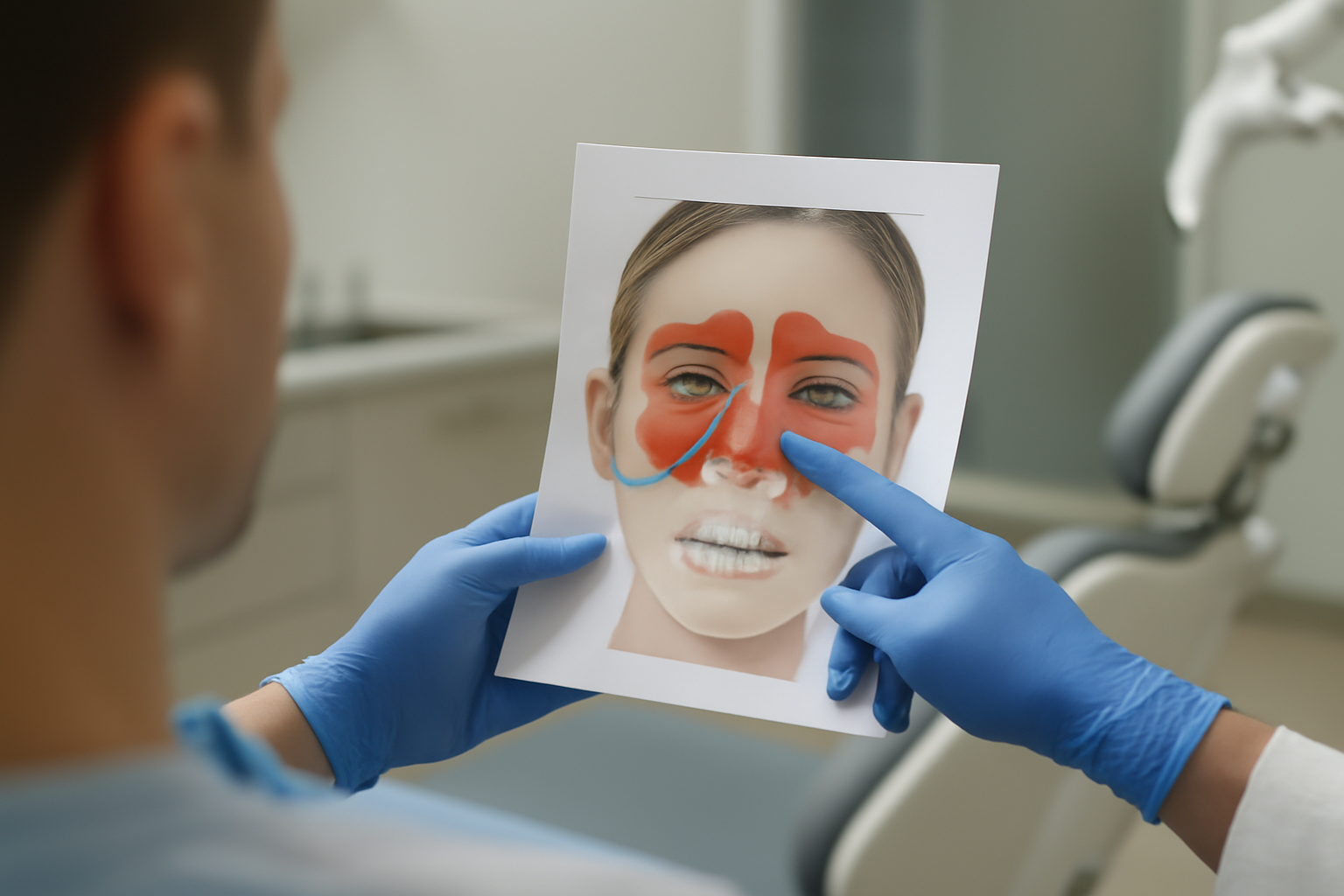
If you’re asking can sinus infection cause tooth pain, here’s the quick answer: yes—often in the upper back teeth. Sinusitis inflames tissue near the maxillary sinuses, and that pressure can irritate nerves that also supply the upper teeth. The confusing part is the pattern. Sinus-related pain usually travels with nasal and facial symptoms.
Use the sections below like a checklist. You’ll see what to watch for, how to compare the pattern with cavities or cracked teeth, and when to get dental or medical care. (And yes, it’s common to feel certain it’s “definitely a tooth” until the sinus picture clicks.)
How sinusitis can mimic a toothache (upper molars and nerve irritation)
Sinusitis inflames the lining of your sinuses, especially the maxillary sinuses behind the cheekbones and above the upper teeth. When pressure builds, it can irritate nearby tooth nerves and create pain that feels like a cavity or a cracked tooth—most often in the upper back molars.
Maxillary sinus location explains a lot. These sinuses sit in the upper jaw area, behind the cheekbones, and they’re positioned above the roots of upper molars.
Because nerves overlap, inflammation and pressure can cause referred pain. In plain terms, your brain “reads” the signal as tooth pain even when the source is the sinus. People often describe it as deep, aching, or pressure-like rather than a sharp pinpoint spot.
Key symptoms that point to sinus-related tooth pain (not a dental cause)
Sinus-related tooth pain usually comes with nasal and facial symptoms: congestion, thick nasal discharge, reduced smell, facial pressure, and discomfort that ramps up when you bend forward. You might also get a headache or ear fullness. If the tooth-like pain flares alongside sinus flare-ups, that’s a strong hint it’s sinus-driven.
Instead of focusing on one tooth, look for a cluster of symptoms. Nasal congestion, discharge that shifts from clear to thick/yellow, and reduced smell are classic sinusitis companions.
Posture matters more than most people expect. When you bend forward, sinus pressure increases. That can intensify facial discomfort and make the upper teeth feel like they’re aching. Did it start after a cold, allergy season, or a stretch of heavy sinus drainage? Timing like that is a clue.
What to watch for during a flare
- Congestion that feels “stuck” in the nose or behind the cheeks
- Facial pressure over the cheeks, around the eyes, or in the upper jaw
- Reduced smell or taste changes
- Headache or ear fullness along with tooth discomfort
These patterns show up in major clinical sources, including the Mayo Clinic and NHS.
How to differentiate: sinus tooth pain vs cavities, abscess, or cracked teeth
Dental pain is often localized to one tooth. It may be triggered by chewing, temperature (cold/hot), or biting. An abscess can bring persistent throbbing, swelling, bad taste, or fever. Sinus pain is more likely to feel diffuse across the upper teeth and comes with nasal symptoms and facial pressure.
Here’s a practical way to sort it out: test the trigger. Tooth decay, cracked teeth, and many dental infections tend to cause pain when you bite down, chew, or react to cold/hot foods.
Abscess warning signs are harder to ignore. Persistent throbbing, visible gum swelling, bad taste, fever, or symptoms that worsen quickly can point to an infection that needs urgent dental attention.
Sinus-related tooth pain often feels broader across the upper molar region and shifts as sinus symptoms change. Fever is less typical for uncomplicated viral sinusitis. If your fever is high or things escalate fast, get checked.
Quick comparison checklist
- One tooth vs several: one-tooth pain leans dental; diffuse upper-molar discomfort leans sinus.
- Temperature/chewing triggers: cold/hot and biting pain are common with cavities or cracks.
- Posture effect: bending forward worsening supports sinus pressure.
- Swelling/fever: swelling, fever, and bad taste point toward abscess—get dental care promptly.
- Nasal symptoms: congestion, thick discharge, and reduced smell strongly support sinusitis.
What you can do at home to relieve sinus pressure and tooth discomfort
If your symptoms suggest sinusitis, focus on lowering congestion and pressure: saline nasal rinses, hydration, warm compresses, and over-the-counter pain relief if it’s safe for you. If allergies are part of the picture, an antihistamine or intranasal steroid may help. Just don’t overuse decongestant sprays beyond the label.
Supportive care can help whether the trigger is a viral illness or allergies. Saline irrigation may improve drainage and reduce pressure, which can ease the referred tooth pain.
Warm compresses over the cheeks and staying well-hydrated can make a noticeable difference. For pain, choose OTC options you can safely tolerate and follow the package dosing instructions. If you use decongestant sprays, keep it within label limits—overuse can cause rebound congestion. (Yes, it’s a real trap.)
At-home steps (simple and practical)
- Saline rinses (sterile/distilled or previously boiled water) to support sinus drainage
- Hydration to thin mucus and reduce blockage
- Warm compresses on the cheeks to ease pressure discomfort
- Allergy control if symptoms match seasonal triggers (antihistamines or intranasal steroids as appropriate)
- Safe OTC pain relief based on your health history
If you want a clinical overview of sinusitis symptom patterns and home guidance, see the NHS and Mayo Clinic resources.
When to see a dentist vs a doctor (and when it’s urgent)
See a dentist if the pain is clearly tooth-specific, triggered by chewing/temperature, or it lingers after your sinus symptoms start improving. A cavity, crack, or infection may be present. See a doctor/urgent care if you have severe facial pain, high fever, vision changes, or symptoms lasting beyond about 10 days without improvement. If swelling or breathing issues occur, treat it as an emergency.
Think of it as matching the most likely source. Dental evaluation matters when one tooth seems to be driving the problem—especially if you can reproduce the pain by biting or exposing it to cold/hot stimuli.
Medical evaluation is the move when sinusitis seems more severe, prolonged, or complicated. A common clinical threshold is symptoms lasting beyond roughly 10 days without improvement, or worsening after an initial improvement.
Urgent warning signs
- High fever or rapidly worsening illness
- Facial swelling (especially around the eyes or cheeks)
- Vision changes or severe headache
- Breathing issues or significant facial tenderness
When red flags appear, don’t wait for a “maybe it’s sinus.” Get prompt care.
Treatment options: what clinicians use for sinusitis and how dental exams fit in
For sinusitis, clinicians may recommend intranasal corticosteroids, saline irrigation, and—when bacterial infection is suspected—appropriate antibiotics. Dental evaluation can include an exam, X-rays, and tests for cracked teeth or abscess. The goal is to treat sinus inflammation while ruling out a primary dental problem.
Most sinusitis starts with inflammation and drainage issues. That’s why many plans focus on reducing swelling in the nasal passages and improving mucus flow. Antibiotics aren’t automatic; guidelines emphasize distinguishing viral vs bacterial patterns before using them.
Dental exams also matter when symptoms overlap. X-rays and clinical testing can confirm or rule out cavities, cracks, and abscesses that may not be obvious from the outside.
How clinicians decide
- Sinus-focused care: anti-inflammatory approaches and drainage support
- Antibiotics, selectively: when bacterial sinusitis is more likely (based on clinical criteria)
- Dental imaging: standard tools to evaluate decay, cracks, and infection
For more on sinusitis symptoms and causes, review Mayo Clinic’s sinusitis overview and NHS guidance on sinusitis. For antibiotic decision-making, see CDC information on antibiotic use for sinus infections. For anatomy context, maxillary sinus anatomy explained can help you visualize why upper molars are involved.
Can sinus infection cause tooth pain? Yes—especially when maxillary sinuses are inflamed above the upper molars. Still, the pattern is your best diagnostic clue. If your discomfort comes with congestion and facial pressure that shifts with posture, sinusitis is a strong suspect. If pain is triggered by chewing, cold/hot, or it stays locked to one tooth, a dental cause becomes more likely.
When symptoms improve with sinus-supportive care, you’re probably on the right track. If pain persists after nasal symptoms ease—or if red flags show up—get the right exam: dental for tooth-specific issues, medical for severe or prolonged sinusitis.
FAQ
Can a sinus infection cause tooth pain in the upper molars?
Yes. Sinusitis can refer pain to the upper back teeth because the maxillary sinuses sit above the upper molars and behind the cheekbones. Inflammation and pressure can irritate nearby nerves, making it feel like a toothache.
How can I tell if my tooth pain is from sinus pressure or a cavity?
Sinus-related pain usually comes with nasal symptoms (congestion, thick discharge, reduced smell) and often worsens when you bend forward. Cavity pain is more often triggered by chewing or cold/hot temperature and tends to be localized to one tooth.
Why does sinus pain get worse when I bend forward?
Bending forward increases sinus pressure and can worsen inflammation in the maxillary sinuses. That pressure can intensify facial discomfort and referred tooth pain in the upper molar area.
When should I see a dentist if I think sinusitis is causing my toothache?
See a dentist if the pain is clearly tooth-specific, triggered by chewing or temperature, or if it persists after your sinus symptoms improve. A dental exam can rule out cavities, cracks, and abscesses that may be present even when sinus symptoms occur.
How long does sinus-related tooth pain usually last?
It often improves as the sinus inflammation and congestion improve. For many viral sinus episodes, symptoms may settle within about a week, but persistent or worsening symptoms beyond roughly 10 days without improvement should be assessed by a clinician.
Can a sinus infection cause an abscess or swelling in the mouth?
True mouth abscesses are usually dental in origin, not directly caused by sinusitis. However, sinus pressure can cause tooth and gum discomfort that feels similar. If you notice gum swelling, bad taste, fever, or persistent throbbing, seek urgent dental evaluation to check for an abscess.
Key takeaways
- Yes—sinusitis can refer pain to the upper back teeth because the maxillary sinuses sit above them.
- Sinus-related tooth pain usually comes with congestion, facial pressure, and symptoms that fluctuate with posture.
- Tooth-specific triggers (chewing, cold/hot) and localized tenderness point more toward a dental cause.
- Try supportive care first if symptoms fit sinusitis: saline rinses, hydration, warm compresses, and safe OTC pain relief.
- If pain persists after sinus symptoms improve, or you suspect one tooth is the source, get a dental exam.
- Seek urgent care for red flags like high fever, facial swelling, vision changes, or rapid worsening.
- Clinicians may treat sinus inflammation and selectively use antibiotics, while dental X-rays help rule out decay or abscess.