
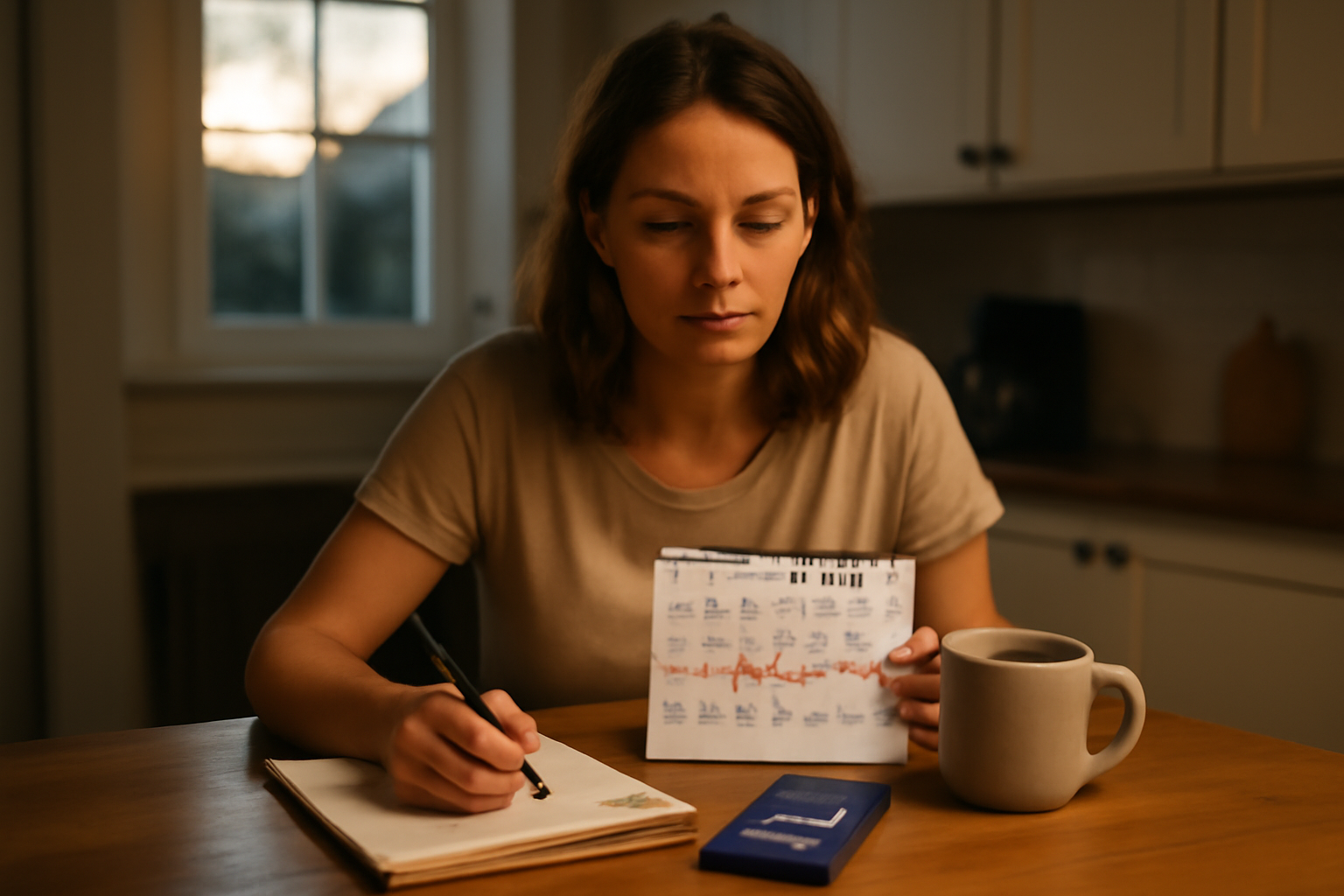
Quick Take: If your anxiety spikes 1–2 weeks before your period, PMS anxiety may be the driver. The pattern often starts in the luteal phase and eases once bleeding begins.
Hormone shifts can affect neurotransmitters, sleep, and how sensitive you feel to stress—so everyday worries hit harder.
Use cycle tracking, a pre-period support plan, and watch for red flags that mean you should get professional care.
| Criteria | What to look for |
|---|---|
| Timing | Often peaks 1–2 weeks before menstruation, then eases after bleeding starts |
| Pattern | Repeats across 2–3 cycles with similar triggers and physical symptoms |
| Sleep & body signals | Commonly includes sleep disruption, irritability, bloating, and increased stress reactivity |
| Red flags | New/worsening panic, severe impairment, or any self-harm thoughts |
| Next step | Track, use a luteal-phase plan, and seek clinician input if symptoms are severe or unclear |
PMS anxiety can feel like someone turned the volume up right before your period—worry, dread, and that “everything feels scary” sensation. If your anxiety spikes 1–2 weeks before your period, PMS anxiety may be the explanation, and the timing can point you toward the right kind of self-care (and support).
Here’s a practical guide to help you sort out what’s cycle-linked, what you can manage at home, and when it’s time to get help. (You deserve answers that match your experience, not generic advice.)
PMS anxiety vs general anxiety: how timing and symptom patterns help you tell the difference
PMS anxiety usually follows a predictable cycle. It often starts in the luteal phase (about 1–2 weeks before menstruation) and improves once bleeding begins. General anxiety disorders tend to be more persistent and don’t track your period as closely. Tracking symptoms for 2–3 cycles can show whether your anxiety is hormonally patterned or broader.
Start with timing. In the luteal phase, progesterone-related shifts are common, and many people notice anxiety changes alongside other PMS symptoms like irritability, bloating, or sleep disruption. When menstruation starts, the pattern often lifts—even if life stress is still there.
Next, look at the “shape” of what you feel: intensity, triggers, sleep quality, appetite changes, and physical discomfort. One rough day doesn’t tell the whole story. A repeating pattern matters. If symptoms reliably worsen pre-period and ease after bleeding starts, PMS anxiety is more likely.
- PMS-consistent pattern: anxiety peaks in the same pre-period window each cycle and improves after bleeding begins
- General anxiety pattern: worry stays elevated across the month, with less clear monthly timing
- Helpful tracking: rate anxiety (0–10) plus sleep and physical symptoms daily for at least 2–3 cycles
Why anxiety increases before your period: hormones, brain chemistry, and stress sensitivity
Before a period, fluctuating estrogen and progesterone can affect neurotransmitters involved in mood and anxiety, including serotonin and GABA. These hormonal shifts may also change sleep quality and pain sensitivity, so everyday stress can feel harder to manage. For some, the result is heightened worry, dread, or that “everything feels scary” feeling.
The luteal phase is often when progesterone is higher, and PMS symptoms commonly peak during this window. When sleep gets lighter or more fragmented, anxiety can intensify because your brain has less emotional “buffer.” You may react faster to stressors—even if nothing big changed outside your body.
Hormone-linked changes can also increase irritability and reduce coping capacity. (If you feel more sensitive to noise, conflict, or uncertainty, that can fit the same pathway.) The point is simple: the experience is real, and it’s often manageable with targeted strategies.
Self-check: PMS anxiety symptoms you can monitor (and red flags that are not “just PMS”)
PMS anxiety often includes persistent worry, irritability, feeling on edge, and fear that ramps up before menstruation. Helpful monitoring includes sleep changes, appetite, concentration, and whether symptoms reliably improve after bleeding starts. Red flags include new or worsening panic attacks, thoughts of self-harm, or severe impairment—those need professional evaluation.
Start simple. Track a few symptoms that reflect both your mind and your body. Anxiety rarely shows up alone; it often travels with other PMS signals. Sleep disruption is especially common, and it can amplify worry and make thoughts feel harder to “turn off.”
Use this checklist to see whether your symptoms fit PMS anxiety. Then keep an eye out for red flags that suggest a different diagnosis or urgent support needs.
Common PMS anxiety features to track each cycle
- Timing: anxiety increases 1–2 weeks before your period and eases after bleeding starts
- Emotional symptoms: persistent worry, dread, irritability, feeling on edge
- Body symptoms: bloating, headaches, cramps, increased sensitivity to stress or pain
- Sleep and cognition: trouble falling asleep, waking more often, lower concentration
- Appetite shifts: cravings, reduced appetite, or nausea that worsens pre-period
Red flags that deserve prompt professional evaluation
- New or worsening panic attacks outside your usual pattern
- Any self-harm thoughts or urges—seek immediate help
- Severe impairment (work/school drop, relationship breakdown, unable to function)
- Symptoms that don’t improve once menstruation starts
Could it be PMDD instead? Differences, severity markers, and what to do next
PMDD is a more severe, clinically recognized form of premenstrual disorder. Mood symptoms—like anxiety, depression, or irritability—are intense enough to disrupt daily life. PMS can be uncomfortable, but PMDD symptoms are typically more extreme and occur in the same premenstrual window each cycle, improving after menstruation begins. If symptoms are severe, ask a clinician about PMDD assessment.
Think of PMS anxiety as a common cycle-linked experience, and PMDD as the more disruptive end of the spectrum. PMDD can include strong anxiety plus depressive symptoms, emotional reactivity, and difficulty functioning. The timing still follows the premenstrual window; the impact is just bigger.
When you judge severity, don’t only focus on how you feel on a bad day. Ask yourself whether symptoms consistently affect your ability to work, study, parent, socialize, or maintain stable relationships. If the pattern escalates each cycle—or you feel stuck in a pre-period emotional storm—professional assessment can help.
How to spot PMDD vs milder PMS
- Severity: mood symptoms are intense enough to disrupt daily life
- Consistency: symptoms worsen in the same premenstrual window each cycle
- Relief after bleeding: improvement starts once menstruation begins
- Functional impact: clear impairment in work, school, or relationships
If you suspect PMDD, don’t wait for it to “get bad enough.” PMDD is a recognized diagnosis within premenstrual disorders, and the right label can open the door to more targeted care.
Practical ways to reduce PMS anxiety: lifestyle, coping tools, and targeted treatments
Start with basics that reduce anxiety’s fuel: consistent sleep, regular meals, and daily movement. Then add targeted coping such as caffeine reduction, grounding and CBT-style thought reframing, and a pre-period “plan” (extra rest, fewer commitments). If symptoms persist, clinicians may suggest therapies like CBT, SSRIs (often timed around the luteal phase), or other medical options based on your situation.
Most people see the best results when they combine “body first” strategies with mental coping skills. In the luteal phase, your system may be more reactive, so small changes—sleep timing, hydration, and meal consistency—can shift the whole experience.
Here’s a practical approach you can start this cycle. Keep it realistic, not perfect. (Perfection can become another anxiety trigger.)
Create a luteal-phase support plan
- Sleep: aim for consistent bed/wake times; reduce late-night scrolling; consider a wind-down routine
- Nutrition: eat regularly to prevent blood-sugar dips; include protein and fiber
- Movement: choose something gentle and repeatable (walking, yoga, light strength training)
- Caffeine and alcohol: reduce caffeine in the pre-period window; go easy with alcohol since it can worsen sleep
- Commitments: schedule fewer high-stakes tasks 1–2 weeks pre-period when possible
- Trigger management: plan for stressful conversations, deadlines, or social events with extra margin
Use coping tools that match how PMS anxiety feels
When anxiety rises, thoughts can feel urgent and absolute. CBT-style skills help you separate “a feeling” from “a fact.” Grounding techniques can also lower physiological arousal quickly. (Yes, it’s okay if you need to repeat them.)
- Grounding: try 5-4-3-2-1 sensory check (five things you see, four you feel, etc.)
- Thought reframing: write the anxious prediction, then add an evidence-based alternative
- Worry container: set a 10-minute daily time to process worries, then redirect to your plan
- Breathing: slow exhale breathing (inhale 4, exhale 6) for 2–5 minutes
Targeted treatments to discuss with a clinician
If self-care isn’t enough, evidence-based options can help. CBT is widely used for anxiety symptoms and can be adapted for cycle-linked patterns. For PMDD, SSRIs are commonly used, sometimes with timing strategies guided by a clinician (for example, starting in the luteal phase or using a specific schedule).
Medical options depend on your history, symptom severity, and any co-existing anxiety conditions. The goal is straightforward: reduce suffering and restore predictable functioning.
When to see a doctor or therapist: getting the right diagnosis and ruling out other causes
See a clinician if your anxiety is severe, causes major impairment, keeps worsening, or doesn’t clearly improve once your period starts. A professional can help rule out thyroid issues, medication side effects, sleep disorders, or primary anxiety conditions. If you have panic symptoms, trauma history, or intrusive thoughts, therapy and medical support can prevent the cycle from escalating.
Timing helps, but diagnosis still matters. Sometimes anxiety that seems “hormonal” overlaps with thyroid dysfunction, medication effects, sleep apnea, or an anxiety disorder that flares around the same time each month. A clinician can help you sort out what’s driving what.
To make your appointment more effective, bring a simple log: cycle dates, anxiety ratings, sleep quality, and any physical symptoms. If you notice a consistent pattern across 2–3 cycles, that’s useful data. (It can save you time and guesswork.)
What to ask for during your visit
- Diagnostic clarity: Could this be PMS anxiety, PMDD, or a primary anxiety disorder?
- Medical contributors: Should we check thyroid function or review medications/supplements?
- Sleep assessment: Could sleep disruption be fueling anxiety symptoms?
- Treatment plan: Would CBT, a targeted SSRI strategy, or another option fit your pattern?
If you want reliable background, these resources can help you prepare questions and understand standard care: NHS overview of PMS and PMDD, NIMH information on premenstrual disorders, and ACOG FAQs on PMS and PMDD.
Key takeaways
- Track symptoms for 2–3 cycles to confirm whether anxiety reliably peaks before menstruation and improves after bleeding starts.
- PMS anxiety is often cycle-linked, while general anxiety disorders tend to be more constant and not tightly tied to your period.
- Hormone fluctuations can influence neurotransmitters, sleep, and stress sensitivity—these pathways can make pre-period anxiety feel stronger.
- Monitor for red flags like severe impairment, panic that’s new or worsening, or any self-harm thoughts—seek prompt help.
- If symptoms are intense and disrupt daily life each cycle, ask a clinician about PMDD assessment.
- Use a luteal-phase “support plan”: prioritize sleep, reduce caffeine, eat regularly, and practice grounding/CBT-style coping.
- If self-care isn’t enough, evidence-based options (like CBT and clinician-guided medication strategies) can help—don’t wait until it becomes unmanageable.
When your body gives you a monthly pattern, you can meet it with a monthly plan. PMS anxiety doesn’t have to run your life—why not start with tracking, then build support for the luteal phase?
FAQ
How can I tell if my anxiety is PMS anxiety instead of a general anxiety disorder?
PMS anxiety usually spikes 1–2 weeks before your period and improves once bleeding starts. Track symptoms for 2–3 cycles and compare timing, intensity, sleep changes, and physical PMS symptoms. If anxiety stays elevated year-round with no clear monthly pattern, a general anxiety disorder may be more likely.
Why does anxiety get worse 1–2 weeks before my period?
Hormone fluctuations during the luteal phase can affect neurotransmitters involved in mood and anxiety (like serotonin and GABA). Sleep disruption and increased pain sensitivity can also amplify stress reactivity, so everyday worries feel more intense even if external stressors haven’t changed.
What are common PMS anxiety symptoms to track each cycle?
Track anxiety intensity (0–10), persistent worry or dread, irritability, feeling on edge, and changes in sleep, appetite, and concentration. Many people also notice bloating, headaches, or increased sensitivity to stress. The most useful clue is whether symptoms reliably improve after your period begins.
When should I suspect PMDD rather than PMS?
Suspect PMDD if mood symptoms (anxiety, depression, irritability) are severe enough to disrupt daily life, happen in the same premenstrual window each cycle, and improve after menstruation starts. If symptoms cause major impairment or keep escalating, ask a clinician about PMDD assessment.
How much can PMS anxiety affect daily life, and when is it considered severe?
PMS anxiety can affect work, school, relationships, and self-care—especially if it disrupts sleep and concentration. It’s considered more severe when it causes major impairment, prevents normal functioning, or includes panic symptoms that are new or worsening.
Is it possible to treat PMS anxiety without medication?
Yes. Many people improve with cycle tracking, a luteal-phase support plan (sleep consistency, regular meals, reduced caffeine, daily movement), and CBT-style coping skills like grounding and thought reframing. If symptoms persist or become severe, therapy and clinician-guided options—including medication when appropriate—can add support.
jhops.org health guidance: cycle-aware self-care, evidence-based support, and practical next steps.