
Quick Take
- Back pain during ovulation can be normal: mild-to-moderate, short-lived, and mid-cycle.
- Track timing and intensity—predictable, self-limited pain is usually more reassuring.
- If your period is late, take a home pregnancy test; repeat in 48–72 hours if negative and still no period.
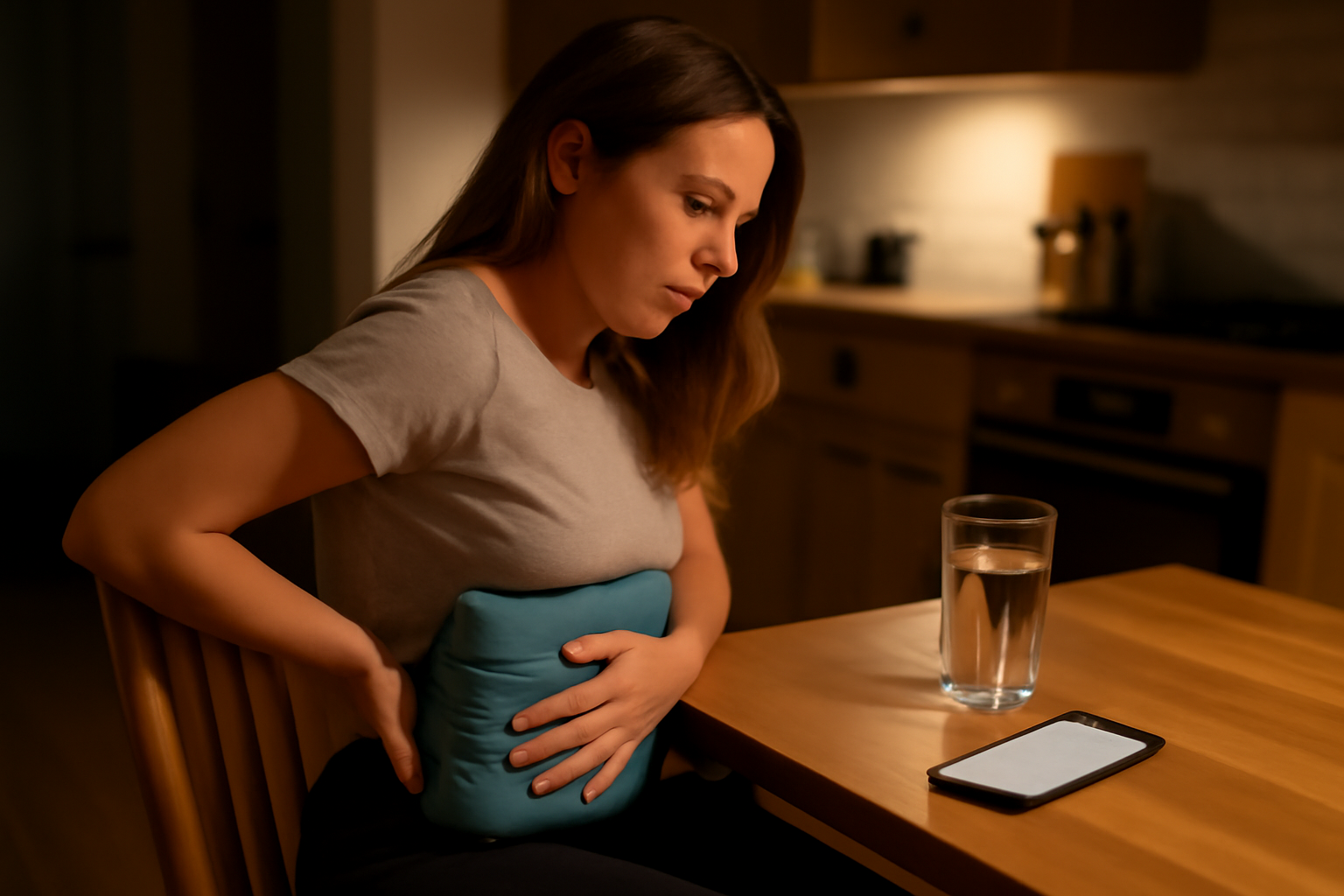
Back pain during ovulation can feel unexpected—especially when it shows up right in the middle of your menstrual cycle. For many people, it’s a real, physical sensation that comes and goes as the ovaries release an egg.
The trick is looking for a pattern. When it’s predictable, mild-to-moderate, and over fairly quickly, ovulation-related causes often fit. But if it’s severe, keeps escalating, or comes with warning signs, it deserves a closer look.
Ovulation-related back pain (mittelschmerz): what it is and why it happens
Ovulation-related back pain, sometimes called mittelschmerz, can show up mid-cycle when the ovary releases an egg. It may feel like a quick twinge, a one-sided ache, or a deeper low-back discomfort. The exact reason isn’t always obvious, but hormone shifts (estrogen and progesterone) and changes in the pelvis can play a role.
Ovulation pain usually hits around the middle of your cycle—often about 10–16 days before your next period (cycle length varies, so the timing can shift). Many people describe it as mild-to-moderate and short-lived, though “short” can still feel different from person to person.
Hormones move fast around ovulation. Estrogen rises before ovulation, then progesterone increases afterward. Those changes can affect how the pelvic area feels, and they may influence fluid balance and muscle sensitivity. (Yes, hormones can be loud.)
Pelvic and ovarian changes can also cause referred discomfort. When the ovary releases an egg, nearby tissues may stretch or briefly irritate structures in the area. Because nerves in the pelvic region share pathways with the lower back, pain can show up in your back even when the starting point is pelvic.
Sensations vary. Some people get an ache that comes and goes. Others feel a stabbing twinge or a steady deep ache for a limited window. Often, it doesn’t steadily intensify—once it starts, it tends to ease.
Typical timing you can use for self-checks
- Mid-cycle: often about 10–16 days before the next period.
- Short window: commonly hours to 1–2 days, but individual duration varies.
- Often predictable across cycles: same general time each month.
Normal signs vs concerning patterns: how to tell ovulation pain apart
Ovulation back pain is more likely to be benign when it’s predictable, mild-to-moderate, and stays within a short window (often hours to a couple of days) without progressive worsening. Concerning patterns include severe pain, pain that steadily intensifies, fever, fainting, heavy bleeding, or symptoms that don’t match your usual mid-cycle rhythm.
Start with timing. If your back pain during ovulation consistently appears around the same part of your cycle and resolves on its own, that pattern can be reassuring. Many people narrow it down by counting back from their period or using ovulation tracking.
Next, pay attention to intensity and how it behaves over time. “Normal” tends to be self-limited: it may be uncomfortable, but it doesn’t ramp up dramatically. It also often stays in the same general area—commonly one-sided or centered low in the back.
Then check for “worry” features. If the pain is new and much stronger than usual, doesn’t line up with mid-cycle timing, or lasts longer than your typical episodes, treat it as a clue. Fever, worsening abdominal or pelvic pain, fainting, or heavy bleeding are red flags that shouldn’t wait.
Comparing symptoms across cycles is practical. When you look month to month—timing, which side it’s on, and how intense it gets—you build a baseline. If the pattern changes (even if you still suspect ovulation), you’ll notice faster. And honestly, who wants to guess every month?
Quick checklist
- More reassuring: predictable mid-cycle timing, mild-to-moderate intensity, short-lived course, no systemic symptoms.
- More concerning: severe pain, progressive worsening, fever, fainting, heavy bleeding, or symptoms that don’t match your usual pattern.
Back pain during ovulation vs pregnancy cramps: timing, symptoms, and tests
Ovulation pain usually happens mid-cycle and settles down quickly. Pregnancy cramps tend to show up later (after implantation) and may come with breast tenderness, nausea, fatigue, or a missed/late period. If your period is late, take a home pregnancy test; if you’re unsure, repeat testing or contact a clinician.
Timing is the biggest difference. Ovulation happens mid-cycle, while early pregnancy symptoms often appear after implantation. Implantation is often cited around 6–12 days after ovulation, which helps explain why symptoms can shift later in the cycle.
Symptoms “travel” together, too. Ovulation-related discomfort may be isolated to one side or centered low in the back. Early pregnancy cramps can overlap with back discomfort, but they’re more likely to come alongside breast tenderness, nausea, unusual fatigue, or a missed/late period.
If your period is late, test instead of guessing. Home pregnancy tests are most reliable after a missed period. If the first test is negative but your period still doesn’t arrive, repeat after several days—often 48–72 hours—because hCG rises over time.
And if you have significant pain with a suspected pregnancy, don’t “wait it out.” Severe one-sided pelvic pain, dizziness, or bleeding with a positive or suspected pregnancy can point to an emergency like ectopic pregnancy.
Practical testing steps
- Test after a missed period for best accuracy.
- If negative and no period, repeat in 48–72 hours.
- Contact a clinician if you have severe pain or any red flags, regardless of test results.
Common causes that mimic ovulation back pain (and when to suspect them)
Not all mid-cycle back pain is ovulation. Endometriosis, ovarian cysts, pelvic inflammatory disease, uterine fibroids, urinary tract issues, and musculoskeletal strain can all mimic the timing and feel. Consider a non-ovulation cause when pain is severe, lasts longer than your usual episodes, comes with abnormal discharge, burning with urination, or significant one-sided pelvic pain.
Ovulation can be a common explanation, but it isn’t the only one. A differential diagnosis helps you avoid dismissing symptoms that deserve attention. Think in categories: gynecologic causes, urinary causes, and musculoskeletal causes.
Gynecologic mimics: Endometriosis can cause cyclical pelvic pain that may radiate to the back, sometimes intensifying around certain points in your cycle. Ovarian cysts can also create unilateral pain that feels similar to ovulation. Pelvic inflammatory disease often includes pelvic pain plus discharge and/or fever—an important difference from typical mid-cycle discomfort.
Urinary mimics: Urinary tract infections can cause lower back discomfort alongside urinary symptoms. Burning during urination, urgency, cloudy urine, or a foul odor point more toward a urinary cause than ovulation.
Musculoskeletal mimics: Strain from lifting, posture changes, or core weakness can flare around the same time each month if your activity or stress patterns shift. Still, persistent pain that doesn’t match your baseline deserves evaluation.
Symptoms that suggest a specific direction
- Abnormal discharge and/or fever → consider pelvic infection; seek timely care.
- Burning with urination → consider UTI; testing may be needed.
- Longer-lasting, cyclical pain → consider endometriosis or cyst-related issues.
- Sudden, severe one-sided pain → consider ovarian torsion or cyst complications; treat as urgent.
Self-care and pain relief for mid-cycle low back pain (safe options first)
If your ovulation back pain is mild and predictable, start with heat (heating pad or warm bath), gentle stretching, and rest. Over-the-counter options may include acetaminophen or NSAIDs if they’re safe for you. Hydration and symptom tracking can also help you spot triggers. If pain disrupts your day or keeps coming back strongly, it’s time to talk with a clinician.
Begin with non-drug strategies. Heat therapy is commonly used for menstrual-related cramping and referred pelvic discomfort because it can relax smooth muscle and improve local circulation. A warm bath or heating pad over the lower abdomen and low back often brings noticeable relief.
Gentle movement can help, too. Short walks, light mobility work, and stretching your hips and lower back may reduce stiffness and calm nerve irritation. If you’re lying down, try a pillow under your knees to support your lower spine.
When medication is appropriate, OTC pain relievers can reduce pain signals. NSAIDs can reduce prostaglandin-related pain for many people, but they aren’t right for everyone—especially if you have certain stomach or kidney conditions, take blood thinners, or have been told to avoid NSAIDs.
Acetaminophen may be an alternative depending on your health history. If you’re not sure what’s safe, ask a pharmacist or clinician. (“Safe for most people” isn’t the same as “safe for you.”)
How to use symptom tracking without overthinking
- Log the day pain starts, the side (left/right/center), and your pain level (0–10).
- Note any associated symptoms: discharge changes, urinary burning, nausea, or fever.
- Compare across 2–3 cycles to see whether it lines up with ovulation.
When self-care should stop
If pain keeps recurring strongly, shifts its pattern, or doesn’t improve with basic measures, get medical input. Relief matters—but so does clarity.
When to see a doctor urgently: red flags for severe or unusual back pain
Get urgent care if back pain is severe, rapidly worsening, or paired with fever, vomiting, fainting, heavy bleeding, or shortness of breath. Also seek prompt evaluation for persistent one-sided pelvic pain, pain with abnormal vaginal discharge, or suspected pregnancy with significant pain. These signs can indicate infection, ovarian torsion/cyst complications, ectopic pregnancy, or other urgent conditions.
“Mid-cycle” timing can be helpful, but it doesn’t rule out emergencies. Some serious conditions can overlap with ovulation-like timing, especially when cycles vary month to month. If your symptoms don’t look like your usual ovulation back pain, take that difference seriously.
Ectopic pregnancy is time-sensitive. It can present with pelvic and back pain, sometimes with spotting or dizziness. If you suspect pregnancy and the pain is significant, seek urgent evaluation.
Ovarian torsion is another urgent cause of sudden, severe unilateral pelvic pain. It often feels more intense than typical ovulation discomfort and may come with nausea or vomiting. Don’t wait for it to “pass.”
Fever plus pelvic pain can suggest pelvic infection. Timely treatment matters for safety and to reduce complications.
What to do next (simple plan)
- If symptoms are severe or worsening fast, go to the ER or urgent care now.
- If you have red flags but aren’t sure, call a clinician’s on-call line or your local urgent service.
- If pain is moderate but persistent or atypical, schedule prompt evaluation instead of waiting for the next cycle.
For general health guidance, you can also review trusted resources like the NHS symptom and condition guides and ACOG women’s health resources.
FAQ: back pain during ovulation
How long does back pain during ovulation usually last?
Most people report a short window—often hours to 1–2 days. Some cycles may feel slightly longer, and individual experiences vary. If the pain lasts well beyond your usual pattern or keeps intensifying, it’s worth discussing with a clinician.
Why does my lower back hurt on one side during ovulation?
Ovulation can involve one ovary at a time, and pelvic tissue changes may be more pronounced on that side. Shared nerve pathways can make pelvic discomfort feel like lower back pain, so one-sided back pain can still fit ovulation-related causes.
Can back pain during ovulation feel like period cramps?
Yes. People often describe it as cramp-like, aching, or a twinge that resembles period discomfort. The difference is usually the timing (mid-cycle) and the fact that ovulation pain is typically self-limited.
When should I take a pregnancy test if I have back pain but no period?
Take a home pregnancy test after a missed period, when accuracy is highest. If it’s negative but your period still doesn’t come, repeat testing after 48–72 hours. If pain is severe or you have red flags, seek medical care right away.
What are the warning signs that ovulation pain is not normal?
Watch for severe or rapidly worsening pain, fever, fainting, heavy bleeding, abnormal discharge, or pain that doesn’t match your usual mid-cycle timing. New, much stronger pain than your baseline also deserves prompt assessment.
Can endometriosis cause back pain around ovulation?
Endometriosis can cause cyclical pelvic pain that may radiate to the back. Some people notice symptoms around ovulation or other points in their cycle. If you have persistent or worsening cyclical pain, ask a clinician about evaluation.
Key takeaways
- Ovulation-related back pain often follows a mid-cycle pattern and is usually self-limited.
- Compare intensity, duration, and timing across cycles—predictable, mild pain is more reassuring.
- If your period is late, pregnancy testing is the practical next step; repeat if negative but still no period.
- Atypical symptoms (fever, abnormal discharge, heavy bleeding, severe worsening) point away from simple ovulation pain.
- Start with heat, gentle movement, and safe OTC pain relief if appropriate for you.
- Persistent, recurrent, or severe pain deserves medical evaluation to rule out cysts, endometriosis, infection, or other causes.
- When red flags appear, don’t wait—seek urgent care.
If your back pain during ovulation matches a predictable mid-cycle pattern, you can often manage it at home while staying alert to changes. When something feels off—especially with fever, unusual discharge, heavy bleeding, or severe one-sided pain—get evaluated. Your body is giving you information; your job is to listen and respond.
For trusted general guidance, you can explore CDC health topics and WHO health information.