
uterus size during period usually doesn’t “double” or “quadruple” in any measurable way for most people.
What shifts more reliably is the endometrium (lining thickness) and local blood flow—and those changes can affect heaviness, cramps, and bloating.
Clinicians use pelvic ultrasound and cycle timing. They don’t rely on viral percent-change graphics.
| Best way to assess uterus/endometrium | Pelvic ultrasound (timed to your cycle) |
| What most often changes during bleeding | Endometrial thickness and local blood flow |
| Why “viral uterus size” numbers feel convincing | They focus on perception and exaggerate percent changes |
| Symptom reliability | Heaviness doesn’t map neatly to uterine size |
| When to seek care | Very heavy bleeding, anemia symptoms, severe worsening pain |
| What to ask your clinician | Cycle day used, endometrium thickness, and whether structural causes are seen |
Understanding uterus size during period can feel oddly urgent because viral posts make it sound like your uterus becomes a balloon. In reality, most of what you feel is tied to hormone-driven lining changes and pelvic circulation. Your symptoms can be real even when the measurable size change is modest. (And yes, that mismatch is frustrating.)
Here’s an evidence-based guide to what’s normal, which numbers actually matter, and how to connect symptoms to clinical measurements without getting stuck on viral images.
Does the uterus actually change size during menstruation? (and what “normal” means)
During menstruation, the uterus doesn’t “double” or “quadruple” in a measurable way for most people. What can change is the uterus’ internal environment—endometrial thickness and blood flow—along with mild fluctuations in uterine volume. “Normal” depends on your baseline anatomy, cycle length, and how heavy your bleeding is.
To make sense of this, start with what “uterus size” means in real life. On ultrasound, clinicians talk about uterine dimensions and volume. The lining (endometrium) changes thickness across the cycle. Social media often mixes those ideas with sensations like heaviness, pressure, and bloating—feelings that don’t translate one-to-one into a single “size number.”
Across studies, reported uterine volume changes during the cycle are generally described as modest rather than dramatic. The exact direction and magnitude can depend on how and when measurements are taken. Ultrasound is the standard method clinicians use for uterine and endometrial assessment—not social media comparisons.
Realistic uterus size and volume ranges during a period (what numbers to trust)
Reliable “during-period” numbers are usually expressed as uterine volume trends and endometrial thickness, not one universal uterus size. Many sources that claim large percentage jumps are overstated or based on limited methods. A practical approach is to compare your cycle timing with ultrasound norms, especially if your symptoms are severe.
There isn’t one fixed uterus size that applies to everyone, followed by one universal “period size” that all bodies reach. Baseline uterine size varies with age, parity (whether you’ve carried a pregnancy), genetics, and overall anatomy. Even within one person, timing matters: scan too early or too late in bleeding and you may capture different phases of shedding and vascular changes.
Some commonly repeated claims describe uterine volume increases in the range of roughly 10–15% during menstruation. Those figures depend on study design and measurement technique. Viral claims about doubling or quadrupling don’t match mainstream clinical measurement practices. If you want numbers you can trust, focus on what a report actually measures: uterine dimensions/volume and endometrial thickness (often listed in millimeters).
What to trust when you see “percent change” online
- Check what was measured: uterine volume vs endometrial thickness vs body sensation.
- Check timing: cycle day and whether bleeding is light, moderate, or heavy.
- Check method: ultrasound protocol and how the study calculated volume.
- Check context: whether the claim is about individuals or an average population.
Why the uterus changes: endometrium shedding, blood flow, and pelvic congestion
The uterus changes during menstruation mainly because the endometrium is shedding and the uterine lining has built up under hormone control. As bleeding starts, vascular congestion and local blood flow can shift. That may slightly affect uterine volume. These physiologic changes can also contribute to cramping, heaviness, and bloating.
Menstrual bleeding follows hormonal withdrawal. In the weeks before your period, the endometrium thickens and becomes “ready.” When hormone levels drop, the lining breaks down and sheds. That shedding can show up on imaging as changes in endometrial thickness and local uterine vascularity.
Pelvic blood flow and uterine vascularity vary across the cycle. When blood flow shifts, the pelvis may feel fuller or heavier—even if the measurable uterus size change is small. Cramping is driven largely by uterine muscle contractions and prostaglandins. So symptom intensity doesn’t always line up neatly with uterine size. (Bodies love to keep us guessing.)
A quick physiology snapshot
- Hormones build the lining: endometrium thickens under estrogen and progesterone effects.
- Hormone withdrawal triggers shedding: the lining breaks down and bleeding begins.
- Local blood flow shifts: vascular congestion can influence pelvic sensation.
- Prostaglandins drive cramps: uterine contractions help expel tissue.
Uterus size vs symptoms: heaviness, bloating, and when it’s not “just your period”
Feeling heavy or bloated during your period is common, but it doesn’t reliably point to a specific uterus size change. Heaviness can come from hormonal fluid shifts, constipation, muscle contractions, and pain signaling. If symptoms are extreme—very heavy bleeding, anemia symptoms, or pain that worsens each cycle—get medical evaluation.
Heaviness can feel like pressure because multiple systems are involved at once. Hormone changes can influence water retention. Prostaglandins can affect the gastrointestinal tract, sometimes contributing to constipation or diarrhea. Then uterine contractions and pain signaling add to the “full” sensation.
Clinically, heavy menstrual bleeding is defined using criteria such as soaking through pads or tampons frequently and/or passing large clots. Guidelines use specific thresholds. If your bleeding is heavy enough to cause fatigue, dizziness, or shortness of breath, anemia screening may be needed. Over time, worsening cyclical pain or changes in bleeding patterns also deserve assessment.
Red flags that deserve more than “it’s just your uterus”
- Very heavy bleeding: frequent pad/tampon saturation, large clots.
- Anemia symptoms: unusual fatigue, dizziness, shortness of breath.
- Worsening cyclical pain: pain that escalates over months/years.
- Possible structural causes: symptoms that fit fibroids, adenomyosis, or endometriosis.
How clinicians measure uterine changes (ultrasound, timing, and what to ask your doctor)
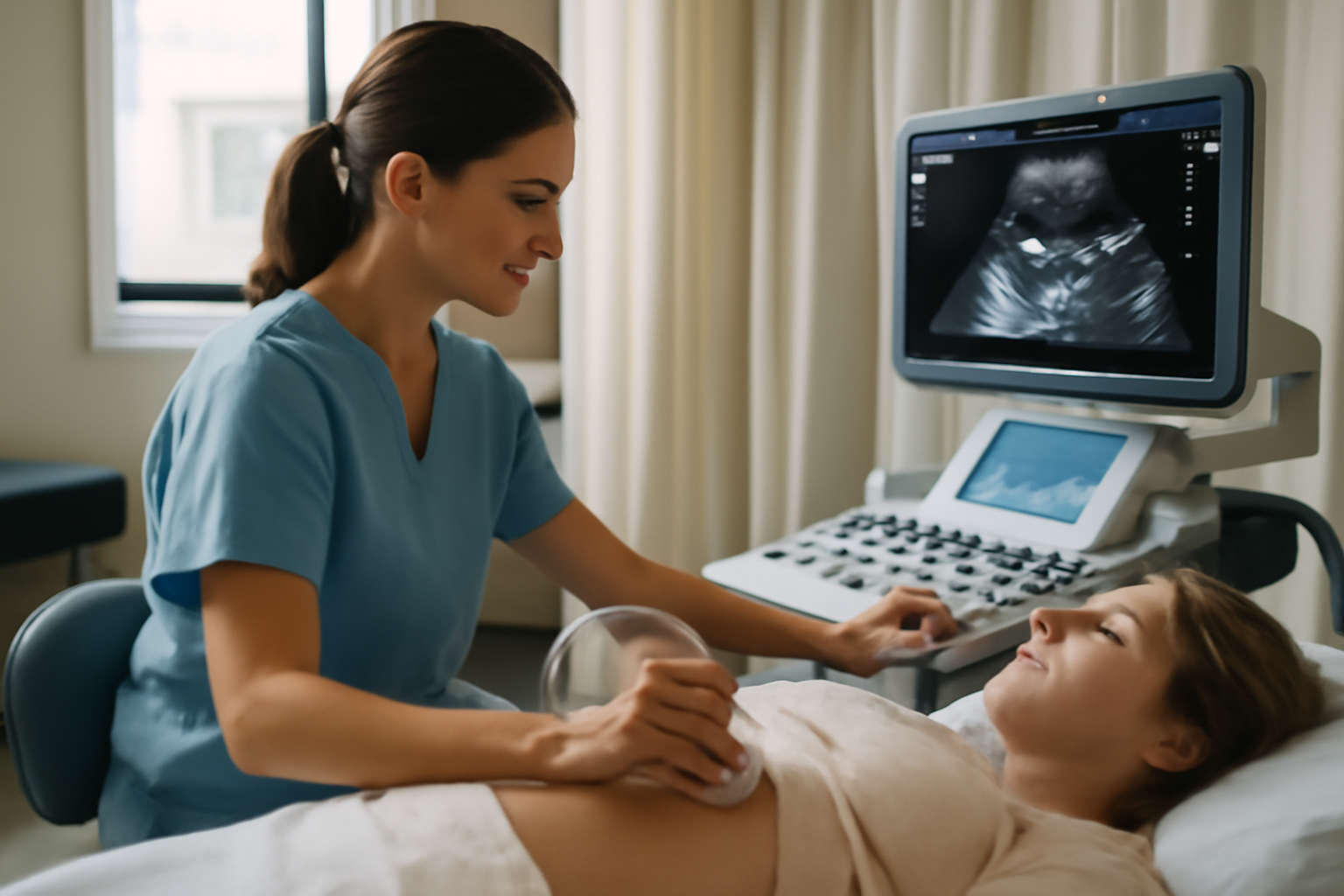
Clinicians typically use pelvic ultrasound to measure uterine dimensions and endometrial thickness. Timing matters because measurements vary across the cycle. If you’re concerned about “uterus size during period,” ask whether your endometrium thickness and uterine volume fit your cycle day—and whether any structural causes (like fibroids) are visible.
Ultrasound is the standard imaging method for uterine and endometrial assessment in routine gynecology. Still, results can look different depending on when the scan is performed—early bleeding versus mid-cycle, for example. That’s why one “before and after” photo from social media can’t reliably tell you what your body should do.
If symptoms persist, clinicians may recommend repeat imaging at a specific cycle timing. That helps interpret endometrium and uterine measurements in the right context. It can feel slow, but it improves accuracy. And honestly, it’s often the fastest way to stop guessing.
Questions you can bring to your appointment
- “What cycle day was my ultrasound done, and how does that affect interpretation?”
- “What was my endometrial thickness in millimeters during bleeding?”
- “Did you measure uterine volume or dimensions, and were any fibroids seen?”
- “Could my symptoms fit adenomyosis or endometriosis, and what would be the next step?”
Myths to ignore: “double/quadruple uterus” posts and what to replace them with
Viral posts often claim dramatic uterus enlargement (like doubling or quadrupling) to explain heaviness, but they usually skip the measurement details. A better replacement is evidence-based context: mild physiologic changes in endometrium and blood flow, plus normal symptom variability. If symptoms are severe or new, consider evaluation rather than relying on a viral claim.
Many viral claims don’t explain what was measured, when it was measured, or how the numbers were calculated. Even when a study reports a percent change, it may not apply to everyone—and it may not reflect what you’re feeling. Symptom severity can also be influenced by prostaglandins and individual pain sensitivity.
Instead of chasing a “perfect uterus size” target, track what matters: your bleeding pattern, clot size, how often you change pads/tampons, and whether pain is stable or worsening. If you’re concerned, use clinical evaluation to rule out treatable causes. After all, who wants to guess when you can get answers?
Replace the myth with a practical action plan
- Track symptoms: start/end dates, flow level, clots, pain score.
- Note triggers: stress, sleep changes, constipation, diet and hydration.
- Time your questions: ask how your scan timing affects interpretation.
- Seek care when needed: heavy bleeding, anemia signs, or worsening pain.
FAQ
How much does the uterus size change during a period?
For most people, the uterus does not “double” or “quadruple” in a measurable way during menstruation. What often changes more noticeably is the endometrium (lining thickness) and local blood flow, which can cause mild shifts in uterine volume and strong changes in how the pelvis feels.
Why do I feel so heavy during my period if my uterus doesn’t grow a lot?
Heaviness can come from hormonal fluid shifts, constipation or bloating, uterine muscle contractions, and prostaglandin-driven pain signaling. Those processes can change pelvic sensations even when the measurable uterine size change is modest.
When is the best time to measure uterine size with ultrasound during my cycle?
There is no single best day for everyone, but timing matters because the endometrium and vascularity change across the cycle. If you’re being evaluated for symptoms, ask your clinician what cycle day they want and why, then interpret results in that context.
What does endometrial thickness mean during menstruation?
Endometrial thickness is a measurement of the uterine lining seen on ultrasound, usually reported in millimeters. During menstruation, the lining is shedding, so thickness can change meaningfully across days of bleeding.
How can I tell if heavy bleeding is normal or a sign of something else?
Normal periods still vary, but heavy bleeding often means soaking through pads or tampons frequently and/or passing large clots. If you also have fatigue, dizziness, shortness of breath, or worsening pain, talk to a clinician and consider anemia screening.
Is it possible to have severe period symptoms without a large uterus?
Yes. Severe symptoms can be driven by prostaglandins, individual pain sensitivity, and conditions such as fibroids, adenomyosis, or endometriosis. Symptom intensity does not always match uterine size, so evaluation can be important.
Key takeaways
- Viral claims of a “doubling” or “quadrupling” uterus are usually exaggerated; real changes are typically modest and depend on what’s being measured.
- The uterus changes during menstruation mainly because the endometrium sheds and local blood flow shifts—not because it suddenly balloons in a uniform way.
- Heaviness and bloating are common and often come from fluid shifts, constipation, and uterine contractions, not a specific uterus-size number.
- If bleeding is very heavy or pain is severe/worsening, don’t self-diagnose from uterus-size posts—ask a clinician about causes like fibroids or endometriosis.
- Ultrasound measurements vary by cycle day; if you’re concerned, time the scan and ask how your results relate to your symptoms.
- Use credible medical sources and focus on symptoms plus clinical evaluation rather than viral percent-change graphics.
When you’re trying to interpret uterus size during period, keep it simple: understand what’s measurable (endometrium thickness, uterine dimensions/volume) and connect it to your symptoms with clinical context. That approach protects you from misinformation and helps you get answers when something feels off.