
Yes—you can get a positive ovulation predictor kit (OPK) and still not ovulate. An OPK detects an LH surge in urine, which often shows ovulation may be near (commonly ~24–36 hours), but it doesn’t confirm that an egg was released. To verify ovulation, look for temperature shifts, cervical mucus changes, and/or progesterone testing.
Quick Take: A positive OPK means your LH crossed the test threshold, usually about a day before ovulation.
It still might not lead to an egg release—some cycles are anovulatory.
Confirm with sustained BBT rise and/or progesterone testing, not OPKs alone.
If this keeps happening or your cycles are very irregular, it’s worth talking with a clinician.
| OPK detects | Urinary luteinizing hormone (LH) surge |
| Typical LH → ovulation timing | About 24–36 hours |
| OPK proves egg release? | No—timing prediction, not certainty |
| Stronger confirmation | Sustained BBT rise and/or progesterone testing |
| When to seek help | Repeated unconfirmed ovulation or very irregular cycles |
| External references | CDC ovulation and fertility health resources, NHS guidance on fertility and ovulation, WHO health topics, Ovulation overview (Wikipedia) |
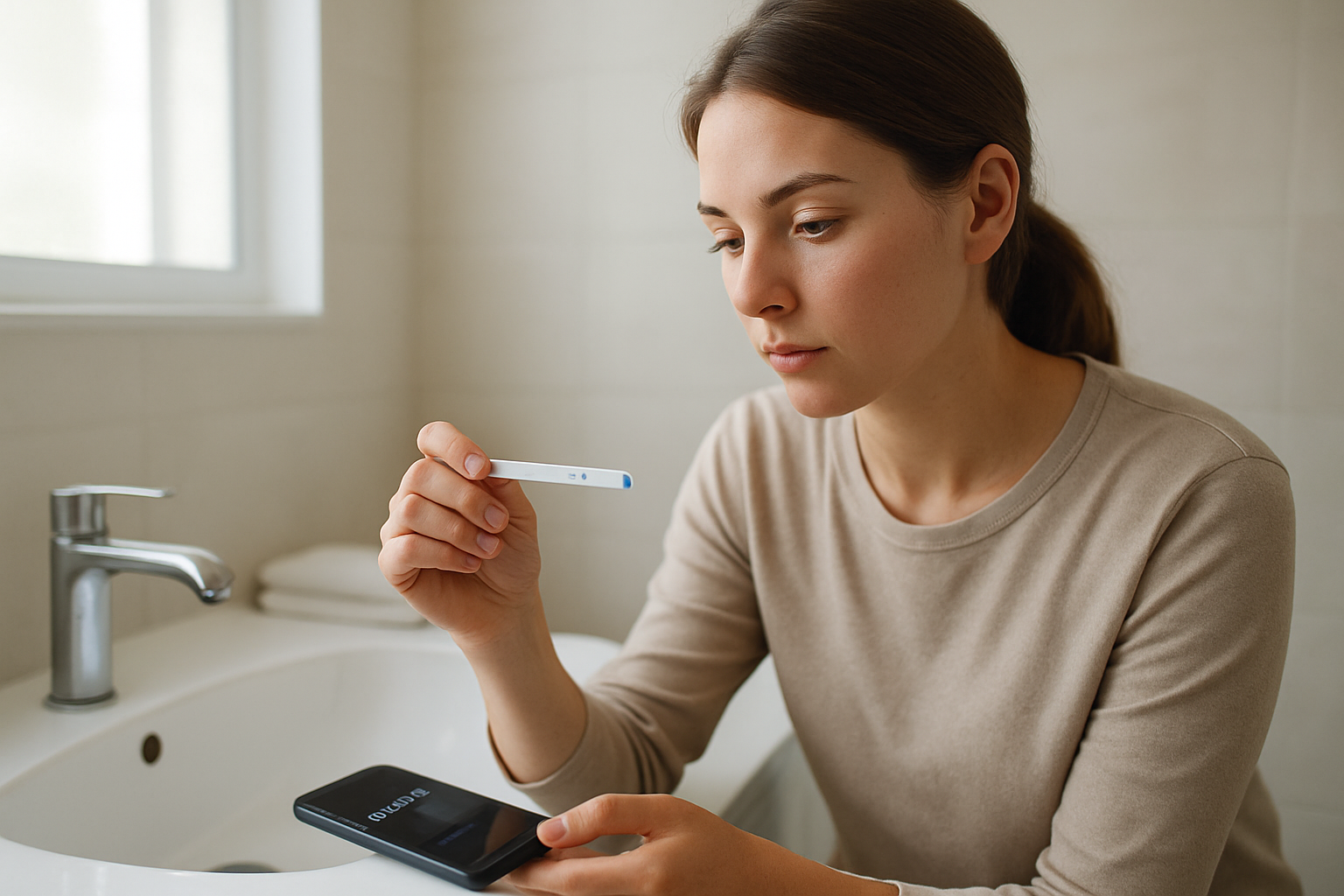
Why a positive LH surge (OPK) doesn’t guarantee egg release
An OPK turns positive when luteinizing hormone (LH) in your urine crosses the test threshold. LH surges usually come about 24–36 hours before ovulation, but the surge can show up even when no egg is released (anovulatory or “silent” cycles). In other words: it predicts timing, not certainty.
OPKs measure LH in urine. They don’t directly confirm that a follicle ruptured and released an egg. If ovulation doesn’t complete, you can still see a positive strip—especially when hormone signaling is present but follicle development stalls. (It’s frustrating, but it happens.)
What you see on the strip also depends on test timing and urine concentration. Hydration, time of day, and your personal LH pattern can all shift when the line crosses the threshold. One “positive” may never lead to ovulation, or it may be part of an unusual cycle rhythm.
- OPK positive = LH surge detected, not “egg released.”
- Some cycles show LH but end without ovulation (anovulation).
- Timing and hydration can change when the line crosses the threshold.
How to confirm ovulation when OPKs look positive but nothing “happens”
Confirmation usually comes from post-ovulation progesterone effects: a sustained basal body temperature (BBT) rise for several days, a shift in cervical mucus toward a drier pattern, and—ideally—a progesterone blood test about 7 days after the suspected ovulation. These signals are more direct than OPKs.
BBT is one of the easiest at-home checks. After ovulation, progesterone raises body temperature, so you typically see a multi-day sustained rise rather than a single brief bump. If the temperature shift fades quickly, that’s a clue the cycle may not have finished ovulation.
Progesterone testing adds biochemical confirmation. Many clinicians check a blood progesterone level roughly 7 days after suspected ovulation (the exact timing can vary by clinician and cycle length). Cervical mucus is another useful clue: stretchy, wet “egg-white” mucus often gives way to less stretchy, drier mucus after ovulation.
What to track alongside OPKs
- BBT trend: aim for a sustained rise over several days.
- Mucus pattern: wet/stretchy days often cluster before ovulation.
- Timing: note the date of the first clear positive and the last positive.
- Symptoms: mild cramps or breast tenderness can happen after ovulation, but symptoms alone aren’t proof.
If OPKs are positive but you never see the expected post-ovulation pattern (temperature shift and mucus change), anovulation becomes more likely. And honestly—if you’re seeing that mismatch, why keep guessing?
Common causes of a positive OPK with no ovulation (anovulatory cycles)
A positive OPK with no ovulation can happen when the body produces LH, but the follicle doesn’t release an egg. Common causes include PCOS, thyroid disorders, high prolactin, significant stress, rapid weight change, and some medication effects. In these situations, LH may surge intermittently without successful ovulation.
PCOS is a frequent reason for irregular ovulation. Hormone signaling can be “out of sync,” so LH may rise on a pattern that doesn’t reliably lead to egg release. That’s how you can get repeated positive OPKs while ovulation stays unconfirmed.
Thyroid disorders and elevated prolactin can also disrupt follicle development and shift ovulation timing. Lifestyle and medication factors can contribute too—major stress, significant weight loss or gain, and certain drugs can alter reproductive hormone pathways. If your cycle feels unpredictable, your hormones may be trying to shift gears without completing ovulation.
Common contributors to consider
- PCOS: irregular ovulation and LH surges without egg release
- Thyroid disorders: abnormal thyroid hormone affects reproductive signaling
- High prolactin: can interfere with ovulation
- Stress and weight change: can affect LH/FSH balance
- Medication effects: some treatments can influence hormone patterns
OPK timing, test accuracy, and “false positives” that mimic ovulation
Sometimes the issue isn’t that you didn’t ovulate—it’s that the OPK result doesn’t match what your body actually did. LH strips can be affected by testing too early or too late, diluted or concentrated urine, and individual LH patterns. Rarely, certain medications or hormone conditions can cause positive results without a true ovulation event.
Urine concentration changes with fluid intake and time of day. If you test when urine is more concentrated, the LH line may cross the threshold sooner. Test later with more diluted urine and the same LH rise may look weaker or delayed—so your “positive day” can shift.
Consistency helps. Test at similar times daily, follow the kit’s instructions for when to read the result, and avoid changing your sample timing habits mid-cycle. If your OPK pattern conflicts with BBT or mucus, treat it as a cue to confirm—not as a final verdict.
Quick accuracy checklist
- Same time daily (or a consistent window) to reduce variation.
- Follow reading timing (lines can change after the recommended window).
- Don’t over-interpret a single strip; look for a pattern across days.
- Match OPKs with confirmation signals (BBT and/or progesterone).
What to do next: when to keep trying vs when to see a clinician
If you keep getting positive OPKs without ovulation confirmation, switch from “OPK-only” to confirmation (BBT and/or progesterone) and review your cycle patterns. If you’re trying to conceive, get medical advice sooner if cycles are very irregular or you’ve had months of unclear ovulation. A clinician can evaluate hormones and ovarian function.
Use confirmation data before assuming your fertile timing is accurate. OPKs can still help identify the likely fertile window, but if ovulation isn’t confirmed, you may be timing intercourse without knowing whether an egg was released.
Many fertility evaluation guidelines use a 12-month window for most people, or about 6 months if you’re older—though individual circumstances matter. If anovulatory patterns show up repeatedly, it’s reasonable to ask about hormone labs (like thyroid and prolactin) and, when appropriate, ultrasound monitoring to check follicle development. The CDC also offers broader context on reproductive health and infertility evaluation.
Questions to ask at a visit
- “Can we check thyroid function and prolactin given my OPK results?”
- “Should we assess progesterone after suspected ovulation to confirm it?”
- “Would ultrasound monitoring help confirm whether follicles are maturing and rupturing?”
Interpreting your cycle after a “positive OPK” (and before pregnancy tests)
After a positive OPK, what you do next depends on whether ovulation is confirmed. If you don’t see a progesterone-like shift (BBT rise, post-ovulation symptoms), don’t assume pregnancy timing. If you confirm ovulation, pregnancy testing can be planned based on expected timing. Confusing cycles are common—confirmation helps you avoid false hopes.
Don’t base pregnancy timing on the OPK line alone. Pregnancy tests are more meaningful after implantation has had time to occur, and implantation timing depends on when ovulation truly happened. If you never confirm ovulation with BBT or progesterone, a negative test may reflect timing—or an anovulatory cycle.
If your period comes without post-ovulation temperature rise and mucus changes, anovulation is a more likely explanation. That doesn’t mean you “did everything wrong.” It means your tracking needs confirmation signals so you can interpret each cycle accurately.
A practical way to plan testing
- If ovulation is confirmed: plan pregnancy testing based on confirmed timing.
- If ovulation is not confirmed: treat OPKs as fertile-window markers only, and focus on confirming ovulation next cycle.
- If cycles stay unclear: consider clinician evaluation to identify hormone or ovarian-function drivers.
For ovulation biology background, see Ovulation, and for general fertility health guidance, review NHS resources.
FAQ
Can you have a positive ovulation test and still not ovulate?
Yes. An OPK detects an LH surge in urine, which predicts ovulation may be near, but it does not prove that an egg was released. You may need BBT confirmation and/or a progesterone blood test to verify ovulation.
How long after a positive OPK should you ovulate?
Ovulation often occurs about 24–36 hours after an OPK becomes positive. Individual patterns vary, and a positive result can occur in cycles where ovulation does not happen, so confirmation is still important.
What signs confirm ovulation if OPK is positive but you’re unsure?
Look for a sustained BBT rise for several days and a shift in cervical mucus from fertile/wet to less stretchy/drier. A progesterone blood test about 7 days after suspected ovulation (timing varies) provides stronger confirmation.
Why do I keep getting positive LH tests but my period comes anyway?
That pattern can happen when you have an LH surge without completing ovulation (anovulatory cycle). Hormone imbalances such as PCOS, thyroid issues, or high prolactin, plus stress or major weight changes, can contribute.
When should I test progesterone after a positive ovulation predictor kit?
Many clinicians check progesterone roughly 7 days after the suspected ovulation. Confirming ovulation first helps interpret the result correctly. Ask your clinician about the best timing for your cycle length.
Should I see a doctor if my OPKs are positive but ovulation is not confirmed?
Yes—especially if it happens repeatedly or your cycles are very irregular. A clinician can review hormone labs and consider ultrasound monitoring to evaluate follicle development and ovulation.
Key takeaways
- A positive OPK shows an LH surge, not proof that an egg was released.
- Confirm ovulation with a sustained BBT rise and/or progesterone testing, not OPKs alone.
- Repeated positive OPKs without confirmation can point to anovulatory cycles such as PCOS or thyroid/prolactin issues.
- Check testing consistency (timing, urine concentration, reading instructions) to reduce misleading results.
- If ovulation remains unconfirmed for multiple cycles—especially with irregular periods—consider clinician evaluation.
- Plan pregnancy testing based on confirmed ovulation timing, not OPK results alone.
- Use cycle tracking as a decision tool: OPK + confirmation signals give the clearest picture.
If you’re asking whether you can have a positive ovulation test and still not ovulate, the practical answer is yes—and the next step is confirmation, not guesswork.
1 commentaire sur « Can You Have a Positive Ovulation Test and Still Not Ovulate? »