
Hot flashes are most often a sign of perimenopause or menopause, driven by changing estrogen levels that affect the brain’s temperature regulation. They can also show up with other hormone-related issues, medication side effects, thyroid problems, infections, or certain cancers. Your age, cycle changes, triggers, and any red-flag symptoms help narrow down the cause.
- Most often: perimenopause or menopause from fluctuating estrogen.
- Common pattern: sudden heat in the face/neck/chest with sweating, sometimes followed by chills.
- When to worry: chest pain, fainting, severe shortness of breath, persistent fever, drenching night sweats, or unexplained weight loss.
Hot flashes usually reflect a hormone shift, but the “why” can vary. When you line up timing, triggers, and other symptoms, it’s easier to spot what fits—and what needs prompt medical review.
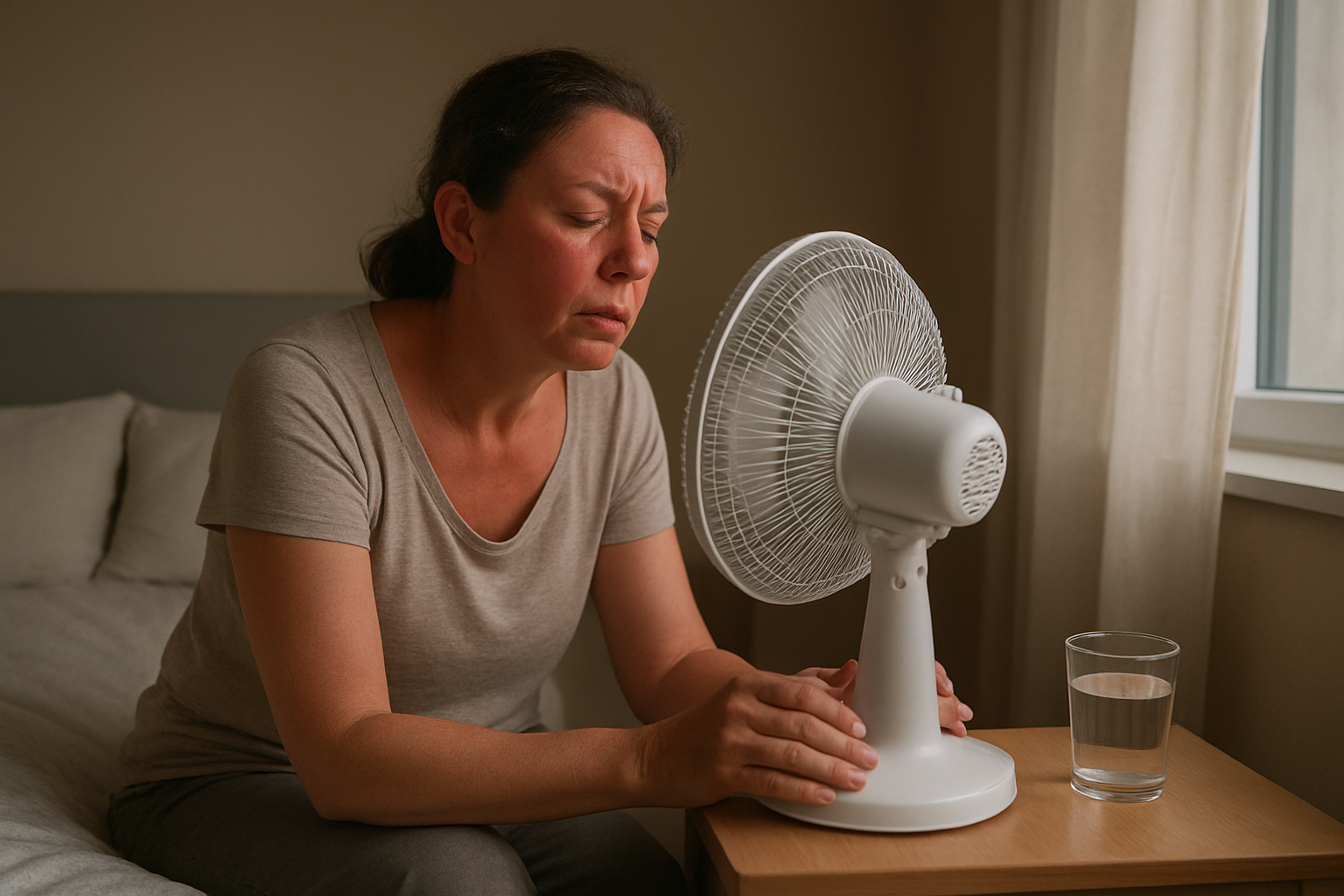
Menopause vs. perimenopause: when hot flashes usually start and why
Hot flashes are a classic vasomotor symptom of perimenopause and menopause. Many people first notice them in their late 40s, when menstrual cycles become irregular, and symptoms can continue for years. Fluctuating estrogen changes how the brain regulates body temperature, which can trigger sudden heat, flushing, and sweating.
Cycle changes are often the first clue: shorter or longer periods, skipped months, or a different flow pattern. Those shifts tend to match the hormone swings that affect temperature regulation.
During an episode, heat often rises in the face, neck, or chest. Sweating can follow quickly, and some people feel chilled afterward because the body loses heat after the flush. A faster heartbeat or a wave of anxiety can also show up with the heat—still consistent with vasomotor symptoms.
Night sweats are hot flashes that happen during sleep. They can be frequent enough to disrupt rest and worsen daytime fatigue (and yes, waking up soaked is a real differentiator). For many, episodes last from several months to several years, with intensity that often comes and goes.
How long do they last in menopause-related cases?
There’s no single timeline. Many people experience hot flashes for months to several years, and some continue longer. Your pattern—how often they happen, how intense they are, and whether sleep is affected—helps guide treatment choices.
External reference: NHS: understanding menopause symptoms and WHO: menopause fact sheet.
Other hormone-related causes: thyroid disease, pregnancy changes, and more
Hot-flash-like episodes can happen outside menopause when hormones shift. Hyperthyroidism (an overactive thyroid) can raise heat intolerance and lead to sweating. Pregnancy-related hormonal changes and postpartum shifts can also trigger similar symptoms. If hot flashes come with weight loss, tremor, palpitations, or major cycle changes, thyroid or other endocrine causes should be on the list.
Thyroid disorders are a key “rule-out” category because symptoms can overlap with vasomotor complaints. Overactive thyroid can make you feel overheated, restless, and sweaty—even when your environment is cool. When heat intolerance shows up with tremor or a racing-heart feeling, thyroid testing is a strong next step.
Pregnancy can change temperature and sweating due to shifts in estrogen, progesterone, and circulation. Postpartum transitions can contribute too. These causes are less common than menopause for typical late-40s onset, but timing that doesn’t match perimenopause deserves a closer look.
Other endocrine issues are rarer, but they matter when symptoms are atypical or persistent. If episodes start suddenly, intensify quickly, or come with systemic symptoms, a targeted evaluation helps avoid guesswork.
What symptoms point away from “typical” menopause?
- Unexplained weight loss, tremor, or palpitations (possible thyroid involvement)
- New symptoms outside the expected age window
- Severe or rapidly worsening episodes
- Major cycle changes that don’t fit perimenopause
Medication and treatment side effects: how drugs can trigger flushing
Some medications can cause hot flashes by affecting hormone levels or the body’s temperature regulation. Examples include hormone-blocking cancer therapies (like aromatase inhibitors), certain antidepressants, and other drugs that influence estrogen pathways. If you started a new medication or changed doses around the time symptoms began, that timeline is a useful clue to bring to your clinician.
Hormone-altering cancer treatments are well-known triggers. Aromatase inhibitors can cause vasomotor symptoms in many patients, sometimes starting soon after treatment begins. If your therapy lowers estrogen, your body may respond with classic flushing and sweating.
Some antidepressants can also influence hot flashes, sometimes through serotonin pathways involved in thermoregulation. The medication name matters less than the timeline—symptoms that start after a dose change often help clinicians narrow the cause.
Don’t stop prescriptions on your own. Bring a clear timeline (start date, dose changes, and the episode pattern) to your clinician. They may adjust the regimen or add symptom-management strategies that fit your health history.
External reference: WebMD: hot flashes causes and treatment for a medication-focused overview.
When hot flashes are a warning sign: red flags and urgent symptoms
Hot flashes are usually benign, but certain features mean you should get medical care promptly. Seek urgent evaluation if you have chest pain, fainting, severe shortness of breath, or persistent high fever. Contact a clinician soon for unexplained weight loss, drenching night sweats, new lumps, or symptoms that don’t fit menopause—because infections, blood disorders, or cancers can sometimes present with flushing and night sweats.
“Benign” doesn’t mean “ignore everything.” If an episode comes with chest pain or fainting, treat it as urgent. Severe shortness of breath is another reason to get help right away rather than waiting for the next appointment.
Fever raises the stakes. A persistent high fever isn’t a typical menopause feature and can signal infection or another systemic illness. Drenching night sweats—where clothing or sheets are soaked—are more concerning than mild sweating.
Red flags also include unexplained weight loss, new lumps, or persistent symptoms that don’t match your prior cycle or menopause timeline. If your age and symptom profile don’t align, clinicians need the chance to rule out other causes. (It’s okay to ask for that evaluation.)
Quick self-check: do your symptoms match your usual pattern?
- New onset at an unusual age
- Night sweats that soak bedding
- Weight loss without trying
- Fever that persists
- Breathing or heart symptoms beyond typical flushing
How to track triggers and severity: what to record for your doctor
A simple log can clarify whether your episodes match menopause and helps your clinician choose treatment. Write down the date/time, duration, intensity, associated symptoms (palpitations, anxiety, headache), and what came right before (heat, alcohol, spicy food, stress, exercise). Note cycle changes and whether symptoms happen at night. Pattern recognition can make the appointment more productive.
Hot flashes often last minutes per episode, and many references cite a rough range of about 2–30 minutes. Tracking duration helps separate brief flushes from other sudden symptoms. Intensity matters too: mild warmth versus needing to change clothes can point to different severity levels.
Triggers can be surprisingly consistent. Common ones include alcohol, spicy foods, warm environments, and stress. Exercise timing can matter as well, especially if symptoms appear during or right after workouts. If you notice a trigger, it’s not “in your head”—it’s data.
Night versus daytime frequency is a big differentiator. If episodes repeatedly wake you, sleep quality often drops, which can amplify fatigue and mood symptoms. Add any cycle or medication changes to your log so your clinician can connect the dots.

Treatment options and next steps: lifestyle, nonhormonal meds, and HRT
Management depends on the cause and how disruptive symptoms are. Lifestyle steps—cooling strategies, limiting known triggers, and paced exercise—can help mild cases. Nonhormonal prescription options may reduce frequency and intensity for people who can’t or prefer not to use hormones. Hormone therapy (HRT) can be effective for many people with menopause-related hot flashes, but suitability depends on age, health history, and risk factors, so the decision should be individualized.
Start with practical changes that reduce the “heat load.” Dress in layers, keep your bedroom cooler, use breathable fabrics, and consider a fan for night sweats. If alcohol or spicy foods are consistent triggers, adjusting them can reduce episodes without waiting for medication.
When symptoms are more than just annoying—especially if sleep is disrupted—nonhormonal options are often considered. Clinicians may recommend prescription therapies that target vasomotor symptoms through pathways other than estrogen. These can be a good fit when HRT isn’t appropriate or when you want to avoid hormones.
For menopause-related hot flashes, HRT can be highly effective for many people. The deciding factors typically include timing relative to menopause onset, personal cardiovascular risk, clot history, breast cancer history, and other health conditions. Your clinician should weigh benefits and risks based on your profile, not someone else’s.
What to do at your next appointment
- Bring your trigger log (dates, timing, duration, intensity, night sweats).
- Share medication start dates and dose changes.
- Ask whether thyroid testing or other labs are appropriate based on your symptoms.
- Discuss treatment options matched to your risks and preferences.
External reference: Mayo Clinic: causes of hot flashes.
FAQ
How can I tell if my hot flashes are related to menopause or something else?
Look for the pattern: menopause-related hot flashes often start in the late 40s, come with cycle changes, and include face/neck/chest heat with sweating and possible chills afterward. If your timing is atypical, symptoms come with tremor, palpitations, major weight loss, fever, or drenching night sweats, ask your clinician about thyroid, pregnancy/postpartum causes, medication triggers, and other non-menopause explanations.
What age is most typical for hot flashes?
Hot flashes most commonly begin in the late 40s during perimenopause. Onset varies by person, though. Earlier or later onset doesn’t automatically mean something is wrong, but it does increase the need to review cycle history, medications, and symptoms that suggest thyroid or other endocrine causes.
Why can hot flashes happen before age 40?
They can appear before 40 due to early perimenopause, pregnancy or postpartum hormonal shifts, medication side effects (including hormone-modifying therapies), or thyroid problems. If episodes are new, severe, or paired with red flags like weight loss, fever, or drenching night sweats, clinicians should evaluate for causes beyond typical menopause.
When should I see a doctor for hot flashes and night sweats?
Get urgent care if hot-flash episodes come with chest pain, fainting, severe shortness of breath, or persistent high fever. For non-urgent but concerning cases—especially unexplained weight loss or drenching night sweats—contact a clinician promptly. If symptoms disrupt sleep or affect daily functioning, schedule an appointment even without red flags.
How long do hot flashes usually last during perimenopause?
Many people experience hot flashes for several months to several years during the transition period around menopause. Frequency and intensity can change over time. Your log of episode timing and severity helps your clinician estimate how your pattern compares with typical perimenopause trajectories.
Can hot flashes be a sign of cancer or an infection?
They can be associated with infections or cancers in some cases, especially when accompanied by persistent fever, drenching night sweats, unexplained weight loss, new lumps, or symptoms that don’t fit your expected menopause timeline. These red flags should lead to timely medical evaluation rather than assuming menopause alone.
Key takeaways
- Hot flashes are most often linked to perimenopause or menopause, driven by fluctuating estrogen.
- Atypical timing, unusual symptoms, or severe night sweats can point to causes beyond menopause.
- Thyroid problems and medication side effects are common non-menopause explanations to consider.
- Track episode timing, duration, triggers, and associated symptoms to speed up diagnosis.
- Get urgent help for chest pain, fainting, severe shortness of breath, or persistent high fever.
- For non-urgent but concerning patterns (weight loss, drenching night sweats), arrange prompt medical evaluation.
- Treatment is individualized: lifestyle measures, nonhormonal options, and HRT can all play a role depending on your risk and preferences.
If you’re trying to figure out what hot flashes are a sign of, start with the basics: age, cycle changes, triggers, and red flags. Then use a symptom log to turn uncertainty into a focused conversation with your clinician. What pattern do you notice first—timing, triggers, or what happens right after?