
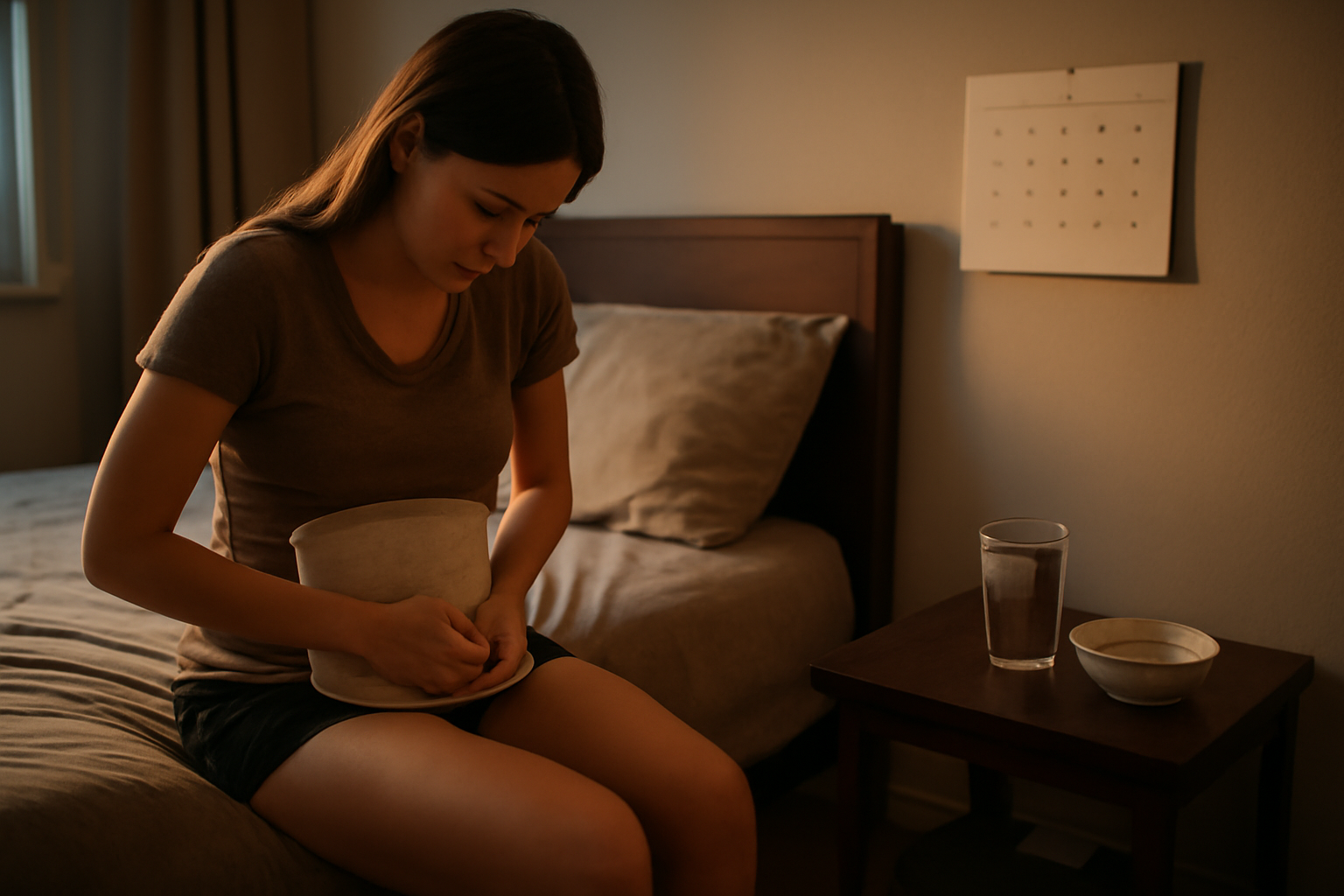
Severe period cramps and nausea can hit at the same time. Prostaglandins help the uterus contract, but they can also irritate your gut—so nausea, diarrhea, or even vomiting may follow.
Some patterns are predictable. Still, vomiting that keeps you from holding down fluids, fainting, or rapidly heavy bleeding are warning signs, not “just a bad period.”
When symptoms are cyclic and debilitating, it’s worth thinking about conditions like endometriosis, fibroids, adenomyosis, ovarian cysts, or pelvic inflammatory disease.
Start with safer relief (NSAIDs early, heat, hydration), then track what happens for 2–3 cycles. That log often makes diagnosis and treatment much more straightforward (and less guesswork).
| Criterion | What it can suggest |
|---|---|
| Symptoms peak around the start of bleeding | Often matches prostaglandin-driven menstrual biology |
| Vomiting prevents keeping fluids down | Needs prompt medical advice |
| Pain is progressively worsening or disrupts life each cycle | Consider evaluation for endometriosis, fibroids, adenomyosis, or other causes |
| Cycle is late or bleeding pattern is unusual | Rule out pregnancy with a home test |
| Associated fever or unusual discharge | Possible pelvic inflammatory disease (PID) concern |
Why nausea can travel with intense menstrual cramps (prostaglandins, gut response, and timing)
Nausea during severe period cramps is often tied to prostaglandins—chemicals that help the uterus contract. When prostaglandins are higher, they can also affect the digestive tract. That can slow digestion and trigger nausea, diarrhea, or vomiting.
Timing gives clues. If symptoms start with your period and ease as bleeding eases, it usually points back to menstrual biology rather than a random stomach bug. (And yes, your “usual” cycle can still change from month to month.)
Prostaglandins play a role in shedding the uterine lining. Around the start of menstruation, the uterus may contract more strongly. Those same chemical signals can influence the gut, which is why some people feel queasy, bloated, or sick during a particularly rough cycle.
How prostaglandins link your uterus and your stomach
- Uterus: stronger contractions can mean intense cramping.
- Gut: altered motility can contribute to nausea, diarrhea, or vomiting.
- Timing: symptoms often track with bleeding intensity rather than unrelated stomach illness.
If nausea shows up alongside typical menstrual cramps and follows a cycle-based rhythm, it’s a strong hint that your body is reacting to your period—not something separate. When symptoms start at the same time as your flow and improve as your bleeding slows, the connection is hard to miss.
What’s normal vs. a red flag: when severe cramps with vomiting mean “get checked”
Some nausea during a period can be normal—especially when it’s predictable and settles within 1–3 days. The bigger question is whether it stays manageable. Red flags include vomiting that prevents keeping fluids down, fainting, severe one-sided pain, bleeding that soaks protection quickly, or symptoms that keep getting worse each cycle.
It’s common to feel nauseated when cramps are intense. Many people notice a pattern: symptoms start with menses, peak early, then ease as bleeding slows. That pattern often fits dysmenorrhea (period pain) biology.
But once vomiting threatens dehydration, safety matters. If you can’t keep fluids down, get urgent medical advice. Heavy menstrual bleeding is also a common reason clinicians want you evaluated—especially when it happens rapidly.
Red flags to take seriously
- Can’t keep fluids down: persistent vomiting, dizziness, or signs of dehydration.
- Fainting or near-fainting: especially during a severe pain episode.
- Severe one-sided pain: can signal ovarian cyst issues or other causes.
- Rapid heavy bleeding: soaking through protection quickly over a short time.
- Worsening across cycles: symptoms that trend worse instead of staying similar.
If any of these apply, don’t plan to “wait it out” until next month. Getting checked promptly can prevent complications and help you get the right treatment faster.
Common medical causes behind severe cramps + nausea (endometriosis, fibroids, PID, and more)
Severe cramps with nausea can come from underlying pelvic conditions. Endometriosis often causes intense pain and may include nausea, pain with bowel movements, or pain during sex. Fibroids can lead to heavy bleeding and cramping. Pelvic inflammatory disease (PID) may bring pelvic pain along with fever or unusual discharge. Adenomyosis and ovarian cysts are other possibilities.
When period pain is “severe” every cycle—or it keeps escalating—PMS alone may not explain it. Some conditions create cyclic inflammation and pressure, and that can spill over into the gut.
Endometriosis is a major one. Diagnosis can take years, so it helps to recognize the pattern early when pain is intense and reliably monthly. Fibroids (uterine muscle growths) can change the shape of the uterus, contributing to heavy bleeding and stronger cramping. Adenomyosis involves uterine lining tissue within the uterine muscle and often causes heavy, painful periods.
Condition → symptom clues
- Endometriosis: pain with sex, bowel movements, or urination; cyclic flare-ups; sometimes nausea.
- Fibroids: heavy bleeding, clots, pelvic pressure; cramping may be prominent.
- Adenomyosis: very painful periods, heavier flow, enlarged tender uterus (often suspected clinically).
- Ovarian cysts: one-sided pain, pain that may peak mid-cycle or worsen with movement.
- PID: pelvic pain plus fever and/or unusual discharge; risk increases after untreated STIs.
PID is a medical concern and can follow untreated sexually transmitted infections. If you have fever, foul-smelling discharge, or pelvic pain that doesn’t behave like your usual cramps, seek care. Also remember: if symptoms are unusual, pregnancy-related issues need to be ruled out—especially when timing or bleeding patterns change.
For a broader overview of menstrual health and when to seek help, see WHO guidance on menstrual health and NHS on period pain (dysmenorrhoea).
Could it be pregnancy or a medication effect? How to rule out look-alikes safely
Sometimes severe cramps and nausea aren’t “just a period.” Early pregnancy can cause nausea and cramping, and ectopic pregnancy is a life-threatening emergency. Hormonal birth control—starting, stopping, or switching—can also change bleeding patterns and nausea.
If your period is late, unusually light or heavy, or simply different from your normal, take a pregnancy test and contact a clinician if the pain is severe. When symptoms overlap, ruling out pregnancy is the safest first step.
Ectopic pregnancy needs emergency treatment when severe pain occurs, especially with dizziness or shoulder pain. If you have those symptoms—or you’re bleeding abnormally with significant pain—go to emergency care right away.
How hormonal contraception can change symptoms
Birth control shifts hormone levels and can change bleeding patterns. Some people get more spotting, irregular bleeding, or different cramp intensity during the first months after starting or switching methods. Nausea can also show up as your body adjusts (it may fade, but severe or worsening symptoms shouldn’t be ignored).
Still unsure whether your cramps are menstrual or not? Try a simple pattern check: did symptoms start exactly with your usual period, and do they improve as bleeding settles? If the pattern changes, pregnancy testing and clinician input are the safest next steps.
Relief strategies that are safest first: NSAIDs, heat, hydration, and anti-nausea basics
For many people, NSAIDs (like ibuprofen or naproxen) reduce prostaglandins, which can ease cramps—and sometimes nausea too. Heat therapy (heating pad or warm bath) can relax pelvic muscles. If vomiting happens, sip fluids, choose bland foods, and consider ginger or an oral rehydration solution. If symptoms are severe, ask a clinician about anti-nausea options.
NSAIDs have strong evidence for dysmenorrhea. They work by targeting prostaglandin production, which is why they can help both cramping and the nausea that travels with it. The timing matters: taking them early—when symptoms begin—often works better than waiting until pain is at its worst.
Heat is another practical tool. A heating pad or warm bath can reduce discomfort and help you relax. Pair it with hydration strategies that match your stomach tolerance. If nausea is strong, small sips are usually more realistic than chugging.
During an attack: a simple step-by-step plan
- NSAID early: follow the label or clinician instructions; avoid doubling doses.
- Heat: apply to the lower abdomen or lower back in short sessions.
- Hydration: sip water or use an oral rehydration solution if vomiting makes plain water insufficient.
- Bland foods: crackers, toast, rice, bananas, broth—small portions.
- Nausea support: ginger tea/chews may help some people; rest in a comfortable position.
If you’re vomiting repeatedly, it’s reasonable to ask a clinician about anti-nausea medication instead of trying to push through. And if you have red flags (like inability to keep fluids down), prioritize medical advice over home-only management.
For medication and dysmenorrhea background, you can also review ACOG’s FAQ on painful periods (dysmenorrhea).
Next steps for diagnosis and care: what to track, what clinicians may test, and how treatment changes
If severe period cramps with nausea show up often—or they’re getting worse—tracking helps clinicians spot patterns. For 2–3 cycles, note pain intensity, timing, bleeding amount, vomiting, and anything that seems to trigger it. Depending on your situation, clinicians may do a pelvic exam, pregnancy testing, STI testing, and sometimes ultrasound. Treatment can range from tailored NSAID plans and hormonal therapy to procedures for endometriosis or fibroids. The right diagnosis really does change what you can try next.
You don’t need a medical degree—just consistent notes. A symptom log across multiple cycles is more useful than describing a single episode. People often assume “it’s just my period,” but a pattern record gives clinicians something concrete to work with.
Clinicians may start by checking pregnancy status, then look for structural or infectious causes. Ultrasound is commonly used for structural issues like fibroids or ovarian cysts. If PID is a concern—especially with fever or unusual discharge—STI testing and treatment become important.
What to track for 2–3 cycles (quick template)
- Cycle day: when cramps start, when nausea starts, when vomiting happens.
- Pain score: 0–10 and whether it’s crampy, sharp, or one-sided.
- Bleeding amount: number of pads/tampons per day and whether you soak through quickly.
- GI symptoms: nausea, diarrhea, bloating, vomiting frequency.
- Associated symptoms: fever, unusual discharge, pain with sex/bowel movements, dizziness.
- What you tried: NSAID type/dose timing, heat use, hydration, anti-nausea steps.
Common evaluations clinicians may use
- Pregnancy test: if timing or bleeding is unusual.
- Pelvic exam: to assess tenderness or abnormalities.
- STI testing: especially if PID is possible.
- Ultrasound: to evaluate fibroids or ovarian cysts.
- Additional testing: based on symptoms (your clinician will tailor this).
If you want a reputable clinical reference for PID management, see CDC PID treatment guidelines. The goal isn’t self-diagnosis—it’s understanding why certain tests may be prioritized.
FAQ
How do you know if severe period cramps and nausea are normal?
If your symptoms start with your period, peak early, and improve as bleeding settles—without alarming features like inability to keep fluids down—they may fit menstrual biology. Still, if episodes are severe, worsening, or disruptive, get evaluated.
Why do I vomit during my period even when my bleeding isn’t extremely heavy?
Vomiting can happen even with moderate bleeding because prostaglandins can affect both uterine contractions and the gut. The intensity of cramps and nausea doesn’t always match how heavy the bleeding looks.
When should I worry about severe cramps with nausea and seek urgent care?
Seek urgent care if vomiting prevents keeping fluids down, you faint or feel faint, you have severe one-sided pain, you rapidly soak through pads/tampons, or you suspect pregnancy with severe pain. These patterns can signal conditions beyond typical PMS.
Can endometriosis cause nausea and vomiting during periods?
Yes. Endometriosis can cause intense cyclic pain and inflammation, and some people also experience nausea or vomiting. Pain with bowel movements or sex can be a clue worth discussing with a clinician.
How can I tell the difference between period symptoms and early pregnancy nausea?
Look for timing and pattern changes. If your period is late or unusually different, take a home pregnancy test. Early pregnancy nausea can overlap with cramping, while ectopic pregnancy pain can be severe and needs emergency evaluation.
What is the fastest way to relieve period cramps and nausea at home?
Many people get the quickest relief by taking an NSAID early in the pain cycle (as directed), using heat on the lower abdomen, and sipping fluids. If vomiting occurs, switch to small sips or an oral rehydration solution and consider asking a clinician about anti-nausea options.
Key takeaways
- Nausea with severe cramps is often linked to prostaglandins affecting the gut—especially when it starts with your period and improves as bleeding settles.
- Vomiting that prevents keeping fluids down, fainting, severe one-sided pain, or rapidly heavy bleeding are red flags—get medical advice promptly.
- Conditions like endometriosis, fibroids, adenomyosis, ovarian cysts, and pelvic inflammatory disease can cause debilitating cyclic pain with nausea.
- If your cycle is late or unusually different, rule out pregnancy with a test; ectopic pregnancy requires emergency care.
- For many people, NSAIDs started early in the pain cycle plus heat and hydration are the safest first-line relief steps.
- Track symptoms for 2–3 cycles (pain timing, vomiting, bleeding amount) so clinicians can choose the right tests and treatments.
- If symptoms are frequent, worsening, or disrupting daily life, don’t wait—ask for an evaluation rather than managing alone.
Here’s the simple rule: when your monthly pattern changes—or your nausea turns unsafe—treat it as a health signal, not a personal inconvenience. After all, who wants to “power through” something that could be telling you to get help?
Sources: WHO menstrual health, NHS period pain (dysmenorrhoea), ACOG dysmenorrhea, CDC PID treatment guidelines.
1 commentaire sur « Severe Period Cramps and Nausea: Causes and Relief Tips »