
Quick Take: Implantation usually happens 6–10 days after ovulation. In some cycles it can start as early as day 6, and in others it may land around day 12.
Spotting or cramps can show up, but they’re not a dependable sign.
If you want fewer false negatives, test near the missed period or about 10–14 days after ovulation.
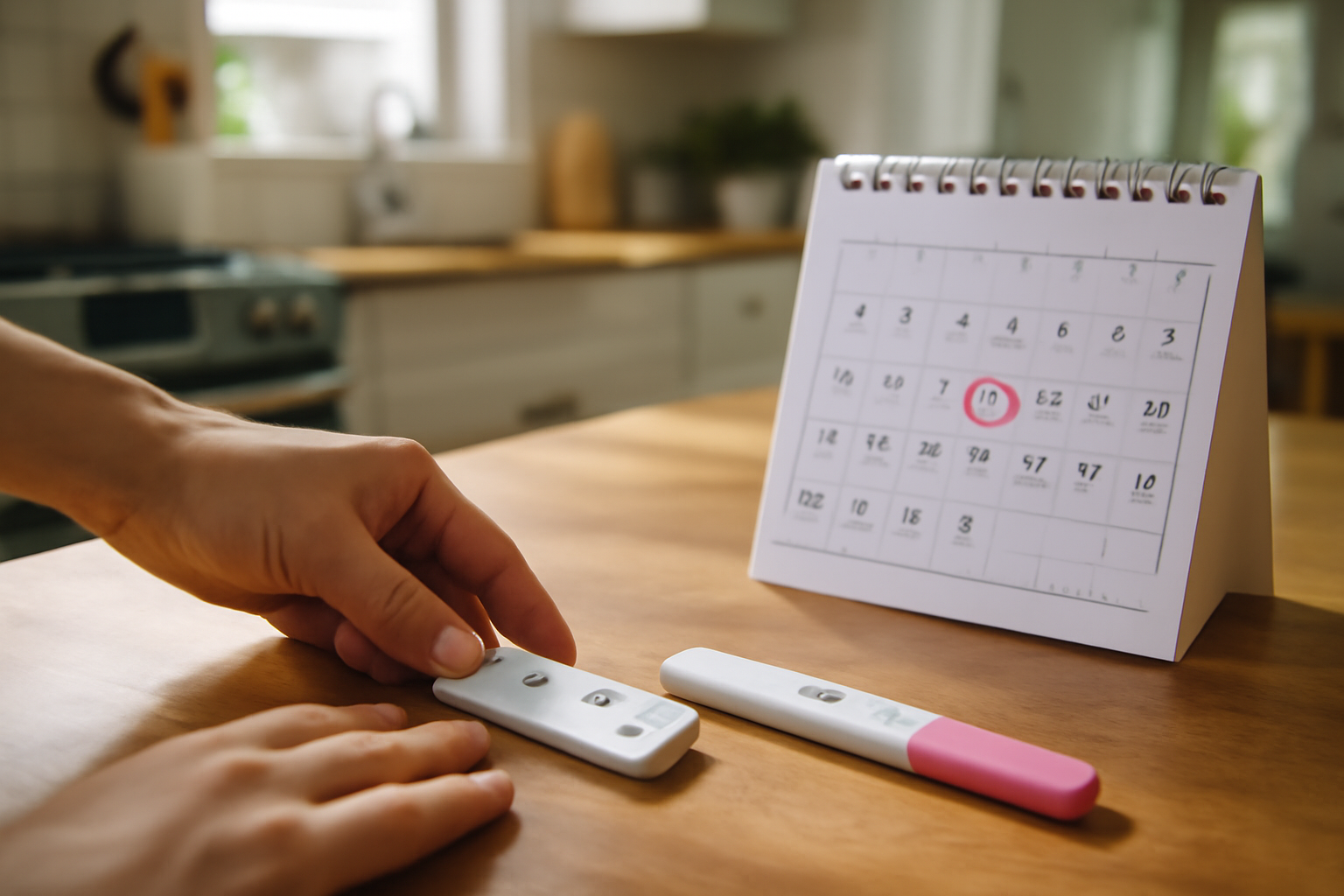
| Most common implantation timing | About 6–10 days after ovulation |
|---|---|
| Broader range often reported | Roughly 6–12 days after ovulation |
| Day 0 definition | The egg release day (ovulation day) |
| Best time to test (for many people) | Near missed period or 10–14 days after ovulation |
| Symptoms reliability | Spotting/cramps can happen, but they can’t confirm implantation |
Typical implantation window after ovulation (days 6–12) and why it varies
Implantation most often occurs about 6–10 days after ovulation. Still, in many cycles it can fall anywhere roughly between day 6 and day 12. The shift comes from ovulation timing, how long sperm survive, and how quickly the fertilized egg travels and develops before it attaches to the uterine lining.
Most sources cluster the “most likely” timing in the 6–10 day range. Some also describe a wider possible window of about 6 to 12 days after ovulation. If you track ovulation around cycle day 14 in a typical 28-day cycle, implantation may cluster around cycle days ~20–24.
Implantation isn’t a single instant. Fertilization happens first, then the embryo needs time to develop and reach the uterus. Even if two people ovulate on the same calendar day, biology can still nudge the timing (yes, bodies really do that).
Earliest and latest possible days: what “day X after ovulation” really means
“Day X after ovulation” counts from the day the egg is released. The earliest implantation is often around day 6, while the latest commonly described timing is around day 12. If ovulation was detected late or your cycle length varies, the calendar date can move even when the biological timing stays similar.
Counting correctly matters because ovulation is the anchor point. “Day 0” is the ovulation day (egg release day)—not the day you first saw a positive LH test, not the day you had intercourse, and not the day your temperature rise is obvious.
If you detected ovulation 1–2 days later than the true egg-release day, all your “day X” estimates shift by the same amount. That’s why two people can follow the same “day 10 after ovulation” rule and still end up with different calendar dates for symptoms or testing.
Common timing reference points
- Earliest often described: around day 6 after ovulation
- Most common range: about day 6 to day 10
- Latest often described: around day 12 after ovulation
Implantation timing vs pregnancy symptoms: spotting, cramps, and when to expect them
Some people notice mild spotting or light cramping around implantation, but symptoms aren’t reliable. Implantation can happen with zero noticeable signs, and similar symptoms can also come from normal hormone changes before a period. If you’re tracking, the most useful approach is to pair timing with pregnancy test timing—not symptoms alone.
Many descriptions place implantation-type symptoms in the same general stretch as implantation itself—often summarized as a few days in cycle-based timelines (commonly around 4 days). The catch is that luteal-phase effects overlap a lot. Progesterone can cause bloating, breast tenderness, mood shifts, and cramping that can feel “pregnancy-like.”
Spotting is especially tricky. When implantation spotting happens, it’s usually light and brief. Period-like bleeding can also start early for lots of reasons, including cycle variation and hormonal fluctuations. (If you’ve ever stared at a “maybe” on a toilet paper strip and felt your heart jump, you’re not alone.)
What to use instead of symptoms
- Timing: use the ovulation day to estimate likely implantation days.
- Testing: use hCG rise timing to guide when to test.
- Pattern: compare with your cycle history—what’s normal for you?
If you’re trying to interpret bleeding that seems “off,” this guide on whether you can be pregnant with a light period may help you separate what’s typical from what deserves a closer look.
When to take a pregnancy test after ovulation (and how to avoid false negatives)
Home pregnancy tests detect hCG, which rises after implantation. For many people, a reliable result is closer to the day of the missed period or about 10–14 days after ovulation. Test too early and you can get a false negative—even if implantation happened—especially when implantation occurs later than average.
Here’s the practical logic: implantation triggers hCG production, but hCG takes time to climb to detectable levels. If implantation happens toward the later end of the window (say, closer to day 12), hCG may not be high enough for a positive on day 10 after ovulation, even though pregnancy is developing.
To reduce false negatives, test strategically. Many people get the clearest home test signal around the missed period. If you test earlier, plan a repeat. A common helpful move is to retest about 48 hours later, since hCG often increases over time.
A simple testing window (most useful for planning)
- Early (higher false-negative risk): roughly 8–10 days after ovulation
- More reliable for many people: about 10–14 days after ovulation
- Often best clarity: the day of the missed period (or shortly after)
If you’re using a sensitive test, follow the package instructions for best results. Urine concentration, time of day, and reading window can change outcomes.
How to estimate your implantation date using ovulation tracking (LH tests, BBT, and cycle length)
You can estimate implantation by first estimating ovulation. LH surge tests show the surge, not the exact moment the egg is released. Basal body temperature (BBT) confirms ovulation after it happens. Once you have an ovulation estimate, implantation is often most likely around days 6–10 after that estimate, with a wider possible range up to about day 12.
Start with ovulation tracking, then apply an implantation “day range” to predict likely windows. LH tests are useful for spotting the fertile window, but they don’t always pinpoint the precise egg-release time. The LH surge typically happens shortly before ovulation—timing varies by person, and sometimes by the cycle.
BBT helps confirm ovulation after the fact: a sustained temperature rise usually indicates ovulation has occurred. That confirmation can tighten your “day 0” estimate, which makes your implantation-day math more accurate. Cycle length matters too. If your cycles are shorter or longer than 28 days, ovulation may occur earlier or later on the calendar, shifting the expected implantation dates.
Quick method to estimate likely implantation days
- Determine “day 0”: the most likely ovulation day (from BBT confirmation when available).
- Add the typical implantation range: most likely days are 6–10 after ovulation.
- Allow a wider possibility: implantation can be reported up to about day 12.
- Plan testing: target around the missed period or about 10–14 days after ovulation.
LH + BBT together can be especially helpful. LH tells you when you’re approaching ovulation; BBT tells you when it likely happened. (If you only have LH data, your estimates still work—you just need a bit more flexibility.)
If you want to connect LH results to fertility timing, see what a positive ovulation test means for fertility.
When to contact a clinician: delayed implantation concerns, bleeding, or repeated losses
Because implantation timing varies, a late or early estimate doesn’t automatically mean something is wrong. Still, it’s a good idea to contact a clinician if you have heavy or persistent bleeding, severe pain, symptoms that could suggest ectopic pregnancy, or repeated pregnancy losses. Early evaluation can also help if cycles are irregular or ovulation is hard to confirm.
Medical guidance matters when symptoms are severe or bleeding seems out of proportion. Ectopic pregnancy is time-sensitive and can be dangerous. Seek urgent care for red-flag signs such as severe one-sided abdominal or pelvic pain, dizziness, fainting, or heavy bleeding.
If you’ve had repeated losses, you shouldn’t carry the uncertainty alone. A clinician can review your history and consider whether you need a workup (the thresholds and recommended steps vary by guideline and individual circumstances). If your cycles are irregular, ovulation timing estimates may be less reliable, which makes home-test timelines harder to interpret.
Red flags to treat as urgent
- Heavy bleeding: soaking pads rapidly or persistent heavy flow
- Severe pain: especially sharp, worsening, or one-sided pain
- Dizziness or fainting: possible signs of internal bleeding
- Possible ectopic symptoms: pain with shoulder discomfort or marked weakness
For general early pregnancy and loss information, see ACOG’s FAQ on early pregnancy loss and NHS guidance on trying to get pregnant.
If you’re unsure whether your symptoms fit a normal pattern, you can also review how to contact a clinician for next steps.
FAQ
How many days after ovulation can implantation occur?
Implantation most often occurs about 6–10 days after ovulation, and it can fall later in some cycles, up to around day 12.
What is the earliest day after ovulation that implantation can happen?
The earliest commonly described timing is around day 6 after ovulation (counting day 0 as the egg release day).
When should I take a pregnancy test after implantation is likely?
For many people, testing around the missed period is the most reliable approach, which is often roughly 10–14 days after ovulation. If you test early and it’s negative, repeat in about 48 hours.
Can implantation cause spotting or cramps, and how long does it last?
Implantation can be associated with light spotting or mild cramps, but symptoms are inconsistent. When people notice them, they typically occur in the implantation window and may last a short period rather than persist like a full period.
Why do I get a negative pregnancy test if I implanted?
A negative test can happen if implantation occurred later than average, so hCG hasn’t reached a detectable level yet. Testing too early is the most common reason, and repeating after 48 hours or after a missed period often clarifies things.
How does late ovulation affect the day range for implantation and test results?
Late ovulation detection shifts your “day X” estimates because day 0 moves. If ovulation actually occurred later than you thought, implantation and hCG rise also happen later, which can delay a positive test.
Key takeaways
- Implantation most often occurs about 6–10 days after ovulation, but it can be later (up to around day 12).
- Count “day 0” as the egg release day; if ovulation was detected late, your timeline shifts too.
- Implantation symptoms (spotting/cramps) are possible but not dependable for confirming pregnancy.
- For fewer false negatives, test around the missed period or roughly 10–14 days after ovulation.
- If you test early and it’s negative, repeat in 48 hours or after a missed period for clarity.
- Use LH surge and/or BBT to estimate ovulation, then apply the day range to predict likely implantation.
- Seek medical care for red-flag symptoms (heavy bleeding, severe pain, dizziness) or repeated pregnancy losses.
If you’re still wondering how many days after ovulation can implantation occur, start with the most realistic window: 6–10 days is common, and up to about day 12 happens too. Time your test around the missed period, and if results don’t match your expectations, repeat—timing is the whole game.
For background on pregnancy and implantation biology, you can also review Implantation (biology) and general pregnancy information from WHO pregnancy.
1 commentaire sur « How Many Days After Ovulation Can Implantation Occur? »