
Quick Take
- Yes—could i be pregnant if i got my period but it was light. Light, period-like bleeding can happen in early pregnancy.
- But light bleeding can also be spotting from hormones, stress, PCOS/thyroid issues, or birth control.
- For clarity: test after a missed period, and repeat in about 48 hours if results are unclear.
If your period showed up but was light, you may feel stuck between two worries: “Maybe I’m pregnant” and “Maybe my cycle is just acting up.” The timing usually matters more than the label you put on the bleeding.
To answer could i be pregnant if i got my period but it was light, look at the pattern (spotting vs full flow), the dates (cycle timing), and what you’ll do next (testing at the right time). Bleeding alone can’t confirm pregnancy, but it can help you decide what to check.
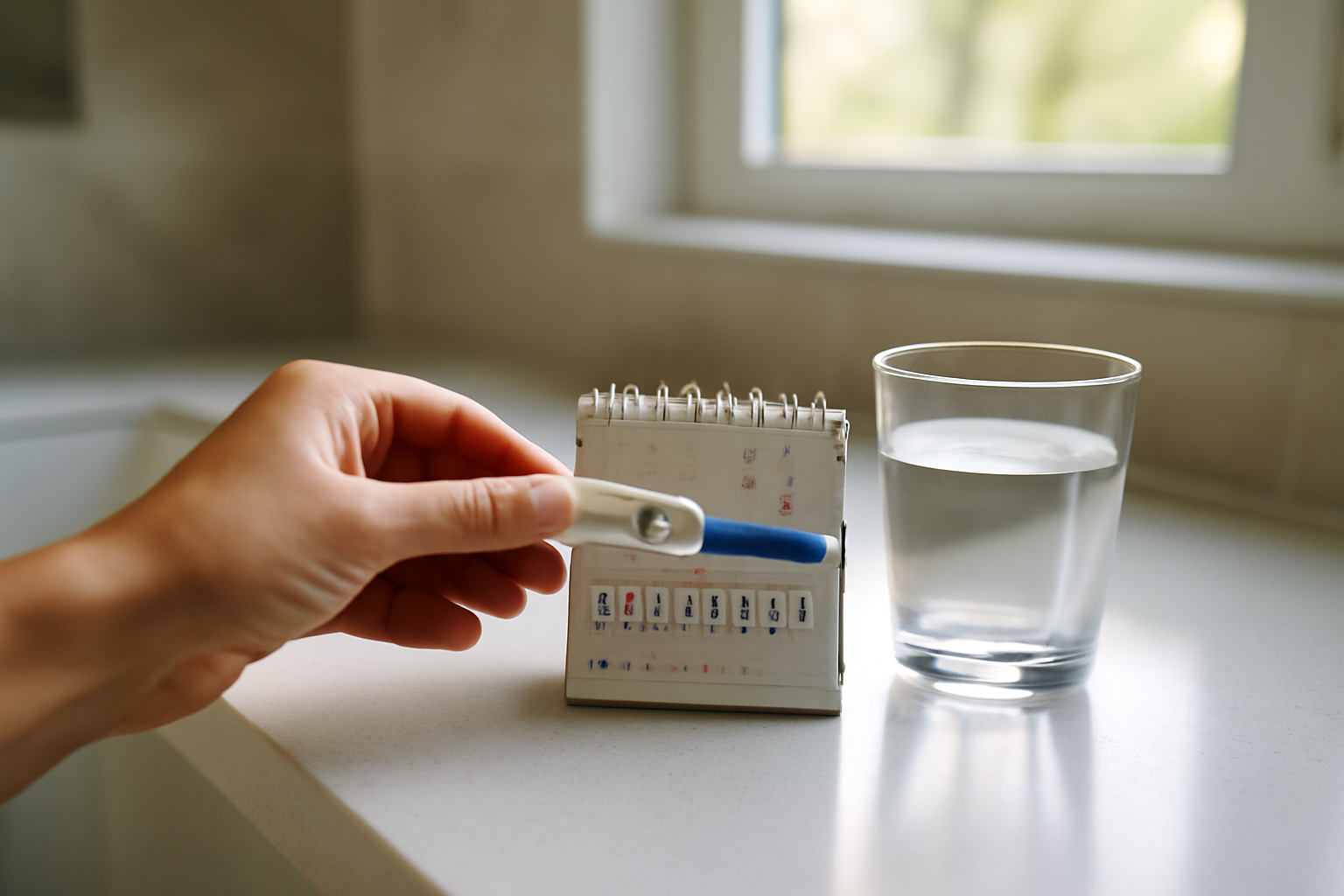
Light bleeding vs a true period: what “light” usually means
Light bleeding can be a real period, but it can also be spotting from early pregnancy or other causes. A true period usually lands around your usual cycle timing and keeps a consistent flow. Spotting is often lighter, shorter, or different in color and texture. Track the dates and changes—then you’ll know what to do next.
What “light” often looks like is usually the first clue. Spotting may be pink, brown, or light red, and it often shows up as small streaks on underwear or when you wipe. A true period tends to be steadier and usually lasts several days, often needing pads or tampons.
How “light” differs from your normal period matters. Compare timing (did it start when you expected?), duration (did it last 1–2 days or more like your usual range?), and flow pattern (steady vs on-and-off). If you normally bleed 4–6 days and this time it was one day with minimal staining, it’s reasonable to treat it as “uncertain bleeding.”
Timing gets tricky with irregular cycles. If your cycles vary a lot, “period-like” bleeding may not mean the same thing every month. That’s why cycle tracking helps—especially noting the first day of bleeding and how long it lasted. (It’s not glamorous, but it’s useful.)
Could it be implantation bleeding? Timing clues and common signs
Implantation bleeding is light spotting that can happen when a fertilized egg implants in the uterus. It usually occurs about 10–14 days after conception, which often overlaps with when a period is due. It’s typically lighter than a normal period and may come with mild cramping. Still, bleeding alone can’t confirm pregnancy—testing is the only way to know.
Many reputable sources describe implantation bleeding as light spotting rather than a full period. The most commonly cited timing is around 10–14 days after conception—often close to the window when you’d expect a period, depending on when you ovulated.
Common characteristics include a smaller amount of blood, shorter duration (often about 1–2 days, though experiences vary), and sometimes mild cramping. Color can be pink or brown. Some people notice nothing at all, so no symptoms doesn’t rule it out.
(Quick reality check: if you had unprotected sex around ovulation, pregnancy becomes more plausible.) If the bleeding showed up near your expected period date and was lighter and briefer than usual, implantation bleeding is one possibility—but not a diagnosis.
Because implantation bleeding isn’t guaranteed and can overlap with other spotting causes, you still need a pregnancy test to be sure.
Other reasons for a light period (and how they overlap with pregnancy)
A light period can come from hormonal changes, stress, changes in sleep or weight, breastfeeding, thyroid issues, PCOS, or hormonal contraception. Some of these can also cause spotting that looks like early pregnancy. If you’re on birth control, your bleeding pattern may be intentionally lighter or irregular. Since causes overlap, the safest move is a pregnancy test at the right time.
A lighter-than-usual bleed can happen when hormones shift. Stress, travel, a big change in sleep, or significant weight changes can affect ovulation, which can change how much you bleed. Even if you’re not pregnant, your cycle can look different from month to month.
Health conditions that affect cycles can also lead to light bleeding or irregular spotting. Conditions like PCOS and thyroid disorders can cause delayed or lighter cycles. Hormonal contraception can also cause lighter, less frequent, or irregular bleeding for many users—sometimes it’s basically “spotting mode.”
Why it overlaps with early pregnancy is simple: early pregnancy and many cycle disruptions can both trigger hormone shifts, mild cramps, and spotting. That means you can’t reliably tell the difference based on blood alone. Timing and testing are what separate possibilities from answers.
If you want a broader medical perspective, check guidance from ACOG on early pregnancy and abnormal bleeding and NHS advice on pregnancy tests and bleeding.
When to take a pregnancy test after light period-like bleeding
If you suspect pregnancy, timing matters. For the most reliable result, take a home urine pregnancy test after a missed period. If you tested during or right after light bleeding, repeat in 48 hours or use first-morning urine. Blood tests can detect pregnancy earlier, but home tests are usually accurate once hCG rises enough.
Home urine tests work by detecting hCG, a hormone that rises after implantation. If you test too early—especially during light bleeding that might be implantation—your result can be negative even if you are pregnant.
Practical testing rules help you avoid guesswork. If your period is late, test after the missed period. If you already tested while bleeding was light and got a negative result, repeat in about 48 hours—hCG often increases quickly enough to show up. For early detection, use first-morning urine, when urine is more concentrated.
Why an early negative can happen: implantation timing varies. If implantation occurred later than expected, hCG may still be too low to detect. Repeating the test gives your body time to rise into the detectable range. (Yes, it’s annoying—but it’s the most dependable approach without seeing a clinician.)
If you want earlier confirmation, ask about a blood pregnancy test. In some cases, it can detect hCG sooner than urine, and clinicians can guide next steps if bleeding continues.
When to seek medical care: warning signs and ectopic pregnancy concerns
Light bleeding doesn’t automatically mean something is wrong, but get urgent care if you have severe one-sided pelvic pain, shoulder pain, fainting, or heavy bleeding. These can be warning signs of ectopic pregnancy or other complications. If you have persistent bleeding plus a positive test, contact a clinician promptly to confirm location and viability.
Most cases of light spotting in early pregnancy are not emergencies. Still, ectopic pregnancy is a key reason clinicians take bleeding seriously when pregnancy is possible. Ectopic pregnancy happens when implantation occurs outside the uterus, and it can progress without obvious early signs.
Get urgent help same-day if you notice red flags like severe pelvic pain (especially on one side), pain that spreads to the shoulder, dizziness or fainting, or bleeding that becomes heavy (soaking through pads quickly). These symptoms need immediate evaluation.
If your pregnancy test is positive and bleeding continues, contact a clinician promptly. They often use ultrasound and serial blood hCG measurements to confirm pregnancy location and track whether hCG is rising appropriately.
For general safety guidance, you can also review WHO health information and local emergency guidance through NHS.
How to track your cycle and decide next steps (a simple decision checklist)
Use a short checklist: note the date bleeding started, how long it lasted, and whether it matches your usual period pattern. Think about ovulation and any unprotected sex. If the bleeding is lighter or unusual, treat it as “uncertain” and test. If the test is negative but your period still doesn’t come, repeat and contact a clinician if it keeps going.
Cycle tracking is the bridge between “maybe” and “know.” Start by recording the first day of the light bleeding and how it progressed. Was it only on wiping, or did you need a pad? Did it last 1 day, 2 days, or more?
Decision steps you can follow:
- Compare to your normal pattern: Does the timing and duration match your usual period?
- Think about ovulation: Was there unprotected sex around your fertile window?
- Test based on timing: If your period is missed, test with first-morning urine.
- If you test early and get a negative: repeat in about 48 hours.
- Follow up: If bleeding keeps happening, cycles stay irregular, or symptoms worsen, seek medical advice.
Tracking doesn’t just help with pregnancy. It can also reveal patterns tied to hormones, stress, contraception changes, or conditions like PCOS/thyroid issues. When you bring clear dates to a clinician, interpretation is usually faster and more accurate.
And if you’re still wondering could i be pregnant if i got my period but it was light, this checklist points to the most reliable next step: test at the right time, then repeat if needed.
Key takeaways
- Light, period-like bleeding can happen in early pregnancy, but it cannot confirm pregnancy by itself.
- Compare timing, duration, and flow pattern to your usual period—spotting is often lighter and shorter.
- Implantation bleeding is typically around 10–14 days after conception, often near when a period is due.
- If you suspect pregnancy, test after a missed period and repeat in about 48 hours if results are unclear.
- Seek urgent care for severe one-sided pain, fainting, shoulder pain, or heavy bleeding.
- If bleeding continues and pregnancy tests are positive, contact a clinician promptly for confirmation.
- Use a simple tracking checklist (dates, duration, pattern) to decide whether to test now or repeat.
FAQ
Can I be pregnant if my period was light and only lasted a day?
Yes. Light, brief bleeding can happen in early pregnancy, but it can also be spotting from hormonal shifts, stress, contraception, or delayed ovulation. If pregnancy is possible, test after a missed period and repeat in about 48 hours if the result is unclear.
What does implantation bleeding look like compared with a real period?
Implantation bleeding is usually light spotting—often pink or brown—and short-lived (commonly 1–2 days). A true period typically follows your usual timing and lasts longer with a more consistent flow. Bleeding patterns overlap, so a test is still needed.
Why would I have light bleeding but still get a negative pregnancy test?
You may have tested too early, before hCG rose enough to detect. Or the bleeding may be from non-pregnancy causes such as hormonal contraception, stress, thyroid issues, PCOS, or changes in sleep/weight. Repeat testing after a missed period can clarify.
When should I take a pregnancy test after light spotting?
For the most reliable home test result, test after a missed period. If you test during or right after light spotting and it’s negative, repeat in 48 hours or use first-morning urine for improved detection.
How many days after light bleeding should I retest for pregnancy?
If you tested early and got a negative result, retest about 48 hours later. If your period still doesn’t come, continue testing at that interval until you get clarity, or contact a clinician for a blood test.
Is it possible to have an ectopic pregnancy with light bleeding?
Yes. Ectopic pregnancy can involve light bleeding or spotting, sometimes before severe symptoms appear. If you have severe one-sided pelvic pain, shoulder pain, fainting, or heavy bleeding, seek urgent care. Positive pregnancy testing plus bleeding should be evaluated promptly.
Final check: if you’re still asking could i be pregnant if i got my period but it was light, treat it as uncertain until testing confirms. Light bleeding can be implantation spotting, but it can also come from hormones, stress, contraception, or cycle changes. Test after a missed period, repeat if needed, and get urgent care for warning signs.