
Quick Take
1) You can test after implantation bleeding, but the most reliable timing depends on when implantation likely happened and when hCG becomes detectable.
2) A practical window is about 3–7 days after implantation bleeding begins—then repeat if negative.
3) A positive during implantation bleeding is usually meaningful; a negative can be too early.
If you’re wondering when can you test after implantation bleeding, you’re definitely not alone. Implantation bleeding can look like early period spotting, but it often shows up around the same time you’d expect your period.
Home pregnancy tests don’t detect “bleeding.” They detect hCG in urine. So the real question is timing: when your hCG rises enough for your specific test to turn positive (and when your urine is concentrated enough to show it).
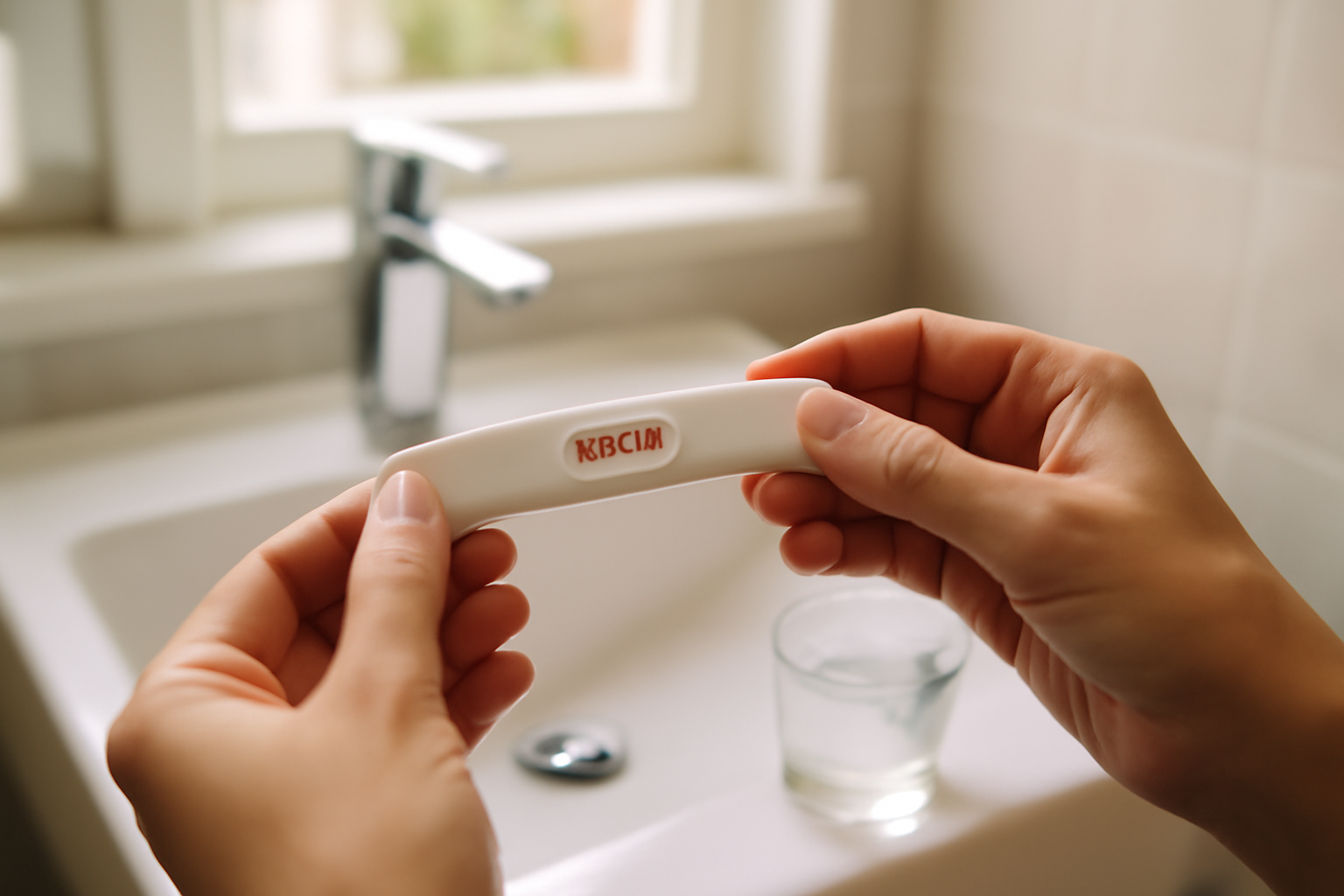
How implantation bleeding timing affects hCG and test accuracy
Implantation bleeding often happens around your expected period date. The catch is that pregnancy tests only turn positive after hCG rises high enough. Even if you bleed, hCG may still be too low for a positive. For most people, a positive becomes more likely several days after implantation—not right during the spotting.
Implantation bleeding is a possible sign that implantation may have happened. It’s not a precise timestamp for when hCG starts rising. Your body begins producing hCG after implantation, but the increase is gradual. That’s why two people can spot on the same day and still get different test results.
Home tests have a threshold—a minimum urine hCG level needed for the test line to appear. If you test early in the timeline (even while spotting is happening), the test may simply not “see” enough hCG yet.
Timing from ovulation to implantation matters more than the bleeding itself. Implantation commonly occurs about 6–10 days after ovulation (the usual implantation window). Early-detection tests can sometimes turn positive sooner than standard tests, but they still depend on hCG reaching the test’s detectable level.
When to take a pregnancy test after implantation bleeding (best waiting window)
For the most dependable home test result, wait until implantation bleeding has stopped and you’re close to (or have missed) your expected period. If you test right when bleeding starts, a false negative is more likely. A practical approach is to test about 3–7 days after implantation bleeding begins, then repeat in 48 hours if negative.
The “best” window is the one that matches when hCG is likely high enough in urine. Many people get the clearest result around the time of their missed period, because hCG has had time to rise for most pregnancies.
If your spotting overlaps your expected period date, treat it like a test-and-repeat situation. You can test now, then repeat 48 hours later to see whether the result changes as hCG increases. (It’s a small step that can save a lot of stress.)
A commonly cited estimate for how long it takes from implantation to a positive urine test is about 3–7 days. That said, it varies by test sensitivity, your ovulation timing, and urine concentration. Morning urine often helps because it’s more concentrated.
If you want a more specific timeline, see How Long After Implantation Bleeding Can I Test?.
Testing during implantation bleeding: is a positive reliable?
A positive pregnancy test during implantation bleeding is generally meaningful. It usually means hCG is already high enough to detect. A negative test during bleeding is less reliable, though—implantation may be recent, and hCG might still be below the test’s detection threshold. If you get a negative, retest 1–2 days later or after bleeding stops.
A true positive during bleeding typically means your body has produced enough hCG for the test to detect it. That’s why many clinicians treat a positive result as strong evidence of pregnancy, even when bleeding is present.
Negatives during implantation bleeding are where uncertainty shows up. If implantation just occurred (or is still very recent), hCG may not yet be high enough for a home test to turn positive. In that case, the bleeding can push you to test sooner than you should.
Test sensitivity matters. Early-detection tests (with lower hCG detection thresholds) can pick up pregnancy sooner than standard tests. Still, timing and urine concentration can shift results by a day or two—enough to flip a “positive vs negative” call.
Tip: reduce uncertainty with repeat testing
If you test during bleeding and it’s negative, retesting after 48 hours often makes things clearer. hCG tends to rise over time, and a repeat test can catch the point where your level crosses the test threshold.
Also, use first-morning urine when possible. If you can’t, try not to drink a lot of fluid right before testing so your urine isn’t overly diluted.
How many days to wait with different test types (early vs standard)
Early-detection urine tests can sometimes show results a few days before a missed period, but they’re more likely to be negative early. Standard tests are usually most reliable from the day your period is due or after. If you use an early test and it’s negative, repeat with a standard test after 48–72 hours or once bleeding has fully stopped.
Early tests are built to detect lower hCG levels, so they may turn positive sooner for some people. But “sooner” doesn’t mean “instant during spotting.” If implantation is happening near the end of your personal timeline, even an early test can still be negative on the first try.
Standard tests generally reduce the chance of an early false negative because they’re used closer to when your body would naturally have higher hCG levels. If you want the cleanest answer, line up testing with your missed period or the end of spotting—especially if bleeding is confusingly close to your expected date.
A good rule: if you test early and it’s negative, repeat at a time when hCG is likely higher. Many people follow a 48-hour repeat pattern because hCG levels typically rise over that span in early pregnancy.
Morning urine and reading windows
Urine concentration is often higher in the morning, which can improve detection for borderline results. And don’t read the test outside the recommended time window—lines can appear or fade in ways that don’t reflect true hCG.
If you’re unsure about a faint line, take a new test with first-morning urine and compare results after the full instructed time.
When to see a clinician: heavy bleeding, severe pain, or unclear results
Get urgent medical help if you have heavy bleeding (soaking pads), severe one-sided pelvic pain, dizziness/fainting, or symptoms of infection. If you keep getting negative tests but bleeding continues—or pain shows up—you may need evaluation for causes other than implantation. If you get a positive test with unusual bleeding, ask about confirming the pregnancy and ruling out ectopic pregnancy.
Most implantation bleeding is light and short-lived, but heavy bleeding or severe symptoms aren’t things to “wait out.” Seek urgent care if you’re soaking pads quickly, feel faint, or have intense pelvic pain—especially if it’s one-sided.
Persistent or unusual bleeding can point to other causes such as hormonal changes, cervix irritation, infection, or other pregnancy-related complications. This is where a clinician’s assessment matters.
A key reason to seek care with concerning pain and bleeding is the risk of ectopic pregnancy. If you have a positive test plus symptoms like severe pain, your clinician may use blood hCG and an ultrasound to confirm the pregnancy location and timing.
If your home tests stay unclear (faint lines, inconsistent results, or ongoing bleeding), asking for confirmation can bring real clarity. Blood tests can detect hCG earlier and more reliably than urine tests.
Best practices for accurate home testing after spotting
To maximize accuracy, follow the test instructions closely, use first-morning urine when possible, and avoid over-diluting fluids right before testing. Check the result window (don’t read too early or too late). If you test during or right after implantation bleeding and it’s negative, repeat after 48–72 hours to account for rising hCG.
Start with the basics: read the package timing carefully and use the sample method it specifies. Small differences—like dipping time or how long you wait before reading—can change results.
Urine concentration plays a big role. Morning urine typically contains more hCG if you’re pregnant, which improves your odds of detecting it. If you test later in the day, try not to drink large volumes of water immediately beforehand.
Also, treat negative results during bleeding as potentially “early.” A repeat test isn’t overreacting—it’s the practical way to account for rising hCG over time.
When to repeat and what to do with faint lines
If you get a faint positive, treat it as positive and repeat in 48 hours (or follow your clinician’s guidance). Faint lines can reflect lower early hCG levels, which often become stronger as pregnancy progresses.
If you get no line at all and bleeding is still ongoing, retest after 48–72 hours, or after bleeding fully stops, using first-morning urine for consistency.
FAQ
How do I know when to test after implantation bleeding for a reliable result?
Use a “test-and-repeat” approach. For the most dependable result, test when bleeding has stopped and you’re near or past your expected period date. If you test during bleeding and it’s negative, repeat in about 48–72 hours with first-morning urine to account for rising hCG.
What’s the best time to take a pregnancy test after implantation bleeding if I already have spotting?
If spotting is happening, you can test, but plan to repeat. Many people get clearer results around the time they miss their period. A practical window is roughly 3–7 days after spotting begins, then repeat 48 hours later if negative.
Why is my pregnancy test negative during implantation bleeding if I might be pregnant?
A negative during implantation bleeding often means it’s simply too early. hCG may not yet have risen above the test’s detection threshold in your urine. Timing from ovulation/implantation and urine concentration can also affect results.
When does a pregnancy test turn positive after implantation bleeding (how many days)?
There isn’t one exact day for everyone, but a commonly cited estimate is about 3–7 days after implantation bleeding begins (varies by test sensitivity). For best accuracy, confirm near your missed period and repeat if needed.
How many times should I repeat a test if I get a negative result during or right after spotting?
Repeat at least once if your first test is negative during or right after spotting. A common approach is another test 48–72 hours later. If bleeding continues or results remain unclear, consider a clinician-confirmed blood hCG test.
Is a positive pregnancy test during implantation bleeding reliable?
Yes—generally. A positive home test during implantation bleeding usually means hCG is already detectable. If you have unusual bleeding or severe pain, still contact a clinician to confirm and rule out complications such as ectopic pregnancy.
Key takeaways
- Don’t rely on implantation bleeding alone—urine tests depend on when hCG becomes detectable.
- For the most reliable result, test after bleeding stops and you’re near your missed period.
- A positive test during implantation bleeding is usually meaningful; a negative is often too early.
- If you test early and it’s negative, repeat in 48–72 hours (or after bleeding fully stops).
- Use first-morning urine and read the test only within the instructed time window.
- Seek urgent care for heavy bleeding, severe pain, dizziness, or fainting.
- If results stay unclear, ask a clinician about blood hCG and ultrasound confirmation.
So, when can you test after implantation bleeding? Aim for the window that matches rising hCG—often a few days after spotting begins, and most clearly near your missed period. If you’re unsure, repeat testing is your best friend, and your clinician can confirm with blood work when needed.
Signature: Clear answers, steady timing—your next step should feel simpler, not scarier.
Helpful references: NHS guidance on pregnancy tests and timing, ACOG FAQs on pregnancy testing, MedlinePlus on the hCG test, and WHO overview of infertility topics.
1 commentaire sur « When Can You Test After Implantation Bleeding? »