
If you’re trying to figure out how to get your period faster naturally, start with the basics: confirm the delay, rule out pregnancy risk, and then use low-risk steps that support your body (heat, moderate movement, steady nutrition, and better sleep/stress balance). Once you know what’s going on, you can act with confidence—and you’ll also know when it’s time to get medical help.
First, clarify what “delayed” means and check pregnancy risk.
Use heat and pelvic relaxation for comfort—not as a guaranteed trigger.
Pick moderate exercise and keep meals steady with key nutrients.
Stabilize sleep and lower stress daily; watch timelines and red flags.
| Goal | Support cycle timing safely while ruling out common causes of delay |
|---|---|
| First step | Confirm delay using dates (not feelings) and check pregnancy risk |
| Low-risk comfort | Warmth (15–20 minutes) and pelvic relaxation |
| Best “natural lever” | Sleep and stress reduction (10–20 minutes daily) |
| When to get help | No period for ~3 months, severe pain, heavy bleeding, fever, or anemia symptoms |
| Medical context | Thyroid disorders and PCOS are common medical reasons for irregular cycles |
First, confirm what “delayed” means and rule out common cycle disruptors
Before you try to induce your period, make sure it’s truly delayed. A typical cycle runs about 21–35 days, and occasional variation is normal. Start by noting your last period date, any recent spotting, and whether pregnancy is possible. Stress, major travel, illness, big weight changes, and starting or stopping hormonal contraception can all throw timing off.
“Late” doesn’t mean the same thing for everyone. If your cycles usually land within a 21–35 day window, going past that range is a reasonable reason to investigate. If your cycles are naturally irregular, focus on patterns over a few months—and keep using dates you can actually trust.
Pregnancy is the first thing to check if there’s any chance. Unprotected sex, missed contraception, or timing that doesn’t match your usual method all count. If you’re unsure, take a home pregnancy test and repeat if the result is unclear. Stress and acute illness can shift timing even when hormones are otherwise normal (yes, that includes after exams, grief, or long flights).
Quick self-check you can do today
- Write down the first day of your last period.
- Count days until today and compare with your usual cycle length.
- Note any spotting, new symptoms, or changes in discharge.
- Assess pregnancy risk honestly, then test if needed.
- List recent disruptors: stress, illness, travel, weight change, new meds, or contraception changes.
For background on menstrual health and when delays matter, see NHS guidance on periods that are late and WHO: menstrual health.
Heat and pelvic relaxation: how warmth may help when cramps and tension are high
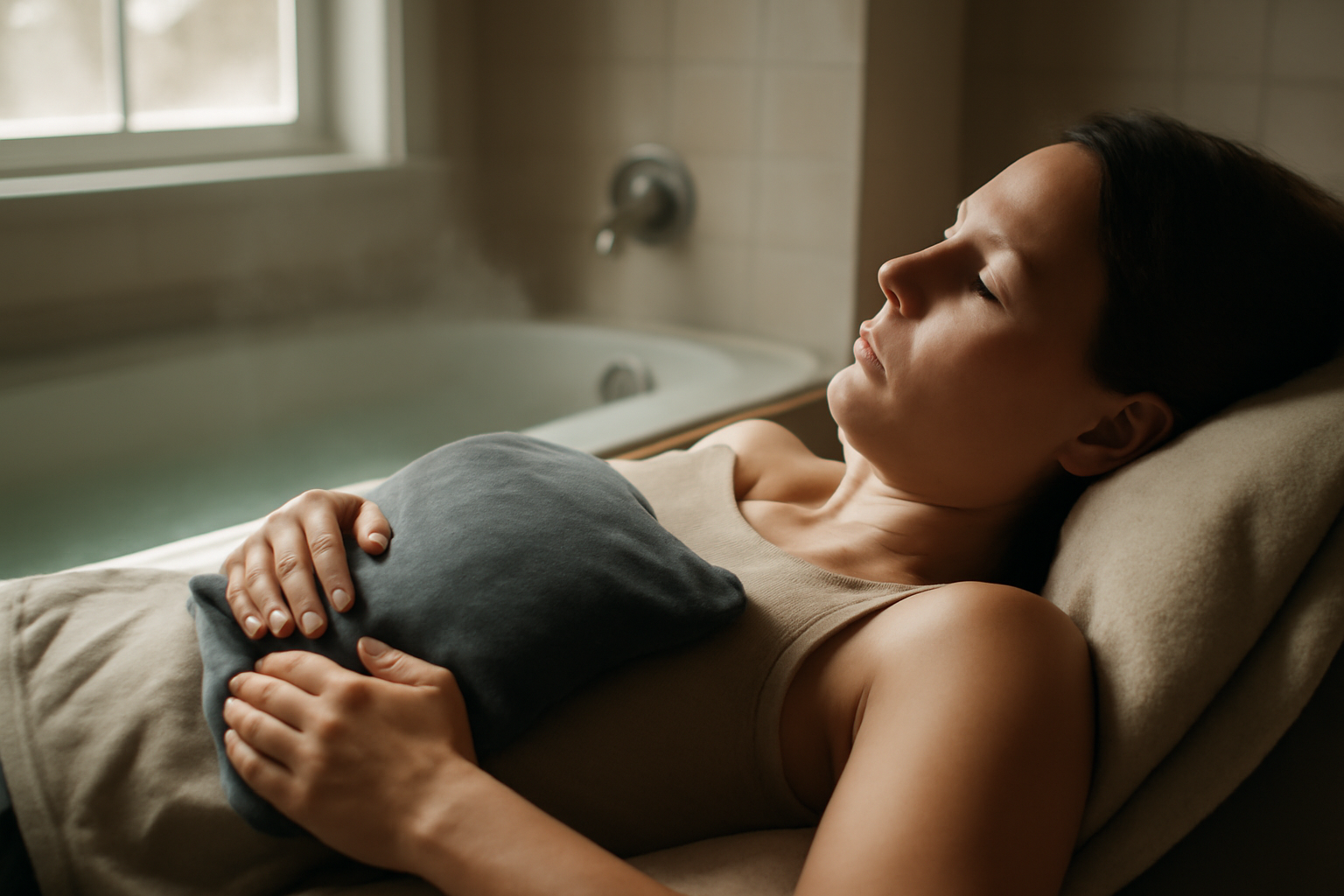
Gentle heat can relax pelvic muscles and may ease cramping or tension that sometimes shows up with hormonal shifts. Try a warm heating pad on the lower abdomen or a warm bath for 15–20 minutes. This won’t “force” ovulation, but it can support comfort and relaxation while your body regulates.
Warmth is often the simplest “natural” tool because it helps your body feel safer and calmer. When pelvic muscles are tense, discomfort can make you feel like something is “stuck.” Heat can’t guarantee a period, but it can make the waiting period easier—and honestly, that can matter more than people expect.
Use consistent, gentle sessions. Aim for 15–20 minutes on the lower abdomen, or a warm bath at a comfortable temperature. Avoid overheating. Stop if you feel burning, dizziness, or worsening pain. If you have severe one-sided pain, fever, or unusual discharge, don’t rely on heat alone—get evaluated.
How to do it safely
- Use a moderate temperature (comfortable warmth, not scalding heat).
- Limit sessions to about 15–20 minutes.
- Hydrate after, especially if you’re using a bath.
- Pair heat with relaxation (slow breathing or a short stretching routine).
If your delay seems tied to stress, heat can be a helpful bridge while you work on sleep and nervous-system regulation. (It’s not a cure, but it can take the edge off.)
Exercise that supports hormones: what to do (and what to avoid) for cycle timing
Moderate movement can reduce stress and improve insulin sensitivity, which may indirectly support regular cycles. Aim for low-to-moderate activity like brisk walking, cycling, or gentle yoga. Skip intense workouts, overtraining, or sudden calorie restriction—those can delay periods by affecting energy availability.
Exercise affects cycle timing mostly through indirect pathways: stress hormones, sleep quality, and energy balance. Moderate activity is usually the sweet spot when you want to support regularity without pushing your body into a deficit.
If your routine recently jumped—new high-intensity classes, lots of extra cardio, or training for an event—that change can matter. Energy imbalance (not enough intake for the training load) is a known pathway to missed or delayed periods. You don’t have to stop moving; you just need to move in a way your body can recover from.
Good options vs. risky moves
- Choose moderate: brisk walking, gentle yoga, light strength training, easy cycling.
- Keep it relaxing: mobility work, pelvic-friendly stretches, and breathing-focused routines.
- Avoid: high-intensity intervals, overtraining, or “punishing” exercise used to force outcomes.
- Avoid sudden restriction: crash diets or skipping meals to “speed things up.”
For a deeper look at cycle irregularity causes and evaluation, compare your situation with clinical guidance from ACOG on irregular periods.
Diet and nutrients for menstrual regularity: iron, vitamin D, and steady energy
Your period depends on overall health and energy balance. Build a balanced plate with enough calories, protein, and micronutrients—especially iron (for blood health), vitamin D, and omega-3 fats. If you’re low on iron or you’re eating restrictively, cycles may become irregular. Hydrate and include fiber-rich foods to support digestion and appetite.
When people try to “get it faster,” they sometimes accidentally reduce the body’s ability to regulate. Restrictive eating, skipping carbs, or cutting portions can lower the energy available for reproductive hormones. That’s why steady meals usually beat extreme strategies—even when you’re tempted to do something fast.
Iron deficiency is common worldwide and can contribute to fatigue and menstrual problems depending on the person. Vitamin D deficiency is also widespread; testing can be useful if you’re at risk or rarely get sunlight. Omega-3 fats (from fatty fish or supplements if appropriate) support general inflammatory balance—helpful for overall health, even if they won’t act like a switch.
What to aim for this week
- Steady energy: don’t skip meals; avoid crash dieting.
- Protein each day: eggs, yogurt, beans, chicken, tofu, or fish.
- Iron sources: lean red meat, lentils, beans, spinach; pair plant iron with vitamin C foods.
- Vitamin D: fortified dairy or alternatives; fatty fish; ask a clinician about testing if you’re unsure.
- Hydration + fiber: fruits, vegetables, oats, chia, and whole grains.
If you recently changed your eating pattern—new diet, stress eating, or weight change—pay attention to the timing. Cycle delays often follow those shifts.
Herbs and teas: what’s relatively safer, what to avoid, and why evidence is limited
Some people use herbal teas (like ginger or chamomile) for comfort, but the evidence that herbs reliably induce a period is limited. Be cautious with “uterine stimulant” products or high-dose supplements, since they can interact with medications or affect pregnancy risk. If you’re trying to conceive or could be pregnant, skip herbal attempts and choose safer comfort measures instead.
Herbal approaches are tempting because they sound gentle. The issue is that “period-inducing” claims don’t hold up consistently across studies, and supplement quality varies a lot. Even when a herb seems harmless, the dose and the product formulation matter.
If pregnancy is possible, many uterus-stimulating strategies aren’t recommended. Instead, focus on low-risk comfort steps (heat, hydration, sleep, moderate movement) while you confirm the cause of the delay. If you’re on medications—especially anticoagulants, thyroid meds, or other hormone-related treatments—check interactions before using any supplement.
Safer use vs. higher-risk use
- Relatively safer: mild teas used for comfort in typical dietary amounts.
- Be cautious: concentrated extracts, “detox” blends, or anything labeled as a uterine stimulant.
- Avoid if pregnancy possible: high-dose or “period-inducing” supplements.
- Ask for guidance: if you’re taking prescription medication or have a medical condition.
For a clinical overview of amenorrhea and related terms, you can also review Amenorrhea (overview)—useful for understanding when delays become a medical issue.
Stress, sleep, and anxiety: the fastest natural lever for many delayed cycles
Stress and poor sleep can affect brain–ovary signaling that regulates ovulation, which can lead to delayed or irregular periods. Try a short, realistic plan: consistent bedtime, morning light exposure, and daily stress reduction (10–20 minutes of breathing, mindfulness, or gentle stretching). If your delay followed a stressful event, these steps can help your cycle settle.
For many people, the most effective “natural” intervention isn’t a food or herb—it’s the nervous system. When you’re stressed, your body may redirect resources away from reproductive signaling. That doesn’t mean something is “wrong” with you. It means your system is adapting.
Start small. Pick one sleep anchor (a consistent bedtime window), add morning light for 5–10 minutes, and do a daily calming routine. Ten to twenty minutes is enough to build a pattern. If your delay followed an acute stressor—exams, travel, grief, or a sudden schedule change—timing often improves as your sleep normalizes. (It’s not instant, but it’s often steady.)
A simple daily routine (no perfection required)
- Morning: get outdoor light for 5–10 minutes.
- Midday: short reset (2 minutes of slow breathing).
- Evening: wind down at a consistent time; reduce screens 30–60 minutes before bed.
- Daily: 10–20 minutes breathing, mindfulness, or gentle stretching.
Want a related perspective? Our guide on Can Stress Cause Your Period to Come Early? What to Know can help you connect stress patterns to cycle changes—even when the direction is different.
When to seek medical help: pregnancy tests, red flags, and timing for evaluation
If pregnancy is possible, take a home pregnancy test as soon as you’re late (and repeat if you’re unsure). Get medical care if your period is absent for 3 months (or your cycles are very irregular), if you have severe pain, heavy bleeding, fever, or symptoms of anemia. It’s also smart to check for underlying causes like thyroid disorders, PCOS, or significant weight changes.
Natural steps can be supportive, but delays can also have medical explanations. A clear timeline helps you decide when to wait and when to act. A common clinical threshold is no period for 3 months (amenorrhea). If your cycles are very irregular, clinicians may investigate earlier based on your history and symptoms.
Know the red flags. Seek urgent care for severe pain, fainting, or very heavy bleeding. Fever or concerning discharge can signal infection. If you have fatigue, dizziness, or shortness of breath, consider anemia and get checked promptly. Thyroid disorders and PCOS are among the common reasons for irregular or delayed cycles.
Suggested evaluation timeline
- Any pregnancy risk: test now and repeat if needed.
- 1–2 months late: monitor symptoms, disruptors, and stress/sleep changes.
- ~3 months without a period: schedule a medical evaluation.
- Any severe symptoms: don’t wait—seek care.
When you’re trying how to get your period faster naturally, the safety rule is simple: rule out pregnancy, use low-risk support strategies, and escalate when symptoms or timelines suggest an underlying cause.
FAQ
How can I get my period faster naturally if I’m not pregnant?
Focus on safe cycle support: confirm the delay using dates, reduce stress, aim for consistent sleep, use gentle heat for comfort, and choose moderate exercise. Support steady meals with enough calories and key nutrients like iron and vitamin D. If the delay reaches about 3 months or you develop red-flag symptoms, contact a clinician.
What exercises help bring on a delayed period, and which ones should I avoid?
Moderate, recovery-friendly movement tends to be safest: brisk walking, gentle yoga, and light strength work. Avoid intense workouts, overtraining, and sudden calorie restriction, since energy imbalance can contribute to missed or delayed periods. If your exercise volume increased sharply right before the delay, consider stepping back and prioritizing recovery.
Why is my period late even though I’m eating normally and not stressed?
Cycle timing can shift for reasons beyond stress and diet alone. Recent illness, major travel, changes in sleep schedule, starting or stopping hormonal contraception, significant weight change, or underlying conditions like thyroid disorders or PCOS can all delay periods. Pregnancy risk also needs to be checked if there’s any chance. Tracking dates and symptoms helps clarify the pattern.
How long should I wait before seeing a doctor for a delayed period?
A common clinical threshold is no period for about 3 months, or earlier if your cycles are very irregular or you have concerning symptoms. Seek prompt care for severe pain, heavy bleeding, fever, fainting, or symptoms of anemia. If pregnancy is possible, take a home pregnancy test now and repeat if results are unclear.
Can certain vitamins or supplements make your period come sooner?
Vitamins can help if you’re deficient, but they usually won’t reliably “force” a period. Iron, vitamin D, and omega-3s support overall health and may matter for cycle regulation when levels are low. Supplement quality and dosing vary, and some products can interact with medications. If you could be pregnant, avoid “period-inducing” supplements and discuss options with a clinician.
Is it safe to use herbal teas to induce a period?
Herbal teas may be used for comfort in typical amounts, but evidence that herbs reliably induce a period is limited. Avoid high-dose supplements or products labeled as uterine stimulants, especially if pregnancy is possible. If you take medications or have medical conditions, check safety and interactions before using herbal products.
Key takeaways
- Treat “delayed” as a timeline problem: confirm cycle length, track dates, and check pregnancy risk first.
- Use heat and pelvic relaxation for comfort while your body regulates—don’t rely on it as a guaranteed trigger.
- Choose moderate exercise (walking, gentle yoga) and avoid overtraining or sudden calorie restriction.
- Support regularity with steady meals and key nutrients like iron, vitamin D, and omega-3 fats.
- Be cautious with herbal “period-inducing” products; evidence is limited and pregnancy risk changes the recommendation.
- Stabilize sleep and reduce stress daily—this is often the most effective natural lever for timing shifts.
- Know the red flags and timelines: severe symptoms or no period for about 3 months warrants medical evaluation.
Signature note from jhops.org: Your body’s timing is data, not a guess—use safe steps, stay aware of red flags, and let evidence guide what you try next.