
Yes—pregnancy tests can be wrong. False negatives usually happen when you test too early or use diluted urine. False positives can come from testing errors, a very early pregnancy loss (chemical pregnancy), leftover hCG, or fertility trigger shots that contain hCG. The most reliable next step is repeating the test at the right time and, if results don’t fit, asking a clinician for a blood hCG test.
Quick Take: Home urine pregnancy tests are often accurate when used correctly, but “wrong” results usually come down to timing, technique, or medical/medication factors.
False negatives are most often from testing before hCG is detectable or from diluted urine.
False positives can follow chemical pregnancy, lingering hCG, or hCG trigger shots.
Repeat at the right time and consider a clinician blood hCG test when results don’t match your symptoms.
| Most common cause of false negative | Testing too early or using diluted urine |
| Most common cause of false positive | Testing errors, chemical pregnancy, or leftover hCG |
| Best confirmation step | Repeat in 48–72 hours and/or get a blood hCG test |
| When to seek urgent care | Severe one-sided pain, fainting, shoulder pain, heavy bleeding |
How accurate are home urine pregnancy tests (and what “wrong” usually means)?
Most home urine pregnancy tests are highly accurate when used correctly. “Wrong” results usually fall into two categories: false negatives (pregnancy is present but not detected) and false positives (the test detects hCG when you’re not currently pregnant). Accuracy depends on timing, urine concentration, and whether the instructions were followed exactly.
A false negative means the test reads negative even though pregnancy is present. A false positive means the test reads positive even though you’re not currently pregnant. Both outcomes depend on whether your urine-based hCG detection matches your actual hCG level at the time you test.
Testing on or after the expected period date gives the best odds. Test too early and hCG may be too low to trigger a positive. Sensitivity varies by brand, and hCG rises at different rates early on—so two people can get different results from the same test type.
False-positive pregnancy test: the most common causes you can check first
A false-positive can come from user or handling mistakes, a recent pregnancy loss, or leftover hCG after an early event. Less often, certain medications (especially fertility treatments that include hCG), ovarian conditions, or rare pregnancy-related issues can produce positive results even when you’re not currently pregnant.
Start with the most common real-world explanations. If you read the test outside the recommended window, interpret a line that appears later than instructed, or store/handle the test improperly, you can end up with a misleading result. (That faint line you noticed hours later? Timing matters.)
Then look at recent events. A chemical pregnancy—a very early pregnancy loss—can cause a positive test that may be followed by bleeding. After a recent birth or loss, hCG can linger for a while, so urine tests can stay positive temporarily even when pregnancy isn’t ongoing.
Common causes to review
- User error or misreading: reading too late, not using urine correctly, or skipping the timing window.
- Chemical pregnancy: a positive test followed by bleeding soon after.
- Recent pregnancy loss or childbirth: leftover hCG can still be detectable.
- hCG-trigger fertility shots: fertility injections can lead to positive tests shortly after use.
- Medical conditions (less common): some ovarian conditions or rare pregnancy-related issues can raise hCG.
If you used fertility treatment, check whether you received an hCG trigger (often used to time ovulation). That medication can make the test read positive even if the outcome isn’t what you expected.
False-negative pregnancy test: why you might get a negative when you’re pregnant
False negatives usually come from testing too early, using diluted urine, or not following the read-time window on the test instructions. If hCG hasn’t risen enough yet, the test may stay negative even when pregnancy is present. Re-testing with first-morning urine and the correct wait time improves reliability.
Early testing is the biggest issue. Before the missed period date, hCG may still be too low for the test to detect. Even if pregnancy has started, your urine hCG concentration might not reach the test’s threshold yet.
Urine dilution matters too. Drinking a lot of fluid before testing can lower concentration. That’s why many clinicians recommend first-morning urine for the earliest checks—it’s typically more concentrated.
Errors that commonly cause a “negative” outcome
- Testing before hCG is detectable: especially before the expected period date.
- Using diluted urine: testing later in the day or after heavy fluid intake.
- Missing the read-time window: checking too soon or too late.
- Not repeating when symptoms persist: one test is a snapshot, not a trend.
If pregnancy symptoms continue after a negative result, repeat testing. hCG usually rises over time, so a later test can turn positive once levels increase enough.
Timing and technique: how to test in a way that reduces both false positives and negatives
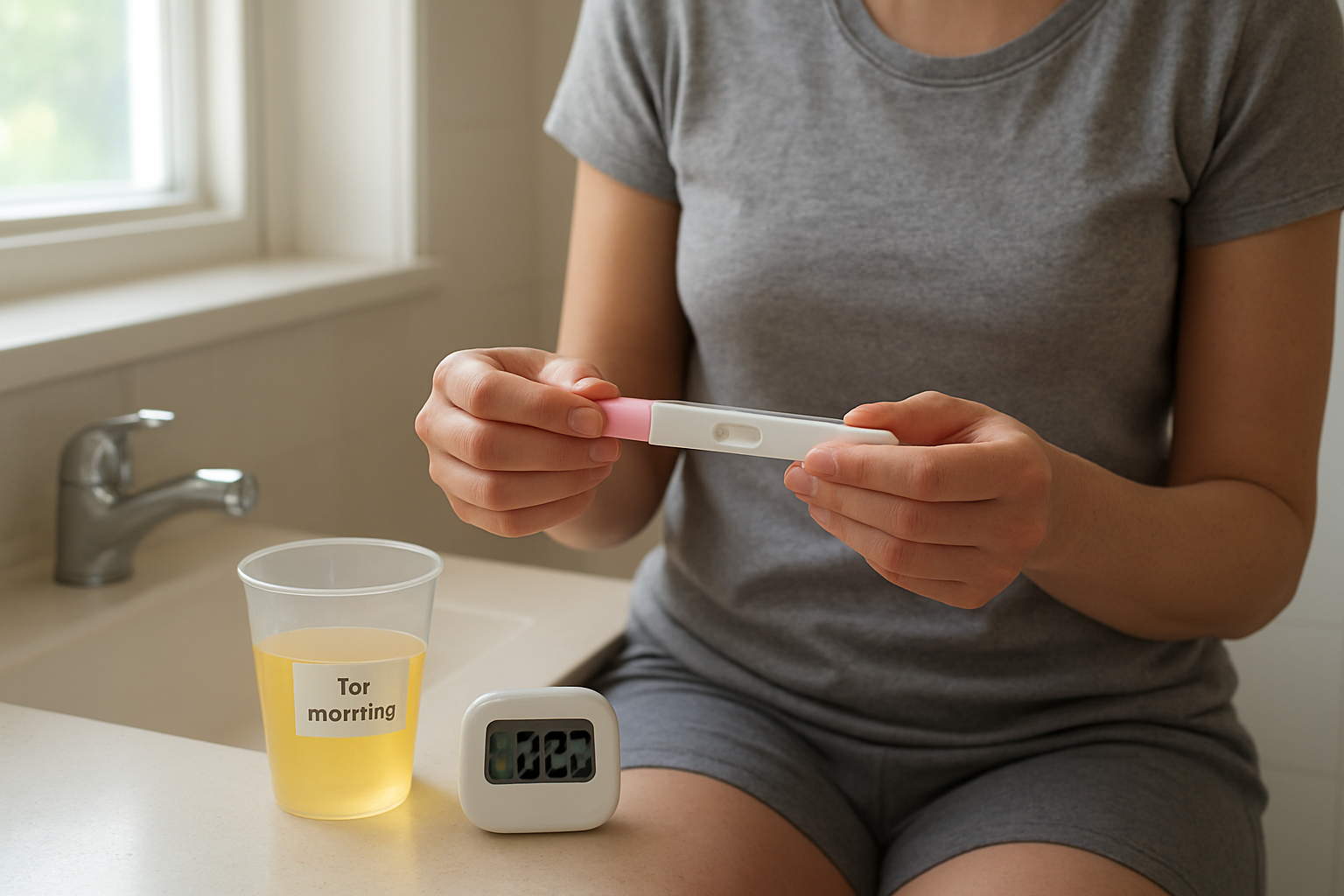
To reduce wrong results, test at the right time (ideally on or after the expected period), use concentrated urine (often first-morning), and follow the instructions for exactly how long to read the result. Don’t interpret faint lines outside the specified window. If you’re unsure, repeat in 48–72 hours.
Use your expected period date as your baseline, not the day you “felt” pregnant. If your cycles are irregular, ovulation may shift, which shifts when hCG becomes detectable.
Technique is simple but strict: collect urine as directed, avoid over-soaking the test tip if your kit sets a limit, and set a timer for the read time. Many tests only consider results valid within a short window (often a few minutes). Reading after that window can create confusing artifacts—annoying, but common.
Step-by-step approach for clearer results
- Pick the right time: test on/after the expected period, or later if you tested early.
- Use concentrated urine: first-morning urine is often best for early detection.
- Follow the wait time: check results only within the manufacturer’s read window.
- Repeat strategically: if results don’t match your symptoms, re-test in 48–72 hours.
- Track trends: two tests a couple of days apart can be more informative than one.
Since hCG generally increases early in pregnancy, retesting at the right interval helps you avoid overreacting to a single snapshot. (Waiting is hard, but it usually pays off.)
What to do next: confirm with repeat testing, blood tests, and when to seek urgent care
If your result is unexpected, repeat the urine test in 48–72 hours and/or use a first-morning sample. For confirmation—especially with severe pain, heavy bleeding, or unclear results—ask for a blood hCG test and follow-up. Seek urgent care if you have one-sided pelvic pain, shoulder pain, fainting, or heavy bleeding, because ectopic pregnancy must be ruled out.
A clear plan lowers stress and improves accuracy. When results don’t line up with your symptoms, repeating the test is the first step. If the repeat test stays negative but pregnancy still seems likely, a clinician can order a blood hCG test to measure levels more precisely than urine tests.
Blood testing can also help clinicians assess a trend by repeating hCG after a short interval. That trend can be especially useful when timing is uncertain or when symptoms raise concern.
Urgent red flags (don’t wait)
- Severe one-sided pelvic or abdominal pain
- Shoulder pain
- Fainting or dizziness
- Heavy bleeding
These symptoms can indicate an ectopic pregnancy, which can be life-threatening. If you have them, get same-day medical evaluation.
For general background on pregnancy testing and care, see MedlinePlus on pregnancy tests and NHS guidance on pregnancy tests.
Special situations that can affect results (fertility treatment, irregular cycles, and recent pregnancy loss)
Fertility treatments that include hCG can cause positive tests even without an ongoing pregnancy. Irregular cycles make “too early” testing more likely, which increases false negatives. After a recent pregnancy loss or childbirth, hCG can linger for a period of time, leading to temporary positives. Your clinician can interpret results using your history and (often) blood hCG trends.
If you’re doing fertility treatment, timing can be confusing. Many clinics use ovulation induction and sometimes an hCG trigger shot to help release an egg. That shot can make home tests positive for days afterward, even if pregnancy status isn’t what you expected.
Irregular cycles shift ovulation, which shifts when hCG rises. A test that would be accurate for someone with a predictable 28-day cycle may be too early for you. In that case, repeating the test after 48–72 hours and using first-morning urine can clarify what’s going on.
How clinicians interpret tricky cases
- Fertility treatment history: what medication you took and when.
- Cycle timing: when ovulation likely occurred.
- Recent pregnancy events: whether there was a loss or childbirth and when.
- Serial testing: blood hCG levels over time to confirm a developing pregnancy or rule out complications.
For broader pregnancy health resources, review CDC pregnancy information and WHO pregnancy topics.
FAQ
Can a pregnancy test be wrong even if the line looks clear?
Yes. A test can be wrong if it was read outside the valid time window, if urine was too dilute, or if hCG is present due to recent loss or fertility treatment. If the result doesn’t match your symptoms, repeat in 48–72 hours or ask for a blood hCG test.
Why would a pregnancy test be positive but I’m not pregnant?
Common reasons include chemical pregnancy, leftover hCG after a recent pregnancy event, or fertility injections that contain hCG. Less often, certain medical conditions can raise hCG. Misreading the test (especially after the read window) can also create a false-positive.
How soon can a pregnancy test be wrong if you test too early?
Testing before the expected period date is the usual setup for a false negative. If hCG hasn’t risen enough yet, the test can read negative even though pregnancy is present. Retesting after the expected period date—or in 48–72 hours—often gives a clearer answer.
When should I repeat a pregnancy test after a negative result?
Repeat in 48–72 hours if pregnancy is still possible, especially if you tested early. Use first-morning urine and follow the read-time window exactly. If you still get negative results but symptoms persist, contact a clinician for a blood hCG test.
Can fertility injections or trigger shots cause a false-positive pregnancy test?
Yes. hCG trigger shots can cause positive urine pregnancy tests shortly after the injection, even if an ongoing pregnancy hasn’t developed. Your fertility clinic can tell you when home testing is reliable based on your specific medication and timing.
What symptoms mean I should get medical help after a positive pregnancy test?
Get prompt medical care for severe one-sided pelvic pain, shoulder pain, fainting or severe dizziness, or heavy bleeding. These can be warning signs of ectopic pregnancy. If symptoms are mild but confusing, still consider blood hCG testing to confirm and guide next steps.
Key takeaways
- Yes—pregnancy tests can be wrong, most often due to timing, technique, or specific medical/medication factors.
- False negatives usually mean “tested before hCG was detectable,” so re-test after 48–72 hours if pregnancy is still possible.
- False positives can come from recent pregnancy loss, leftover hCG, or fertility treatments that contain hCG.
- Follow the read-time window exactly; faint lines read outside the window can mislead you.
- If results don’t match symptoms or you have red-flag pain/bleeding, confirm with a clinician and consider a blood hCG test.
- Irregular cycles and uncertain ovulation increase the odds of early testing errors—use first-morning urine and repeat when needed.
- When ectopic pregnancy is possible (severe one-sided pain, fainting, shoulder pain, heavy bleeding), seek urgent care.
Bottom line: if you’re wondering whether a pregnancy test can be wrong in your situation, the safest approach is a correct first test, then a timed repeat and clinician confirmation when anything feels off.

1 commentaire sur « Can Pregnancy Test Be Wrong? Causes and How to Verify »