
Blood on toilet paper when wiping but no period can be scary, but it’s often linked to irritation or bleeding from the vagina/vulva or the rectum.
What the blood looks like, when it shows up, and what’s happening with bowel movements or sex can help you narrow the likely source.
Some causes are straightforward (hemorrhoids, fissures, friction). Others need faster attention—especially if bleeding is heavy, you feel faint, you have severe pain, you pass black/tarry stool, or you might be pregnant and in pain.
| Most helpful clue | Whether blood is more “front” (vaginal/cervical) or “back” (rectal) when you wipe |
| Bright red vs dark | Bright red often signals a lower source; dark spotting can suggest different timing or irritation |
| Timing | After sex → often vaginal/cervical; after bowel movements → often hemorrhoids/fissures |
| Red flags | Heavy bleeding, fainting, severe pelvic/abdominal pain, black/tarry stool, fever |
| First test to consider | Pregnancy test if pregnancy is possible |
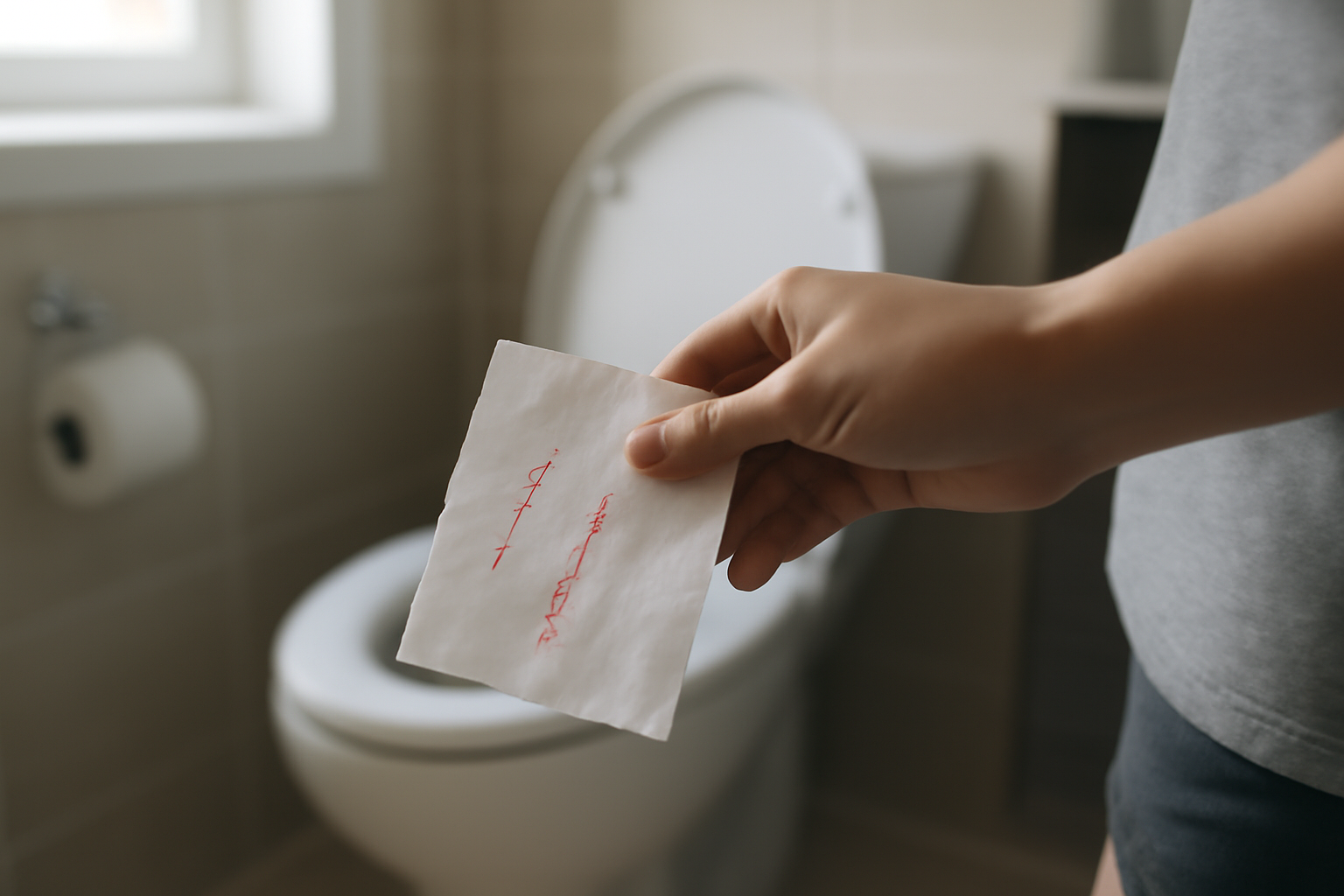
If you see blood on toilet paper when wiping but no period, it’s normal to think of the worst. Still, many causes are common and treatable once you match the pattern to what’s going on in your body (and when it happens).
Common non-period causes of blood when wiping (and how to tell them apart)
Blood on toilet paper but no period is often irritation or bleeding from the vagina, vulva, or rectum. Bright red streaks (often a lower source), spotting after sex (vaginal/cervical irritation), or blood mixed with stool (more likely rectal or bowel-related) are useful clues. Timing, color, and other symptoms help narrow it down.
Start with one question: where does the blood seem to come from when you wipe? If it looks more like it’s coming from the front—especially after wiping near the vagina/vulva—vaginal or cervical sources move higher on the list. If it appears more from the back or clearly after bowel movements, rectal causes are more likely.
Color and pattern matter, too. Bright red blood often suggests fresh bleeding from a lower area. Dark spotting can still be harmless, but it may reflect different timing or slower bleeding. (And yes, it can be hard to tell at first—tracking for a day or two usually helps.)
Quick source-matching checklist
- Bright red streaks: often lower-source bleeding (vagina/vulva or rectum)
- After sex: commonly vaginal or cervical irritation
- With constipation/straining: hemorrhoids or anal fissures become more likely
- Blood mixed with stool: supports rectal/anorectal or bowel causes
- Urinary symptoms (burning, urgency): consider urinary or STI-related causes
Vaginal and cervical spotting: pregnancy, hormonal shifts, and infections
If the blood seems vaginal (on the tissue after wiping from the front), possible causes include hormonal spotting, ovulation-related changes, cervical irritation, infections, or pregnancy-related bleeding. If there’s any chance you could be pregnant, take a pregnancy test. Ongoing spotting, pelvic pain, fever, or foul discharge should be checked promptly.
Front-of-wiping blood points toward the vagina, vulva, or cervix. Hormonal shifts can cause light spotting outside a regular period—especially around ovulation or during cycle changes. Cervical irritation can also happen after sex, after a pelvic exam, or from friction during exercise. Sometimes the simplest explanation really is the right one.
Pregnancy is a key consideration. Tests are most reliable after a missed period, but early testing can still help depending on timing. If bleeding comes with significant pelvic or abdominal pain—or if you have risk factors for ectopic pregnancy—treat it as urgent until it’s ruled out.
Infections: what typically comes along with spotting
Infections usually bring more than blood. Watch for discharge changes, odor, itching, burning, pelvic discomfort, or pain during sex. STIs and cervicitis can cause spotting, especially after intercourse. If you’ve had new partners or unprotected sex, getting tested through a clinician or local sexual health service is often the fastest way to get clarity.
For more on rectal bleeding and pregnancy-related complications, you can also review resources from the NHS on rectal bleeding and the NHS on ectopic pregnancy.
Rectal bleeding without a period: hemorrhoids, anal fissures, and IBD red flags
When blood shows up on toilet paper after bowel movements, hemorrhoids and anal fissures are common causes. Hemorrhoids often cause bright red bleeding with itching or discomfort; fissures can cause sharp pain during or right after passing stool. More concerning patterns include recurrent bleeding, weight loss, diarrhea, or blood mixed into stool—these can point toward inflammatory bowel disease or other conditions.
Hemorrhoids are a frequent reason adults notice blood on toilet paper. They can flare with constipation, straining, heavy lifting, or prolonged sitting. You might also notice swelling, mild pain, or a persistent urge to pass stool even after you’re done.
Anal fissures are another common cause. They often cause sharp, stabbing pain during or right after a bowel movement, plus bright red blood on wiping. If you’ve been constipated recently, that’s a helpful link—constipation and straining are common contributors to anorectal bleeding.
Hemorrhoid vs fissure: a practical way to tell
- Hemorrhoids: bleeding may be painless or mildly uncomfortable; itching or pressure is common.
- Anal fissure: usually sharp pain tied to stool passage; bleeding tends to be bright red.
Some patterns deserve extra attention. Recurrent bleeding, blood mixed into stool, persistent diarrhea, or weight loss can be “alarm” features. Inflammatory bowel disease and other gastrointestinal conditions still need medical evaluation, even when the blood looks bright red.
Medication, bleeding disorders, and injury: why blood can show up even when cycles don’t
Some people bleed more easily because of medications (especially blood thinners like warfarin, apixaban, rivaroxaban, or antiplatelets), supplements, or bleeding disorders. Local injury—rough wiping, constipation-related trauma, or friction from sex or shaving—can also cause streaks of blood without a period. If you’re on anticoagulants or bruise easily, it’s smart to get advice sooner rather than later.
Think about anything that affects clotting. Anticoagulants and antiplatelet drugs can increase bleeding risk from minor irritation. Even small friction—wiping harder than usual during constipation, or shaving that irritates vulvar skin—can lead to visible streaks.
Constipation is a big “multiplier.” Straining can create tiny tears or worsen hemorrhoids, and the result may show up as blood on the tissue even if your menstrual cycle has been steady. (If you’ve been drinking less, eating differently, or traveling, that can be the hidden trigger.)
Bleeding disorder clues
Consider bleeding disorders if you also have easy bruising, frequent nosebleeds, prolonged bleeding after cuts, or a family history of clotting problems. A clinician can evaluate with a targeted history and blood tests if needed.
If you want broader context on rectal bleeding patterns and when to get checked, the NHS rectal bleeding page is a helpful starting point.
When to seek urgent care: symptoms that suggest something serious
Get urgent care if bleeding is heavy (soaking the toilet paper repeatedly or passing clots), you feel faint, you have severe abdominal/pelvic pain, or you suspect pregnancy with pain. Black/tarry stool, persistent bleeding beyond a few days, fever, or symptoms of anemia (extreme fatigue, shortness of breath) also deserve prompt evaluation.
Severity changes what you should do. Light spotting once or twice may be monitored if there are no red flags. But heavy bleeding, clots, or worsening symptoms should be treated as urgent. If you feel faint, don’t wait.
Black, tarry stool (melena) can signal bleeding higher in the gastrointestinal tract and needs urgent assessment. Persistent or recurrent rectal bleeding often warrants medical evaluation even if it looks bright red. And if pregnancy is possible, pain with bleeding should be treated as an emergency until ectopic pregnancy and other complications are ruled out.
Red-flag symptoms checklist
- Soaking toilet paper repeatedly, clots, or rapidly increasing bleeding
- Fainting, dizziness, or signs of shock
- Severe pelvic or abdominal pain
- Black/tarry stool or vomiting blood
- Fever, worsening weakness, or symptoms of anemia
- Pregnancy possible + pain (urgent evaluation)
Next steps: what to do now, what to track, and what a clinician may check
Start by tracking when the blood happens (after sex, after bowel movements, or randomly), the color, the amount, and any pain, discharge, constipation, or urinary symptoms. Avoid straining and use gentle wiping. (It’s not the time to “push through” discomfort.)
A clinician may examine the vulva/cervix or rectum, review pregnancy risk, and order tests such as a pregnancy test, urinalysis, STI testing, blood counts, or stool/colonoscopy evaluation depending on your symptoms and age.
Your goal is simple: give enough detail to narrow the source quickly. Write down the date, time, and trigger (sex, bowel movement, shaving, constipation, exercise). Note whether blood appears on wiping from the front or back, and whether it’s streaks versus mixed into stool.
While you arrange care, keep things gentle. Avoid aggressive wiping, don’t strain, and consider constipation support with hydration and fiber. If vaginal irritation is likely, skip fragranced products and tight clothing for a few days. If STI risk exists, avoid sex until you’re evaluated (and use barrier protection if you do).
What clinicians commonly check
- Physical exam of external genital area and/or rectum, depending on where the blood seems to originate.
- Pregnancy testing when vaginal bleeding is possible and pregnancy risk exists. A pregnancy test is often a first step.
- STI testing if discharge, pain with sex, or risk factors suggest infection. See CDC guidance on STDs and WHO sexually transmitted infections.
- Blood work, including a complete blood count (CBC) to assess anemia if bleeding is significant or recurrent.
- GI evaluation (stool tests, imaging, or colonoscopy) if there are bowel red flags, persistent symptoms, or risk factors by age.
FAQ
How can I tell if the blood is from the vagina or the rectum when I wipe?
Look at where the blood appears on the wipe. Front wiping (toward the vagina/vulva) points to vaginal or cervical sources; blood that shows up after bowel movements or on the toilet tissue from the back points more toward rectal or anorectal causes. Timing and associated symptoms (pain with stool, itching, discharge) help refine the guess.
What test should I do first if I have blood on the paper but no period and I could be pregnant?
Take a pregnancy test first if pregnancy is possible. If bleeding comes with significant pelvic or abdominal pain, or you have risk factors for ectopic pregnancy, seek urgent evaluation rather than waiting on home test results.
Why might I have light bleeding after sex but no period?
Light bleeding after sex can come from vaginal or cervical irritation, friction, dryness, or inflammation. Infections and certain cervical conditions can also cause spotting. If it repeats, lasts more than a few days, or comes with pain, discharge, or odor, get checked for the cause.
When should I see a clinician for bright red blood on the toilet paper after bowel movements?
Consider medical evaluation if bleeding recurs, persists beyond a few days, is increasing, or comes with alarm features such as weight loss, persistent diarrhea, dizziness, severe pain, or blood mixed into stool. Even bright red blood can require workup when it doesn’t settle.
How long can light spotting last before I should get medical advice?
If the spotting lasts more than a few days, keeps coming back, or interferes with normal activities, arrange medical advice. Seek urgent care sooner if you have heavy bleeding, faintness, fever, severe pelvic/abdominal pain, black/tarry stool, or pregnancy with pain.
Can blood thinners cause blood on the toilet paper even if I’m not having my period?
Yes. Anticoagulants and antiplatelet medications can increase bleeding risk from minor irritation or small tears, including hemorrhoids, fissures, or genital/vulvar friction. If you notice new bleeding while on these drugs—especially if it’s heavy or worsening—contact a clinician promptly.
Key takeaways
- Bright red blood on toilet paper often points to a lower source, but you still need to match it to timing and symptoms.
- If the blood seems vaginal (front wiping), consider pregnancy possibility, hormonal spotting, irritation, and infections.
- If it’s linked to bowel movements, hemorrhoids or fissures are common, but persistent bleeding needs evaluation.
- Medications, constipation, and friction can cause bleeding even without a period—review your risk factors.
- Seek urgent care for heavy bleeding, faintness, severe pelvic/abdominal pain, black/tarry stool, fever, or pregnancy with pain.
- Track color, amount, timing, and associated symptoms to help a clinician diagnose faster.
- Arrange medical advice if bleeding lasts more than a few days, recurs, or comes with red-flag symptoms.
1 commentaire sur « Blood on Toilet Paper When Wiping But No Period: Causes »