
Quick Take
- A small blood clot when i wipe no period is often old blood that sat in the vagina or cervix and then came out later—especially with light spotting.
- Timing matters: ovulation, early/late periods, and perimenopause can all lead to brief, mild bleeding that looks like clots only when wiping.
- If pregnancy is possible, take a pregnancy test; seek urgent care for severe pain, heavy bleeding, fever, fainting, or pregnancy warning signs.
Seeing a small blood clot when i wipe no period can be unsettling—especially when your pad looks “dry.” In many cases, it’s spotting: blood that’s light enough to show up only after wiping, or old blood that leaves later.
Still, your cycle timing and symptoms decide how reassuring this is. A one-time, brief episode can be harmless; repeated bleeding, pain, pregnancy risk, or unusual discharge changes the picture. (And yes, bodies can be weird.)
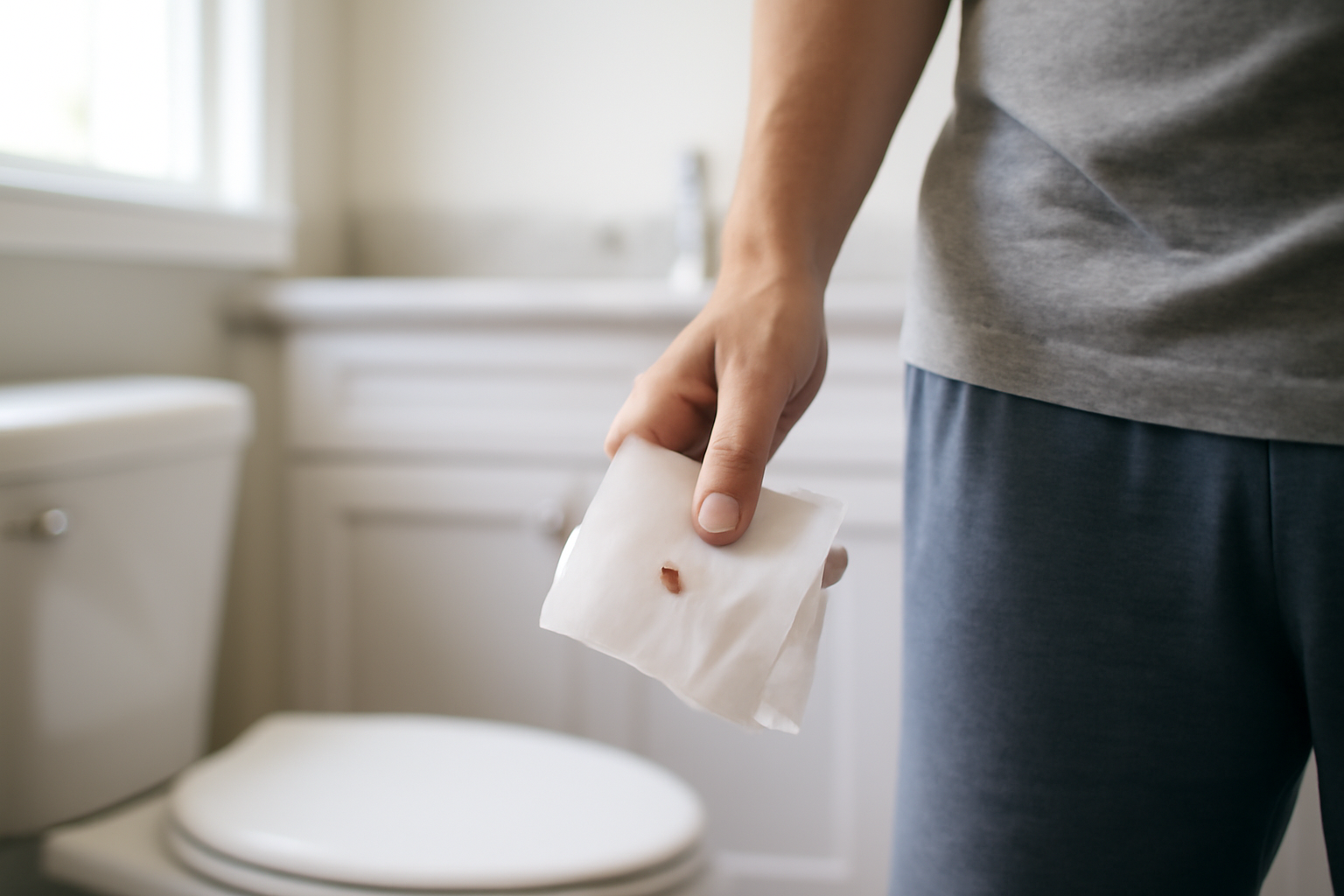
A small trace of blood on wiping can happen with light spotting or old blood leaving later.
Small clots on wiping without bleeding: what it usually is
A small clot you notice only when wiping is often old blood that collected in the vagina or cervix and then came out later. This is common with light spotting, irregular cycles, or the start/end of a period. If it happens once, is brief, and you feel well, it may be benign—but patterns matter.
Old blood can clot in the vaginal canal and show up only when you wipe, even if you don’t see anything on a pad. Blood can pool between restroom trips, then release when you move or wipe. That delayed “exit” often makes the clot look small and darker than fresh bleeding.
Spotting is usually described as light bleeding that may show up on wiping rather than soaking pads. Clots are more likely when blood sits longer—think of it as thicker, darker material formed after time. (And it can happen even when you don’t feel like you’re “on your period.”)
One-off episodes are often less concerning than repeated or worsening ones. Pay attention to what you notice: how many times it happens, whether it’s getting bigger, and whether new symptoms show up—cramps, odor, itching, or bleeding after sex.
Timing clues: ovulation spotting, late/early periods, and perimenopause
When the clot appears around ovulation, before a period starts, or near the end, it can fit normal cycle variation. Hormonal shifts can cause endometrial shedding that’s light enough to be seen only on wiping. During perimenopause, irregular bleeding and small clots can also show up as estrogen and progesterone fluctuate.
Ovulation typically occurs about 10–16 days before the next period (it varies by cycle length). Some people get ovulation spotting mid-cycle, and it can be intermittent. If your clot shows up in that window and then stops, cycle timing may be the main explanation.
Early or late periods can also create “almost no blood” days. You might get a few spots, then later a fuller flow—or you may only see small clots when wiping. Perimenopause often begins in the 40s, but timing varies, and bleeding patterns can get mixed (light days plus occasional clots).
Try mapping dates. If the clot keeps showing up at the same point in your cycle, it points toward cycle-related spotting rather than something new. Wouldn’t it be easier if your body followed a predictable schedule?
What to watch for in your calendar
- Mid-cycle timing (possible ovulation spotting)
- Days before your expected period (possible early start)
- Days after expected bleeding (possible end-of-period spotting)
- Irregular spacing (possible perimenopause or hormone imbalance)
Hormones and common conditions: PCOS, thyroid issues, and medication effects
Hormonal imbalances can change how the uterine lining sheds, leading to spotting or small clots without a full period. PCOS and thyroid disorders are common causes of irregular bleeding. Birth control changes—starting, stopping, missed pills, or switching methods—can also trigger breakthrough bleeding that may appear as clots on wiping.
With PCOS, ovulation can be unpredictable. When ovulation doesn’t happen on schedule, the uterine lining may build differently, then shed in irregular patterns. That can show up as spotting, clots, or cycles that are farther apart or inconsistent.
Thyroid dysfunction can also throw off cycle timing and flow. Even mild thyroid imbalance can affect hormones involved in menstruation. If you also notice fatigue, feeling cold or hot more than usual, weight changes, hair thinning, or constipation, thyroid-related causes become more likely.
Medication effects are common. Starting birth control, missing pills, delaying injections, or switching methods can cause breakthrough bleeding. Sometimes the “break” is subtle—only when you wipe. If you recently changed contraception, that history matters.
When hormone-related spotting is more likely
- Irregular cycles for months
- New contraception changes in the last 1–3 months
- Symptoms like acne flare-ups, excess facial hair, or weight changes (possible PCOS)
- Energy or temperature intolerance changes (possible thyroid issues)
Pregnancy-related bleeding: implantation, miscarriage warning signs, and ectopic risk
If pregnancy is possible, treat any bleeding—even light spotting or small clots—as something to take seriously. Implantation bleeding is usually light. Miscarriage can start as spotting that may progress to clots and cramping. Ectopic pregnancy can cause bleeding and pain, sometimes without a typical period, and it needs urgent evaluation.
If you could be pregnant, take a home pregnancy test. Home tests are most reliable after a missed period, but testing too early can miss a pregnancy. If it’s negative and bleeding continues, repeat testing after a short interval or contact a clinician for guidance.
Miscarriage warning signs often include cramps and bleeding that increases over time. The pattern can start as light spotting and then progress. If you have worsening pain, passing tissue, or you feel faint, get medical help promptly.
Ectopic pregnancy is a medical emergency. It can present with bleeding and pain—sometimes on one side—along with dizziness, fainting, or shoulder pain. If you have pregnancy risk plus pain or worsening bleeding, don’t wait for a “normal period” to confirm things.
External guidance you can trust
When it’s not “just spotting”: fibroids, polyps, infection, and cervical causes
Small clots without a clear period can also come from structural or infectious causes. Uterine fibroids or endometrial polyps can cause irregular bleeding. Cervicitis or vaginal infections may cause bleeding after irritation, and cervical changes can lead to abnormal spotting. Persistent symptoms, bleeding after sex, or unusual discharge make a treatable cause more likely.
Fibroids (benign uterine growths) are common in people of reproductive age, with prevalence estimates varying by study. They can cause abnormal uterine bleeding—sometimes intermittent spotting, sometimes heavier flows, and occasionally clots. If your bleeding pattern changes and stays changed, it’s worth getting evaluated.
Polyps in the uterus or cervix can also trigger irregular bleeding. Polyps may cause spotting between periods or bleeding after sex. Because symptoms overlap with hormone changes, a clinician may use an exam and possibly imaging to tell the difference.
Infections can irritate tissue and cause bleeding. Watch for odor, unusual discharge, itching, burning during urination, pelvic pain, or bleeding after sex. If you suspect an infection, testing matters—treating the cause can resolve the bleeding.
Cervical causes can include cervicitis or abnormal cervical tissue. Bleeding after sex is a common clue that something needs a checkup, even if the bleeding looks light. That’s a well known issue in adult webcams.
Clues that push this toward evaluation
- Bleeding after sex
- Persistent spotting for more than a few days or across multiple cycles
- Unusual discharge, odor, itching, or pelvic discomfort
- New bleeding pattern if you’re older than typical cycle years
Red flags and next steps: when to seek urgent care vs schedule a checkup
Seek urgent care if you have heavy bleeding (soaking a pad rapidly), severe pelvic pain, fainting, fever, or signs of pregnancy complications. If bleeding is mild but keeps recurring, lasts more than a few days, or you have new risk factors (age changes, contraception changes, possible pregnancy), schedule a clinician visit. Track dates, clot size, and symptoms.
“Heavy” bleeding is more than just a clot. A common clinical threshold for heavy bleeding is soaking a pad in about an hour for multiple hours. If you’re filling pads quickly, feel weak, or see large clots, urgent care is appropriate.
Severe pelvic pain, fever, fainting, or dizziness are also red flags. These symptoms can signal infection, significant bleeding, or pregnancy-related complications. If pregnancy is possible, pain plus bleeding should be taken seriously.
If your symptoms are mild but persistent—like repeated small blood clot when i wipe no period episodes across weeks—it’s a good idea to schedule a checkup. A clinician can review your cycle history, do an exam, and order tests such as pregnancy testing, infection screening, or ultrasound if needed.
How to prepare for your appointment
- Write down dates of spotting and clot appearance
- Note clot size (pea-sized, dime-sized) and color (dark vs bright)
- List symptoms: cramps, odor, discharge, pain with sex, urinary symptoms
- Include contraception details (type, start date, missed doses)
- Share pregnancy risk (timing of unprotected sex, contraception gaps)
If you’re in perimenopause or postmenopause, abnormal bleeding deserves timely evaluation. The ACOG guidance emphasizes that bleeding after menopause should not be ignored—especially if it’s new or recurrent. You can review ACOG: bleeding after menopause for context.
FAQ
How can I tell if a small clot when wiping is normal or concerning?
A small clot seen only when wiping is often old blood from light spotting, especially if it’s brief and you feel well. It becomes more concerning if it repeats over multiple cycles, comes with pelvic pain, fever, unusual discharge, bleeding after sex, or if pregnancy is possible.
What pregnancy test should I take if I see blood when wiping but I’m not getting a period?
Use a home urine pregnancy test. For best accuracy, test after a missed period. If the result is negative but bleeding continues, repeat in a few days or contact a clinician for a blood pregnancy test.
Why do I see blood when I wipe but not on my pad?
That pattern often happens with spotting: only a small amount of blood reaches the vagina, so it shows up on wiping rather than soaking a pad. Old blood can also clot and come out later, making pad bleeding look “dry.”
When should I see a doctor if I have small clots but no period?
Schedule a checkup if spotting with clots lasts more than a few days, keeps recurring, or you have new risk factors like contraception changes or possible pregnancy. Go sooner if there’s pain, fever, foul-smelling discharge, or bleeding after sex.
How many days of spotting with small clots is still considered “light”?
Light spotting is often brief—commonly a few days—without heavy flow. If it continues beyond that window, becomes more frequent, or you start seeing larger clots, it’s better to get evaluated.
Can I have an ectopic pregnancy with only traces of blood?
Yes. Ectopic pregnancy can present with light bleeding or spotting and may not look like a typical period. If you have pregnancy risk plus pain, dizziness, fainting, or shoulder pain, seek urgent care right away.
Key takeaways
- A small clot on wiping can be old blood that collected and then came out later, especially with light spotting.
- Cycle timing (ovulation, early/late period, perimenopause) often explains brief, mild bleeding without a full flow.
- Hormonal issues like PCOS or thyroid problems, and contraception changes, can cause breakthrough spotting and clots.
- If pregnancy is possible, take a pregnancy test and consider urgent evaluation if pain or worsening bleeding occurs.
- Persistent or recurrent abnormal spotting may signal fibroids, polyps, infection, or cervical causes—get checked.
- Go to urgent care for heavy bleeding, severe pain, fever, fainting, or any concerning pregnancy-related symptoms.
- Track dates, clot size, and associated symptoms to help a clinician find the cause faster.
Bottom line: a small blood clot when i wipe no period is often harmless old blood or light spotting, but your timing, symptoms, and pregnancy risk guide what you should do next.
Sources for further reading: WHO, NHS on bleeding problems, CDC on pregnancy, ACOG on bleeding after menopause.
If you’re also wondering how bleeding behaves in different situations, you may find this related read helpful: Do periods stop in the bath? What to know.
For general health resources and updates, you can browse the news feed.