
Hot flashes are most often linked to perimenopause or menopause, but they can also come from medication side effects, thyroid problems, infections, certain cancers, or neurologic and metabolic conditions. If they’re new, severe, or paired with red-flag symptoms (fever, weight loss, chest pain, abnormal bleeding), get medical care promptly.
Quick Take
- Most common cause: perimenopause or menopause, often with cycle changes and night sleep disruption.
- Common non-menopause triggers: alcohol, spicy foods, stress, heat, and some medications.
- Don’t ignore red flags: chest pain, fainting, severe breathing trouble, persistent high fever, or abnormal vaginal bleeding.
Hot flashes are sudden waves of heat, often followed by sweating and flushing. They can be a normal hormonal shift—but the pattern is what helps sort out what’s driving them.
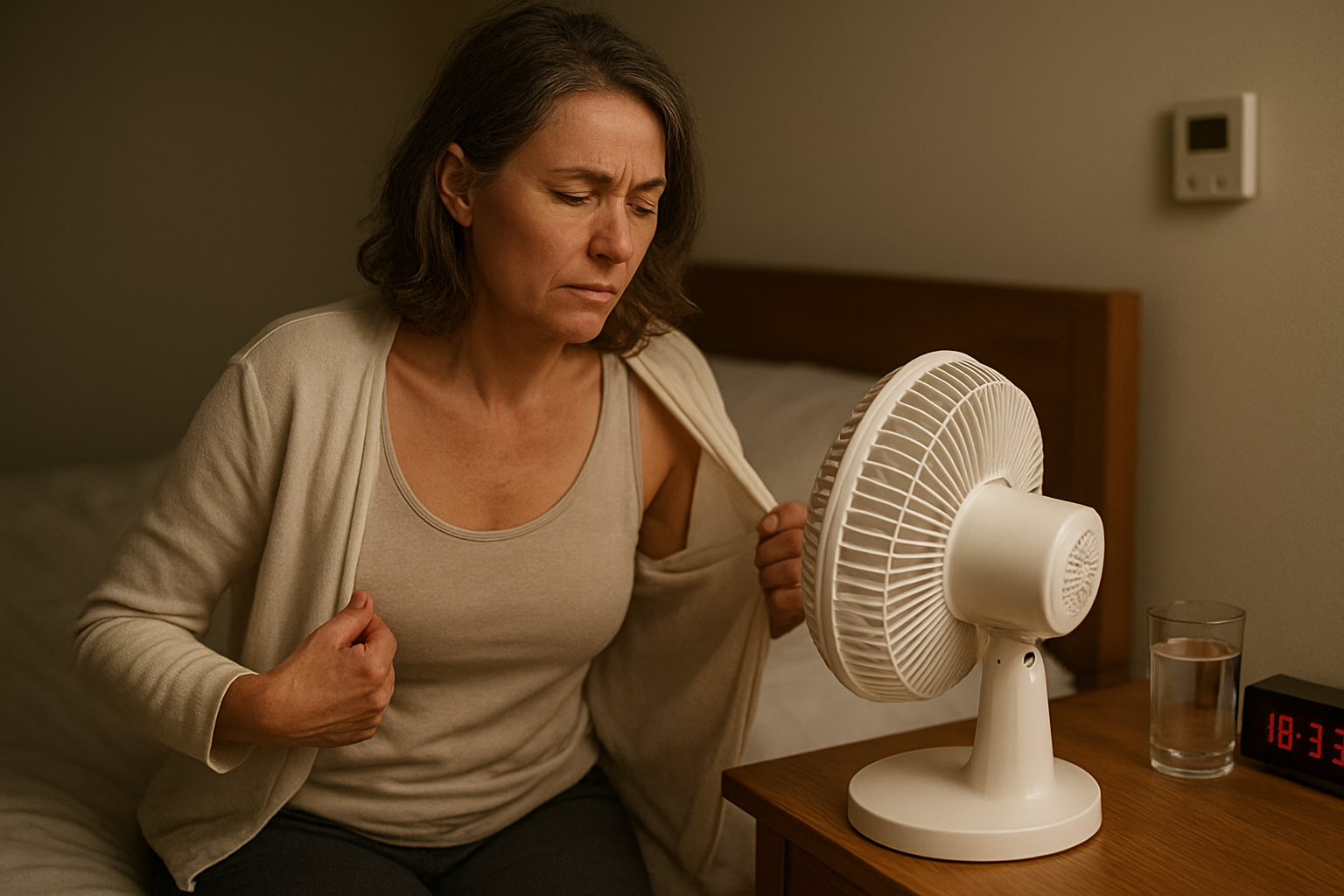
Hot flashes vs. menopause: what they usually mean
Hot flashes are a vasomotor symptom: sudden heat waves that may include flushing, sweating, and a rapid heartbeat. They’re most common during perimenopause and menopause, when hormone levels fluctuate. If you’re between your late 30s and 50s and you’re also seeing cycle changes or sleep disruption, menopause is a likely explanation.
Clinically, hot flashes feel like intense heat in the upper body (face, neck, chest), often with visible redness and sweating. After the episode, some people feel chilled because the body temperature drops once the heat surge passes—like a wave that comes, peaks, and then flips into cold.
Timing matters. Perimenopause can start years before periods stop, so you may still bleed but notice new irregularity—shorter cycles, longer cycles, or skipped months. Hot flashes can show up during this transition even before your period fully stops.
Night sweats are a common pattern and can make sleep worse, which then affects mood and daytime fatigue. Studies report hot flashes in over 70% of people going through menopause, though the exact number varies by study design and population. For many people, an episode lasts from a few minutes to longer stretches.
How to tell “menopause-type” hot flashes from other heat surges
- Common context: late 30s to 50s, irregular cycles, sleep disruption.
- Typical episode feel: sudden heat + flushing/sweating, then possible chills.
- Night pattern: waking sweaty, needing to change clothes or bedding.
If your episodes don’t fit this pattern—or they start outside the usual age window—other causes deserve attention.
Non-menopause causes: medications, hormones, and lifestyle triggers
Not all hot flashes come from menopause. Common non-menopause triggers include medication side effects (including certain antidepressants, hormone therapies, steroids, and some diabetes medications), alcohol, spicy foods, hot environments, and stress. If hot flashes started after a new prescription or a dose change, that timing is a strong clue.
Look at what changed. Review recent starts, stops, and dose changes—especially within the last several weeks to months. Several medication classes can affect thermoregulation and vasomotor symptoms. Examples include antidepressants (including some SSRIs/SNRIs), systemic steroids, and certain diabetes medications (for some people, the heat-like sensation can overlap with blood sugar swings).
Then match lifestyle triggers to the timing of episodes. Alcohol and spicy foods are frequently reported triggers. Heat exposure (hot rooms, saunas, direct sunlight) and stress can also push the body’s temperature regulation and adrenaline response. Even caffeine can play a role for some people, especially if it worsens anxiety or disrupts sleep.
Hormone timing matters too. Sometimes the cause isn’t “age,” it’s a hormonal shift. Hot-flash-like symptoms can appear after starting or stopping hormonal therapy or after changes in reproductive hormones. If you recently adjusted birth control, menopause hormone therapy, or another hormone-containing treatment, note the date and dose.
What to do when you suspect a trigger
- Isolate one variable: cut alcohol or spicy foods for a short trial.
- Lower heat exposure: keep rooms cooler, use fans, dress in layers.
- Track changes: if the trigger is the driver, improvements may show up within days to weeks.
Don’t stop prescribed medications on your own. Bring the timing to a clinician so they can consider alternatives or dose adjustments.
Medical conditions that can cause hot flashes (and how to spot them)
Hot flashes can also be linked to medical conditions such as thyroid disorders (especially hyperthyroidism), infections with fever, low blood sugar episodes, and some hormone-secreting tumors. Clues include other symptoms like unexplained weight loss, tremor, persistent fever, night sweats that feel infectious, or new palpitations outside your usual hot-flash pattern.
Thyroid imbalance is a key non-menopause cause to rule out. With hyperthyroidism, the body’s “speed” increases, which can look like heat intolerance and sweating. People often report tremor, palpitations, anxiety, and sometimes weight loss despite normal or increased appetite. If your episodes come with these symptoms, ask about thyroid testing.
Infections and inflammatory conditions can also cause sweating and night discomfort. Sweats from infection usually come with fever or feeling acutely ill, not just isolated flushing. Persistent fever, repeated “running down,” or night sweats that keep returning without a clear menopausal pattern are stronger signals than occasional mild sweating.
Metabolic issues can mimic hot flashes, too. Low blood sugar (hypoglycemia) can cause sweating, shakiness, a rapid heartbeat, and sudden discomfort that feels similar to a heat surge. If episodes happen after skipping meals, after exercise, or in relation to diabetes medications, that context matters.
There’s overlap with anxiety and panic as well—adrenaline-driven surges can include flushing, sweating, and a racing heart. The context helps: panic episodes often include intense fear, tingling, or a sense of impending doom, while fever-related sweats tend to track with illness.
Quick checklist: features that point beyond menopause
- Tremor or heat intolerance plus palpitations → consider thyroid imbalance.
- Persistent fever or feeling sick → consider infection/inflammation.
- Sweating with shakiness or after missed meals → consider blood sugar swings.
- Unexplained weight loss → needs medical assessment.
When to worry: red flags and urgent symptoms
Get prompt medical care if hot flashes are new and you have red flags such as chest pain, fainting, severe shortness of breath, persistent high fever, unexplained weight loss, or abnormal vaginal bleeding. Urgent evaluation is also important if night sweats are drenching and ongoing without a clear trigger, or if you have a history of cancer or are immunocompromised.
Cardiopulmonary symptoms are the clearest urgency markers. Chest pain, fainting, and severe shortness of breath can signal heart or lung issues—not just hormone-related vasomotor changes. If an episode includes these symptoms, treat it as urgent.
Systemic red flags count, too. Persistent high fever, drenching night sweats, and unexplained weight loss deserve evaluation. Drenching sweating that soaks clothing or bedding—especially when it keeps happening and you can’t identify a trigger like alcohol, a hot room, or illness—shouldn’t be brushed off.
Bleeding patterns can be a warning sign. Abnormal uterine bleeding after menopause is considered a warning sign that needs medical assessment. If you’ve stopped having periods and then bleeding returns, call your clinician rather than assuming it’s “just hormones.”
When to choose emergency care vs. same-week evaluation
- Emergency care: chest pain, fainting, severe breathing trouble.
- Same-week evaluation: persistent drenching night sweats, unexplained weight loss, ongoing fever.
- Prompt appointment: abnormal vaginal bleeding, new palpitations that aren’t typical for you.
A clinician can sort vasomotor symptoms from fever-related night sweats by combining your history, vitals, and targeted testing. (It’s not always obvious from symptoms alone.)
What to do next: tracking symptoms and getting the right tests
Start by tracking when hot flashes happen, how long they last, what you were doing or eating, and any associated symptoms (palpitations, dizziness, fever, bleeding). Bring that log to your clinician. Depending on your situation, they may check thyroid function, review medications, and consider pregnancy status, blood counts, or other targeted tests to rule out non-menopause causes.
A symptom diary turns vague discomfort into usable data. A practical log for 1–2 weeks helps reveal patterns—frequency, duration, and triggers (alcohol, spicy foods, heat, stress, caffeine, or timing around meals). Note whether episodes happen during the day, in the evening, or wake you from sleep.
Also capture what else was going on. Record associated symptoms such as tremor, rapid heartbeat, shortness of breath, dizziness, headache, or fever. Include menstrual changes if relevant (cycle length, missed periods, spotting). If you suspect a medication link, write down the start date and dose.
Testing is usually targeted, not automatic. Thyroid testing (often TSH and sometimes free T4) is commonly used when heat intolerance, palpitations, or tremor suggest thyroid involvement. Clinicians often start with your history and then choose labs based on the full picture.
Medication review is often one of the fastest ways to find a fix. If you can connect episodes to a new prescription, dose change, or supplement, your clinician can consider alternatives. If pregnancy is possible, that changes the evaluation and safety decisions.
External guidance you can reference
Relief options: lifestyle changes, nonprescription strategies, and treatments
Relief often starts with trigger control: keep rooms cool, dress in layers, limit alcohol and spicy foods, and cut back on caffeine if it worsens symptoms. Evidence-based options may include certain nonhormonal prescription treatments and, for eligible patients, hormone therapy. The best plan depends on your age, health history, and whether menopause is the likely cause.
Environmental changes can reduce frequency and severity. Use fans, breathable fabrics, and layered clothing so you can adjust quickly during an episode. Sleep strategies help too: cool bedroom temperature, moisture-wicking bedding, and a plan for night sweats (for example, changing damp sheets promptly to protect sleep quality).
Many people notice improvement within weeks when trigger management and sleep adjustments are consistent—especially if alcohol, spicy foods, or heat are major contributors. If stress is the trigger, even short breathing exercises or structured relaxation before bed can help take the edge off adrenaline surges (small changes can matter more than you’d expect).
Nonhormonal prescription options are often used when hormone therapy isn’t suitable or when someone prefers to avoid hormones. These choices are individualized based on health conditions, medication interactions, and symptom severity. A clinician can review benefits and risks in your specific context.
Hormone therapy can be an option for eligible patients, but decisions are individualized. Time since menopause and personal risk profile guide whether hormones are appropriate, what dose is used, and how long therapy continues. If you have a history that affects risk (for example, certain clotting or cancer risks), nonhormonal strategies may be preferred.
Practical next steps for today
- Lower room temperature and use a fan when possible.
- Limit alcohol and spicy foods for a short trial and watch for changes.
- Track episodes for 1–2 weeks and bring the notes to your clinician.
- Ask about medication side effects if symptoms began after a new prescription or dose change.
FAQ
How do I know if hot flashes are a sign of menopause?
Hot flashes linked to menopause often show up during perimenopause (late 30s to 50s), along with cycle changes and night sleep disruption. Episodes are sudden waves of heat with flushing and sweating, sometimes followed by chills. If your pattern fits menopause and your age aligns, it’s a strong possibility—but new or severe symptoms still deserve evaluation.
What causes hot flashes besides menopause?
Common non-menopause causes include medication side effects (some antidepressants, steroids, and other drug classes), alcohol, spicy foods, stress, and heat exposure. Thyroid disorders (especially hyperthyroidism), infections with fever, and episodes of low blood sugar can also mimic hot flashes.
Why do hot flashes happen at night and cause night sweats?
Night hot flashes are vasomotor episodes that occur during sleep. When the body shifts temperature regulation, you may sweat heavily, wake up flushed, and then feel chilled as the episode resolves. Poor sleep can follow, which can amplify fatigue and mood symptoms.
When should hot flashes make me worry about a serious condition?
Get prompt care if hot flashes are new and paired with chest pain, fainting, severe shortness of breath, persistent high fever, unexplained weight loss, or abnormal vaginal bleeding. Drenching night sweats that continue without a clear trigger also warrant evaluation.
How long do hot flashes typically last during perimenopause and menopause?
Hot flashes vary widely. Individual episodes can last from minutes to longer stretches, often a few minutes. Symptoms may come and go over months to years during the perimenopause-to-menopause transition, depending on the person.
Are hot flashes a sign of thyroid problems?
They can be. Hyperthyroidism may cause heat intolerance and sweating, often with additional symptoms such as tremor and palpitations. If your hot flashes come with these features, thyroid testing (such as TSH and sometimes free T4) is a common next step.
Key takeaways
- Hot flashes are most often linked to perimenopause or menopause, especially with cycle changes and sleep disruption.
- Medication side effects and common lifestyle triggers can cause hot-flash-like episodes even when menopause isn’t the cause.
- Thyroid issues, infections, and metabolic problems can mimic hot flashes—watch for additional symptoms like fever, weight loss, tremor, or palpitations.
- Get urgent care for chest pain, fainting, severe shortness of breath, or persistent high fever; seek prompt evaluation for abnormal bleeding or drenching night sweats.
- Track timing, duration, triggers, and associated symptoms for 1–2 weeks to help your clinician pinpoint the cause.
- Treatment depends on the underlying reason: lifestyle strategies first, then nonhormonal or hormonal options if appropriate.
- If symptoms are new, severe, or unexplained, don’t assume it’s “just menopause”—ask about targeted testing and medication review.
When you’re trying to figure out what hot flashes are a sign of, the most useful clues are pattern: your age and cycle changes, medication timing, and whether fever, weight loss, tremor, or palpitations are present. (What else shows up with the heat?)
jhops.org — Evidence-first health guidance for real-life decisions.
1 réflexion au sujet de « What Is Hot Flashes a Sign of? Causes and When to Worry »