
Weak chin side profile usually means your chin looks recessed or underprojected from the side, so the chin–neck area doesn’t read as clearly. The jawline can look softer than you expected, even if you feel your chin is “fine” from the front.
Start with a structured look at the bite and the lower-lip balance—those two details often explain more than the shape alone.
Chin filler (commonly hyaluronic acid) can be a good fit for mild to moderate underprojection. If the issue is mainly skeletal, genioplasty is often the most dependable option.
And yes—use consistent side photos. It’s the simplest way to track change safely (and to avoid chasing random angles).
| Main concern | Reduced chin–neck definition in a side view |
| Common descriptors | Recessed chin, underprojected chin |
| Most common non-surgical option | Hyaluronic acid chin filler |
| Most reliable structural option | Genioplasty (chin bone surgery) |
| Best first step | Standardized side-photo assessment + bite check |
| Photo consistency matters | Neutral head posture, eye-level camera, relaxed jaw |
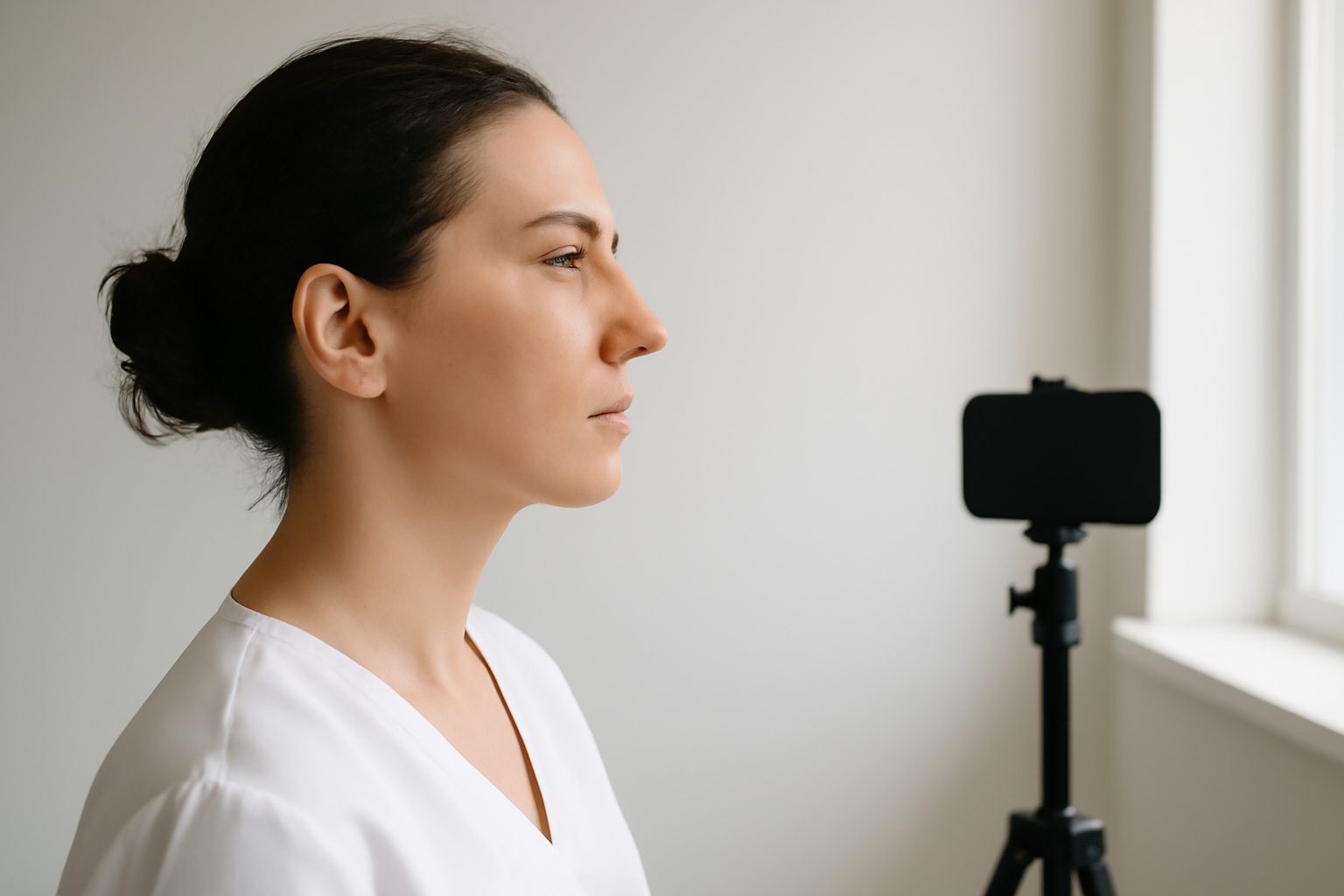
What a weak chin side profile means (recessed vs underprojected chin)
A “weak chin side profile” usually describes a chin that looks recessed or underprojected when you view it from the side. In practice, that often means the jawline and neck look less defined. The cause can be chin size, projection, or how the chin sits relative to the lower lip and jaw.
In facial aesthetics, “recessed” often suggests the chin sits farther back compared with the lower lip. “Underprojected” usually means the chin doesn’t have enough forward projection, even if it’s in a similar vertical position. Either way, the chin–neck angle can soften—exactly the kind of transition many people want to sharpen (and it shows up clearly in side-profile photos).
When the chin lacks forward projection, the lower face can feel like it “falls back” toward the neck. You may notice less jawline definition, a chin that looks shorter, or a chin–lip balance that feels off. Want a quick way to describe what you’re seeing before your consult?
Simple self-check: your side-photo setup
- Use a standardized setup: camera at eye level, neutral head posture, relaxed jaw.
- Take photos in the same lighting and distance each time (natural window light often works best).
- Capture both right and left side profiles, then compare consistency—not just the “best” angle.
Clinicians commonly use terms like “recessed chin” and “underprojected chin” during consultations. Side-profile imbalance is frequently discussed alongside jawline definition in aesthetic medicine, because chin projection rarely exists in isolation.
Common causes of chin underprojection in facial proportions
A weak chin side profile can come down to genetics (the most common reason), normal variation in jaw and chin growth, or structural differences in the lower face. Less often, it’s influenced by bite alignment, orthodontic history, or age-related soft-tissue changes that reduce the chin’s apparent prominence.
Genetic variation is a major driver of facial shape. Some people naturally develop a chin with less horizontal projection, and the proportions become obvious in a side view. Growth patterns during childhood and adolescence also affect how the chin relates to the lower lip and the rest of the jaw.
Orthodontic treatment can shift lower-face relationships over time. If your bite alignment changes how your teeth meet, it can subtly influence how the lower lip and chin appear in profile. That’s one reason “just adding filler” won’t match the underlying cause for everyone.
Age-related soft-tissue changes can gradually alter how projected the chin looks—even when the bone hasn’t changed. Skin laxity, changes in neck support, and altered fat distribution can make the chin–neck transition feel less crisp. Over time, the same chin can look “weaker” in photos simply because the surrounding tissues shift.
How to tell whether you need filler, orthodontics, or surgery (assessment checklist)
Whether chin filler is enough depends on the cause and how much projection you actually need. A solid assessment compares your side profile with your bite, lower-lip support, and the chin–neck angle. If the issue is mostly soft tissue or mild underprojection, filler may help. If it’s skeletal or severe, orthodontics or surgery may be the better route.
Don’t assess the chin in isolation. Many clinics use standardized facial photography and measurements for treatment planning, then interpret those results alongside functional alignment. A side profile that looks “weak” can have different drivers—some people respond well to added projection, while others need structural repositioning.
Match the plan to both severity and expectations. Mild to moderate aesthetic correction often fits a conservative filler strategy: add projection and improve contour. Structural correction—especially when chin bone position limits the outcome—may require orthodontics and/or surgery for the most reliable long-term profile change.
Assessment checklist you can bring to a consult
- Chin–lower lip balance: Does the chin sit back compared with the lower lip, or is it simply not projecting forward enough?
- Bite relationship: Are tooth alignment and occlusion affecting how the lower face rests in profile?
- Chin–neck angle: Is the issue mostly a contour/definition problem, or does the chin look structurally short/recessed?
- Soft-tissue contribution: Do you notice neck laxity or skin changes that blur definition, especially with age?
- Goal clarity: Are you aiming for subtle refinement or a noticeable change in projection?
Consultations usually include a discussion of risks, reversibility, and expected longevity. Treatment selection should consider both aesthetics and functional alignment (bite/occlusion). A strong cosmetic result still needs to look natural with your bite and facial movement.
Chin filler for weak chin side profile: what it can and cannot do
Chin filler (often hyaluronic acid) can improve a weak chin side profile by adding forward projection and supporting the chin–neck transition. It tends to work best for mild to moderate underprojection, especially when you want a reversible, low-downtime option. It cannot correct major skeletal deficiencies, and results depend heavily on injector technique and correct product placement.
For many patients, the realistic goal is clearer contour: more projection, a smoother chin–neck transition, and a side profile that looks better balanced with the lower lip and jawline. When done conservatively, filler can also reduce the “flat” look some people notice in profile photos.
Limitations matter. If the chin bone position is significantly recessed, filler is not a substitute for skeletal correction. It may improve the look, but it can’t fully recreate the structural change that genioplasty (chin bone surgery) is designed to achieve.
What to expect from hyaluronic acid chin filler
- Reversibility: Hyaluronic acid fillers are commonly used because they can be reversed with hyaluronidase in many settings.
- Longevity: Results are typically temporary, with duration varying by product and individual factors.
- Conservative start: Many patients begin with a smaller amount and reassess before adding more.
Downtime is usually minimal compared with surgery, but you still need a planning mindset. Your injector should show you a projected plan (often based on measurements and your side-photo goals) and discuss what’s realistic for your specific underprojection pattern. For safety and accuracy, choose a qualified clinician who regularly performs facial aesthetics.
Surgical options for a recessed chin: genioplasty and combined jaw approaches
When a weak chin side profile is driven by skeletal structure, surgery can be the most effective choice. Genioplasty (chin bone surgery) can advance or reshape the chin to improve profile balance. In more complex cases, surgeons may combine chin surgery with orthodontics or other jaw procedures—because the goal is to address the underlying jaw relationship, not only the soft-tissue appearance.
Genioplasty is often the core option when chin bone position is the main limitation. By repositioning the chin segment, surgeons can directly change horizontal projection and refine the chin–neck angle in a way filler can’t fully replicate. Planning typically relies on imaging and measurements used by maxillofacial teams.
Combined approaches are considered when the “weak chin” look is part of a broader jaw relationship. Orthodontics is frequently paired with surgery to optimize bite alignment and facial harmony. That pairing matters because profile aesthetics and functional occlusion are connected, and the most stable results usually respect both.
Recovery and long-term stability: what to plan for
Recovery timelines vary by procedure and by how you heal. Your surgeon should explain expected swelling, activity restrictions, and follow-up imaging or measurements. Long-term profile stability is a major advantage of skeletal correction—especially when the plan is coordinated with orthodontic alignment.
If you want reliable side-profile balance and your assessment points to a structural cause, surgery may deliver the most consistent change. For general background on genioplasty, you can review genioplasty overview on Wikipedia (as a starting point, not medical advice).
Non-surgical alternatives beyond filler: skincare, posture, and orthodontic alignment
Not every weak chin side profile is solved with injections. Supportive steps—improving posture, addressing neck or skin laxity, and refining skincare—can make the chin–neck area look more defined. For some people, orthodontics or bite correction can improve lower-face relationships and boost profile balance without directly augmenting the chin.
Non-injectable steps can’t rebuild bone structure, but they can change how your profile reads in real life (especially in photos). Posture and head position matter because the chin can look more or less prominent depending on neck extension and head tilt.
Skin quality and neck support also affect perceived definition, particularly with age. When the skin and soft tissues look smoother and better supported, the chin–neck transition can appear sharper. This won’t “advance” your chin bone, but it can improve contour clarity. (Small changes add up.)
Practical options that may help (realistically)
- Posture optimization: keep neutral head posture and avoid habitual forward head positioning.
- Neck/skin support: discuss evidence-based skin and laxity approaches with a qualified professional.
- Orthodontic alignment: bite corrections can alter lower-face relationships over the course of treatment.
If you’re unsure whether your profile issue is mostly soft tissue or related to occlusion, start with an assessment that includes both aesthetics and functional alignment. For general public health context on dental and jaw-related conditions, you can also explore NHS condition information and AAOMS resources (useful for understanding surgical specialties and evaluation pathways).
How can I tell if my weak chin side profile is more ‘recessed’ or ‘underprojected’?
Compare your chin position to the lower lip in a standardized side photo. A more ‘recessed’ look often means the chin sits farther back relative to the lower lip. A more ‘underprojected’ look usually means the chin lacks forward projection, even if the vertical position is similar. Consistent lighting, neutral head posture, and a relaxed jaw are key.
What is the best treatment for a weak chin side profile: chin filler or surgery?
Chin filler is often best for mild to moderate underprojection when the goal is improved projection and chin–neck definition with low downtime (commonly using hyaluronic acid). Surgery is more appropriate when the issue is mainly skeletal or severe, because genioplasty can reposition the chin bone directly. The best choice depends on measurements, bite relationship, and realistic goals.
Why can a weak chin side profile look worse with age even if the bone doesn’t change?
Soft-tissue changes can blur the chin–neck transition over time. Skin laxity, neck fat redistribution, and changes in how tissues support the lower face can make the chin look less prominent in photos even if the bone stays the same. Posture habits can also shift with age, affecting side-profile appearance.
When should I see an orthodontist instead of an injector for a weak chin?
Consult an orthodontist when your side-profile concern seems linked to bite alignment, occlusion, or lower-face relationships that may change with treatment. If your chin–lip balance and profile appear influenced by how your teeth meet, a functional assessment matters. Many people benefit from a coordinated plan involving both orthodontics and facial aesthetics.
How long do chin filler results last for a weak side profile?
Results depend on the specific hyaluronic acid product, your metabolism, and the amount used. Many patients expect a temporary improvement that can last months to longer, then gradually softens as the filler settles. A conservative first session followed by reassessment is common, so the plan can be adjusted safely.
Can chin filler correct a very recessed jaw, or is it only for mild lack of projection?
Chin filler can improve mild to moderate underprojection and enhance chin–neck definition, but it cannot reliably correct a severely recessed skeletal jaw relationship. If the underlying issue is major structural deficiency, fillers may provide partial cosmetic improvement without delivering the full profile change that skeletal correction (often genioplasty and/or orthodontics) can achieve.
Key takeaways
- A weak chin side profile is usually about recession or underprojection that reduces chin–neck definition.
- Start with a structured assessment that considers bite alignment and chin–lower-lip balance, not only appearance.
- Chin filler can be a strong option for mild to moderate underprojection when you want lower downtime and reversible results (for hyaluronic acid).
- If the issue is mainly skeletal or severe, genioplasty (often with orthodontics) may deliver the most reliable long-term profile change.
- Non-surgical steps like posture optimization and skin/neck support can improve perceived definition, but they typically cannot change bone structure.
- Choose treatment based on severity, goals, and reversibility—then plan follow-ups to refine the result safely.
- Use consistent side photos and realistic expectations to track improvement and decide on next steps.
Approached the right way, a weak chin side profile isn’t about chasing a trend. It’s about building a plan that fits your anatomy and your timeline. Take photos the same way, ask about bite and measurements, and choose the least invasive option that can still meet your goals.
If you want a broader medical perspective on surgical evaluation and health information, you can also review WHO health resources for general guidance.