
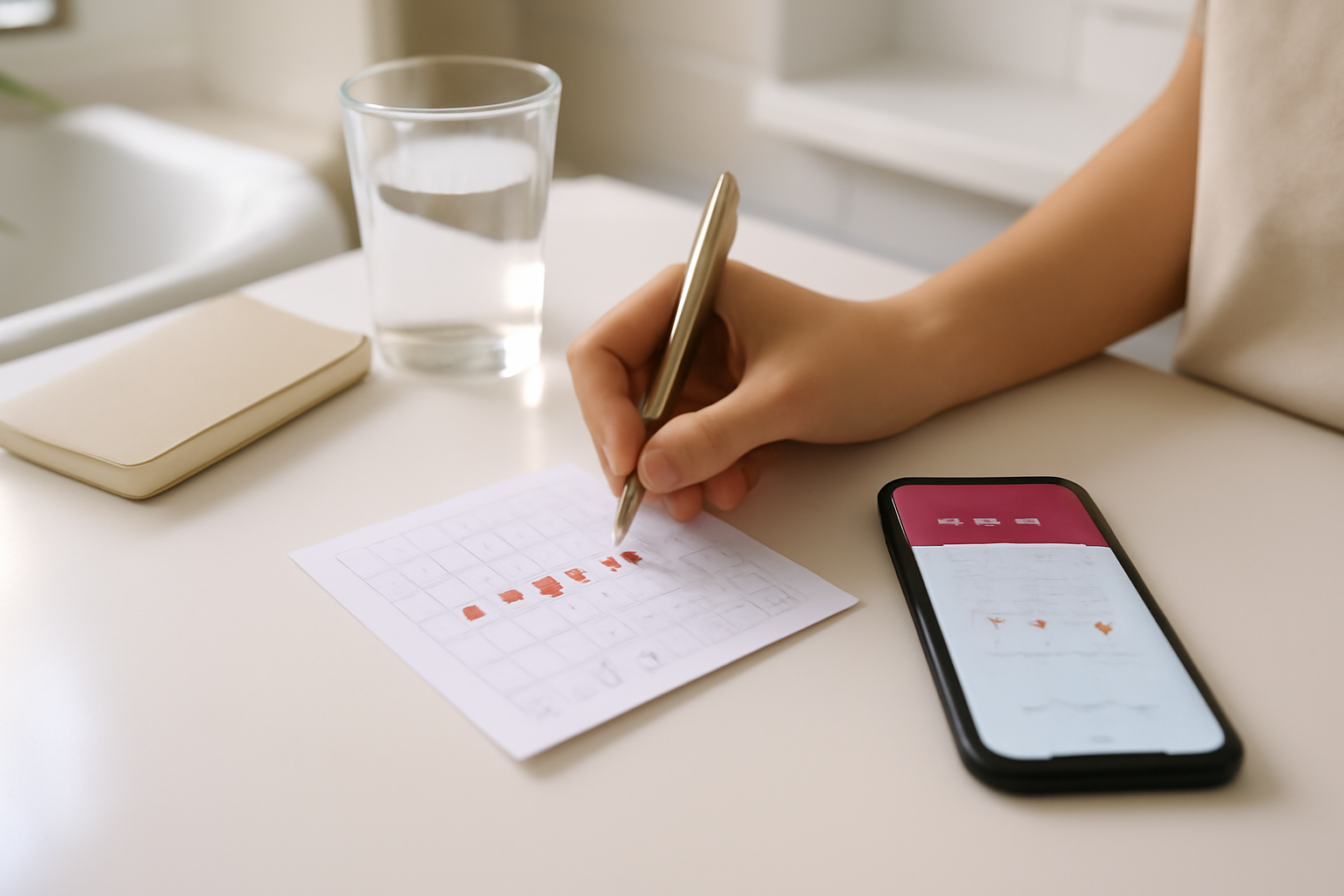
Quick Take: Yes—bleeding can happen twice in one calendar month. Often the second “period” is lighter spotting, not a full cycle reset.
A short gap can point to ovulation timing changes or a naturally shorter cycle (many people fall around ~21–35 days).
Stress, weight shifts, intense exercise, and medication changes can all nudge hormones and timing.
If pregnancy is possible, take a test. And if symptoms feel severe, don’t wait—ectopic pregnancy can be urgent.
| Criteria | What it often suggests |
|---|---|
| Bleeding matches your usual flow + lasts several days | More likely a true second period (cycle change) |
| Very light flow, 1–2 days, only on wiping | More likely spotting |
| Gap near 14 days (about two weeks) | Possible ovulation timing shift |
| Very heavy bleeding or severe pain | Needs prompt medical evaluation |
| Possible pregnancy + unusual bleeding | Take a pregnancy test; watch for ectopic red flags |
Can Your Period Come 2 Times in a Month? Causes
If you’re wondering can your period come 2 times in a month, you’re definitely not the only one. Two bleedings in the same calendar month can happen for harmless reasons—especially when your cycle shifts. The real question is simpler: does the second bleed look like your normal period, or does it behave more like spotting? (That detail changes what you should do next.)
This guide breaks down how to tell period-like bleeding from spotting, how ovulation timing can shorten the gap, which lifestyle or medication changes can throw things off, and when pregnancy or medical causes need attention.
Can bleeding twice in 30 days be normal? How to tell a true period from spotting
Two bleedings in one month can be normal if one is light spotting and the other matches your usual period pattern—flow, duration, and cramps. A “true period” usually follows your body’s rhythm and lasts several days. When both bleedings look similar to your normal period, it’s more likely a cycle irregularity than random spotting.
Start with the basics. For many people, a menstrual bleed lasts about 3–7 days, though it varies. A common benchmark for cycle length is ~21–35 days. If your cycle tends to be shorter, two bleedings can land in the same calendar month without anything being “wrong.”
Next, compare the second episode to your usual period. Period-like bleeding typically needs pads or tampons, follows a flow pattern you recognize, and often comes with your usual cramping or timing. Spotting is usually 1–2 days, much lighter, and may show up as pink/brown streaks or only when wiping.
- Flow: period-like = needs protection; spotting = light, minimal
- Duration: period = several days; spotting = often 1–2 days
- Color: spotting can be brown/pink; periods are usually red to dark red
- Symptoms: similar cramps and energy changes point toward a true period
Finally, look at the gap. If the second bleed is about 14 days after the first (roughly two weeks), ovulation timing may be shifting. If the gap is just shorter than your usual cycle, it can still fall within normal variation.
Short cycle changes: ovulation timing, luteal phase shifts, and why the gap can be ~2 weeks
A gap near two weeks often happens when ovulation timing shifts. Ovulation may occur earlier or later than your usual pattern, and hormone withdrawal bleeding can arrive sooner—so it can feel like you “got your period again.” Changes in the luteal phase (the time after ovulation) can also affect when bleeding starts.
Think of the cycle like a hormone timeline. Ovulation is the turning point. When ovulation happens earlier than your baseline, the next hormone drop—and the bleeding that follows—can also move earlier. That’s one reason someone might see two bleedings in the same month.
The luteal phase is often around 12–14 days, but it varies. If your luteal phase shortens (or ovulation is unpredictable), the calendar gap between bleedings can shrink. This is especially noticeable if your baseline cycle length is already on the shorter side, like 21–24 days.
How to connect timing with what you’re seeing
- Mark the first day of Bleeding #1 on your calendar.
- Count the gap until Bleeding #2 starts.
- If the gap is close to ~14 days and symptoms match your usual cycle pattern, ovulation timing changes are more likely.
- If the second bleed is very light and brief, it may be spotting between hormonal shifts.
If this pattern repeats often, it’s a good idea to track dates for a few cycles and consider an evaluation. Your body’s “clock” can shift—but persistent changes deserve a closer look.
Common non-pregnancy causes: stress, weight changes, intense exercise, and medication effects
Stress, significant weight loss/gain, intense exercise, and some medications can disrupt the hormones that control ovulation and the uterine lining. The result can be irregular bleeding that looks like a second period. These causes are more likely when the change is temporary and your bleeding returns to baseline after a few cycles.
Hormones don’t work in isolation. The hypothalamic–pituitary–ovarian axis responds to your overall energy balance and stress load. When stress rises or caloric intake drops (or increases), ovulation may shift or become less predictable—then bleeding timing can follow.
Weight change is a classic trigger in clinical guidance. Big weight shifts and high training loads are well-known disruptors. Even travel, illness, or a sudden change in sleep can nudge your cycle. If irregular bleeding lasts more than 2–3 cycles, it’s less likely to be only a short-term lifestyle effect.
Medication and contraception can change your bleeding pattern
Some medications affect cycle timing and endometrial stability. For example, changes in hormonal contraception can cause irregular bleeding during adjustment. Emergency contraception can also lead to earlier or irregular bleeding in the next cycle—timing varies by product.
- Hormonal contraception changes: new method, missed pills, start/stop
- Emergency contraception: can cause earlier or irregular bleeding after use
- Other meds: some may influence hormone metabolism (a clinician can review your specific list)
When you connect what you’re feeling to real-life changes—new stress, recent travel, illness, or a training bump—the story usually becomes clearer. That clarity helps you decide whether monitoring is reasonable or whether it’s time to book an appointment.
When it could be pregnancy-related: implantation bleeding, early pregnancy bleeding, and ectopic warning signs
Some pregnancy-related bleeding can be mistaken for a period, including light implantation bleeding or bleeding in early pregnancy. Still, true heavy period-like bleeding isn’t typical. If pregnancy is possible—especially with a short, unusual gap—take a pregnancy test. And if you have severe one-sided pain, dizziness, or fainting, seek urgent care.
Bleeding in early pregnancy can throw off even careful trackers. Implantation bleeding is usually light and brief, often appearing as pink/brown spotting. Early pregnancy bleeding can also happen for other reasons, but it’s risky to assume it’s “just a period” when pregnancy is on the table.
Home pregnancy tests are most reliable from the day of an expected period and after. Accuracy improves the longer you wait if pregnancy exists. If your bleeding is unusual and your cycle gap is short, testing is a practical next step—not guesswork.
Ectopic pregnancy: don’t ignore red flags
Ectopic pregnancy can cause bleeding and pain, and it’s a medical emergency. Watch for severe pelvic pain (often one-sided), shoulder pain, dizziness, fainting, or symptoms that rapidly worsen. If any of these show up, don’t wait for test results—get urgent care.
If you’re trying to conceive or had unprotected sex, treat this as a “test now” situation. Peace of mind matters, but so does safety.
For more on what bleeding can look like when pregnancy is possible, see Could I Be Pregnant If I Got My Period, But It Was Light?.
Medical causes to consider: fibroids, polyps, thyroid issues, PCOS, and bleeding disorders
If you’re repeatedly having two period-like bleeds in one month, it may be worth looking beyond cycle timing. Uterine fibroids and polyps can cause irregular or frequent bleeding. Thyroid disorders can shift cycle timing. PCOS can make ovulation unpredictable, which can lead to irregular bleeding. Less commonly, bleeding disorders can cause abnormal uterine bleeding.
When bleeding changes start to recur, the list expands. Structural causes like fibroids (benign muscle growths) and polyps (benign tissue growths) can affect how the uterus sheds its lining, leading to frequent or irregular episodes.
Endocrine causes can also change your rhythm. Thyroid dysfunction can affect menstrual regularity, including timing and flow. With PCOS, ovulation may not happen on schedule, so the “second bleed” may reflect irregular hormone withdrawal rather than a steady monthly pattern.
What “very heavy” can mean
If bleeding is very heavy—like soaking through protection quickly—or if you feel fatigue or shortness of breath, you may need an anemia check. Bleeding disorders can contribute too, especially if you bruise easily or have a history of unusually heavy bleeding.
- Fibroids: irregular, frequent, or heavy period-like bleeding
- Polyps: spotting or unpredictable bleeding between cycles
- Thyroid issues: cycle timing and flow changes
- PCOS: irregular ovulation and unpredictable bleeding
- Bleeding disorders: heavy bleeding patterns and possible easy bruising
Because these causes can overlap, clinicians usually combine your history with exam findings and tests. If you’ve been asking can your period come 2 times in a month because of a possible medical issue, repeated true period-like bleeding is one of the strongest reasons to get checked.
If fibroids are part of your concern, you may also find What Size of Fibroid Is Dangerous? A Practical Guide helpful.
When to seek care: red flags, how long to wait, and what tests clinicians may do
Call a clinician if the pattern is new and lasts for 2–3 cycles, if bleeding is very heavy, or if you have significant pain. Get urgent care for severe pelvic pain, fainting, or suspected pregnancy with pain. Clinicians may ask about your cycle history, do a pelvic exam, and order tests such as a pregnancy test, CBC for anemia, thyroid tests, and possibly ultrasound.
Use a simple rule of thumb: if this is a one-off change and the second bleed is light or matches your usual period pattern, you can monitor. If the pattern is new for you and keeps repeating, schedule an appointment. Many clinicians evaluate persistent abnormal uterine bleeding after about 2–3 cycles.
Know the urgent red flags. Severe pelvic pain, fainting, or symptoms that suggest internal bleeding or ectopic pregnancy require immediate care. If you might be pregnant and you have pain, don’t wait for test results if you feel unsafe.
What to expect at a visit
Clinicians often start with questions: cycle dates, typical flow, contraception or emergency contraception timing, pain level, and any pregnancy risk. A pelvic exam may be part of the assessment. Depending on your symptoms, they may order:
- Pregnancy test: to rule out pregnancy-related causes
- CBC: checks for anemia when bleeding is heavy or prolonged
- Thyroid tests: for thyroid-related cycle changes
- Pelvic ultrasound: to evaluate fibroids, polyps, and other uterine causes
Bring your timeline. Tracking dates, flow level, and symptoms (and even a photo if you’re comfortable) can help a clinician narrow down the most likely cause quickly. For general menstrual health context, you can review WHO guidance on menstrual health and NHS information on irregular periods.
FAQ
Comment savoir si c’est vraiment une deuxième période ou juste des saignements entre les règles ?
Compare flow, duration, and symptoms. A true second period usually resembles your usual bleeding (often requiring pads/tampons and lasting about 3–7 days). Spotting between periods is typically much lighter, lasts 1–2 days, and may show as pink/brown streaks or only on wiping.
Quel test de grossesse faire si j’ai eu un saignement inhabituel mais pas un cycle normal ?
Use a home pregnancy test from the day of an expected period and after. If your bleeding was unusual and your period timing is off, test now and repeat in 48–72 hours or in a few days if results are negative and pregnancy remains possible. If you have pain, seek urgent care.
Pourquoi mon cycle est-il plus court d’un mois à l’autre et je saigne deux fois ?
A shorter cycle can happen when ovulation timing shifts or when the luteal phase changes (often around 12–14 days but variable). Lifestyle stressors, weight changes, intense exercise, and medication adjustments can also disrupt hormone regulation and cause irregular bleeding.
Quand s’inquiéter si j’ai des saignements deux fois en un mois avec un intervalle d’environ deux semaines ?
A gap near two weeks can fit ovulation timing shifts, but you should get checked if the pattern is new for you and continues for 2–3 cycles, if bleeding becomes very heavy, or if you have significant pain. Seek urgent care for severe one-sided pain, dizziness, fainting, or suspected pregnancy with pain.
Combien de temps peut durer un dérèglement hormonal avant de nécessiter une consultation ?
If cycle changes last longer than about 2–3 cycles, or if bleeding is very heavy or painful, it’s time to contact a clinician. Temporary disruptions from short-term stress or illness can resolve sooner, but persistent irregular bleeding deserves evaluation.
Est-ce que le stress peut provoquer des saignements qui ressemblent à des règles deux fois dans le même mois ?
Yes. Stress can affect the brain–hormone pathways that regulate ovulation and the uterine lining, leading to irregular bleeding that may look like a second period. The likelihood increases with major stress, sleep disruption, or energy imbalance, and it’s more reassuring if your cycle returns to baseline after a few cycles.
Key takeaways
- Two bleedings in one calendar month can happen, but check whether the second one matches your usual period or is lighter spotting.
- A short gap can reflect ovulation timing changes, especially if your cycles are already shorter than average.
- Stress, weight shifts, intense exercise, and medication changes can temporarily disrupt cycle timing and cause irregular bleeding.
- If pregnancy is possible, take a pregnancy test—bleeding can occur in early pregnancy, and ectopic pregnancy needs urgent attention if symptoms are severe.
- Repeated true period-like bleeding may signal fibroids, polyps, thyroid issues, PCOS, or (less commonly) bleeding disorders—worth medical evaluation.
- Seek care if it persists for 2–3 cycles, is very heavy, or comes with severe pain, fainting, or pregnancy-related red flags.
- Track dates, flow level, and symptoms (and consider a photo) to help a clinician quickly identify the most likely cause.
So, can your period come 2 times in a month? Often, yes—especially when one bleed is spotting or when cycle timing shifts. But if the second bleed keeps looking like a true period, it’s smart to get answers that fit your situation.
For additional reading, see ACOG guidance on abnormal uterine bleeding and CDC advice on when to take a pregnancy test.
1 commentaire sur « Can Your Period Come 2 Times in a Month? Causes »