
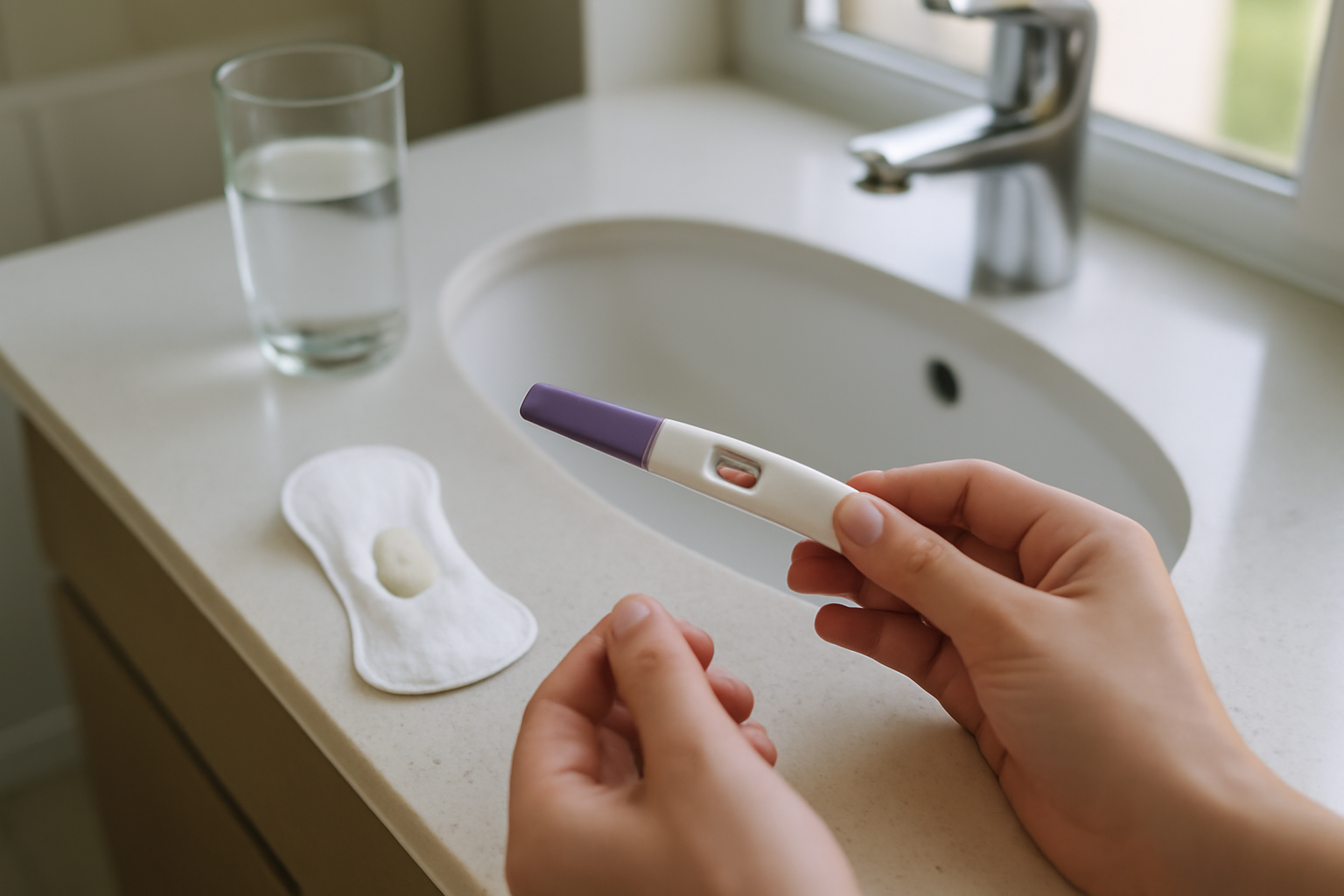
Missed period but negative pregnancy test white discharge can happen for reasons that have nothing to do with pregnancy—timing, hormone shifts, or an infection can all look similar at first.
Ovulation can run late, which pushes implantation back and may keep early urine tests negative. (It’s frustrating, but it’s common.)
White discharge can be normal when it’s creamy and doesn’t smell strong. If you notice itching, burning, or a strong odor, that’s a different story and often points to infection.
If you have severe one-sided pain, fainting, heavy bleeding, or fever, get urgent care right away.
| Criterion | Value |
|---|---|
| Typical “normal” white discharge | Milky/creamy, thin to moderately thick, little to no odor, no burning or itching |
| Urine test accuracy tip | Use first-morning urine and follow the kit instructions |
| How soon to retest | Repeat after 48–72 hours if pregnancy is still possible |
| Common non-pregnancy drivers | Stress, weight change, thyroid issues, and PCOS-related anovulation |
| Urgent warning signs | Severe one-sided pelvic pain, fainting, heavy bleeding, or fever |
Why a Missed Period Can Happen With a Negative Test (Timing, Ovulation, and Test Accuracy)
A negative pregnancy test with a missed period doesn’t always mean you’re not pregnant. If ovulation was late, implantation can shift later too, and hCG may not rise enough for a urine test yet. Test timing matters: using first-morning urine and following the kit instructions improves accuracy.
If your period is late by several days, repeat testing or get confirmation from a clinician. In typical cycles, ovulation timing varies, and that alone can move your expected “due date” by a few days.
That delay can create the exact pattern you’re worried about: missed period but negative pregnancy test white discharge. Discharge can still change as estrogen and progesterone fluctuate while your cycle catches up.
Urine test accuracy also depends on urine concentration. Testing later in the day after drinking a lot of fluids can dilute urine and lower detectable hCG. It’s a common trap—and it’s fixable with better timing.
If you still have no period, retesting after 48–72 hours can be more informative because hCG usually increases in early pregnancy. If symptoms are concerning or the missed period continues, a clinician can order a blood hCG test and, when needed, an ultrasound.
White Vaginal Discharge After a Missed Period: What’s Normal vs Concerning
White discharge can be normal when it’s thin to creamy, not strongly smelly, and not paired with itching or burning. After a missed period, hormone shifts can change the consistency and amount. Concerning signs include strong odor, green or yellow color, clumpy “cottage cheese” discharge, pelvic pain, fever, or bleeding.
“Normal” discharge often looks milky or creamy and may increase around ovulation. Even with a delayed period, your body may still produce discharge as hormones move around. Texture is a clue too: watery, milky, or lightly creamy discharge without irritation is commonly seen in healthy cycles.
When discharge becomes concerning, it usually comes with other symptoms. A strong fishy smell can suggest bacterial vaginosis (BV). Thick clumpy discharge plus intense itching often points toward yeast (candidiasis). If you notice burning with urination, pain during sex, or bleeding after sex, consider cervical inflammation or an STI—not pregnancy alone.
Will you wait it out, or get checked? If you have pelvic pain with heavy bleeding or fever, seek urgent care. For less urgent but persistent symptoms, arrange evaluation soon so the right cause gets treated early.
Common Non-Pregnancy Causes: Stress, Weight Changes, Thyroid Issues, and PCOS
Stress, significant weight loss or gain, intense exercise, and sleep disruption can delay ovulation and lead to a missed period with a negative pregnancy test. Thyroid disorders and PCOS are also common reasons for irregular or absent periods, and they can affect discharge patterns. If irregular cycles keep happening, clinicians may recommend blood tests and a pelvic evaluation.
Cycle irregularity often starts with ovulation changes. Stress can interfere with brain signals that control reproductive hormones, which can delay or stop ovulation. That can lead to a missed period even when pregnancy isn’t present, and it can also shift discharge timing and consistency.
Weight changes and intense training can alter hormone levels too. Thyroid function is another major factor—abnormal TSH (thyroid-stimulating hormone) can cause delayed or irregular periods. PCOS (polycystic ovary syndrome) is common and often involves anovulatory cycles, meaning you may not release an egg on schedule.
If irregularity lasts multiple cycles, tracking helps you and your clinician spot patterns. Note cycle dates, discharge changes (color, texture, odor), and symptoms like cramps or breast tenderness. Then you can discuss testing options rather than repeating home tests indefinitely.
Practical tracking checklist (before your visit)
- First day of each period (or absence of bleeding)
- Discharge notes: creamy/milky vs watery, any odor, itching/burning
- Pain details: location, one-sided vs central, severity
- Relevant changes: stress, travel, new exercise routine, weight change
- Test details: date/time of each pregnancy test and whether it used first-morning urine
Infections and Cervical Causes: BV, Yeast (Candidiasis), STIs, and Cervicitis
White discharge with a missed period can come from vaginal or cervical infections. BV often causes thin gray-white discharge with a fishy odor. Yeast (candidiasis) commonly causes thick white discharge with intense itching. STIs and cervicitis may cause abnormal discharge, bleeding after sex, pelvic discomfort, or burning. Testing matters because treatment depends on the cause.
Discharge patterns can overlap, so it helps to look at the whole picture. BV typically involves altered vaginal pH and a characteristic odor that may be more noticeable after sex. Yeast tends to cause irritation—itching is a big clue—and the discharge often looks thicker and clumpier.
STIs and cervicitis can also change discharge and may lead to bleeding after intercourse or pelvic discomfort. Symptoms can be subtle, so clinicians often use vaginal swabs and NAAT (nucleic acid amplification tests) for accuracy. Guessing or self-treating can delay the right care.
If symptoms persist beyond a few days or worsen, get evaluated promptly to reduce the risk of complications. You can ask about targeted testing for BV/yeast and STI NAAT based on your symptoms and sexual health history. For background on infectious causes and prevention, see resources from the CDC on STDs and overview of bacterial vaginosis.
Quick “pattern match” guide (not a diagnosis)
- Thin gray-white + fishy odor → BV more likely
- Thick white + intense itching → yeast more likely
- Burning, pain, bleeding after sex → consider cervicitis/STI; test needed
- Fever or significant pelvic pain → get urgent care
When to Worry: Ectopic Pregnancy, Miscarriage, and Other Urgent Red Flags
Most missed periods with negative tests aren’t emergencies, but some symptoms need urgent care. Seek immediate evaluation if you have severe one-sided pelvic pain, shoulder pain, fainting, heavy bleeding, or fever. Ectopic pregnancy can be missed early and may not show on a single urine test. If pregnancy is possible, clinicians may use blood hCG and ultrasound to confirm.
Ectopic pregnancy is time-sensitive. In early ectopic pregnancy, urine tests can be negative or faint because hCG levels may be lower than expected or rise more slowly. That’s why symptoms matter more than one test result.
If you have severe pain on one side of the pelvis, dizziness or fainting, or any combination of heavy bleeding and fever, go to the emergency department. Clinicians can check blood hCG levels (often repeated to track the trend) and use ultrasound based on your presentation.
For a patient-friendly overview of ectopic pregnancy and what to watch for, refer to the NHS guidance on ectopic pregnancy. If you want pregnancy basics and when to seek care, the WHO pregnancy topic page can help frame the timeline.
Next Steps: How to Confirm Pregnancy and Get the Right Diagnosis
If your period is late and the test is negative, repeat testing after 48–72 hours or use first-morning urine. If you still don’t bleed, consider a clinician visit for a blood pregnancy test and an evaluation of discharge. For discharge-related symptoms, ask for targeted testing (vaginal swabs, STI NAAT) instead of guessing. Track symptoms and avoid unneeded douching.
Use a simple decision path. If pregnancy is possible and the missed period is only a few days, repeat a home urine test after 48–72 hours using first-morning urine. If you’re still not bleeding and pregnancy still seems possible, schedule a clinician appointment for a blood hCG test and a focused exam.
For discharge symptoms, request tests that match what you’re experiencing. A clinician can check for BV/yeast and perform STI NAAT when indicated. This approach is faster than trying random treatments, especially when your symptoms include odor, itching, burning, or pain.
A quick self-care note: avoid douching. It can disrupt vaginal flora and worsen symptoms for some conditions. Instead, note changes in color, texture, odor, and irritation so you can describe them clearly.
What a clinician may do
- Blood pregnancy testing (hCG) and sometimes repeat measurements
- Pelvic exam to evaluate cervix and discharge
- Vaginal swabs for BV/yeast and microscopy-based checks
- STI testing via NAAT when risk or symptoms suggest it
- Additional labs if periods remain irregular (thyroid, PCOS-related evaluation)
How long should I wait to retest after a missed period with a negative pregnancy test?
Repeat testing after 48–72 hours if pregnancy is still possible. Use first-morning urine and follow the kit instructions. If your period still doesn’t come, a clinician can confirm with a blood hCG test.
Can white vaginal discharge mean pregnancy even if the pregnancy test is negative?
Yes, discharge can change in early pregnancy, but white discharge alone cannot confirm pregnancy. Hormone shifts from delayed ovulation can also cause creamy or milky discharge. Use repeat testing and consider clinician confirmation if bleeding still doesn’t start.
Why am I late but my pregnancy test is negative and my discharge is creamy or milky?
Late ovulation can shift your expected period and delay hCG, making urine tests negative early. Creamy or milky discharge can also be normal during hormone changes. If you remain late, retest after 48–72 hours or seek blood hCG and discharge evaluation.
What does thick white discharge with itching usually indicate?
Thick white discharge with intense itching often indicates yeast (candidiasis). Treatment depends on confirmation, so testing is helpful if symptoms persist, recur, or if you have pain or fever.
When should I worry about ectopic pregnancy with a negative urine test?
Worry and seek urgent care if you have severe one-sided pelvic pain, shoulder pain, fainting/dizziness, heavy bleeding, or fever. Ectopic pregnancy can be missed early on a single urine test, so clinicians may use blood hCG trends and ultrasound.
How can BV or yeast be distinguished from normal discharge?
BV often causes thin gray-white discharge with a fishy odor and altered vaginal pH, while yeast commonly causes thick white discharge with intense itching and irritation. Normal discharge is usually milky/creamy without strong odor or burning. If symptoms persist, get targeted swab/NAAT testing.
Key takeaways
- A missed period with a negative test can happen if ovulation was late—repeat testing after 48–72 hours if pregnancy is still possible.
- Normal white discharge is usually milky/creamy, without strong odor or irritation; itching, burning, or bad smell are more concerning.
- Stress, weight changes, thyroid issues, and PCOS commonly delay periods and can shift discharge patterns.
- BV, yeast, and STIs can cause abnormal white discharge—get targeted swab/NAAT testing instead of guessing treatment.
- Urgent symptoms like severe one-sided pelvic pain, fainting, heavy bleeding, or fever should be assessed immediately.
- If your period doesn’t come or symptoms persist, ask for a clinician evaluation, which may include blood hCG and pelvic/vaginal testing.
- Track cycle dates and discharge symptoms (color, texture, odor, itching/pain) to speed up diagnosis.
When you’re dealing with missed period but negative pregnancy test white discharge, the goal is clarity without panic: time the test well, watch for infection clues, and don’t delay care if red flags appear. Your body is giving signals—your job is to respond with the right next step.
1 commentaire sur « Missed Period but Negative Pregnancy Test: White Discharge »