
When does implantation occur? Usually 6–12 days after ovulation (often day 8–10).
Pregnancy weeks are counted from your last menstrual period, so implantation happens earlier than the “2 weeks pregnant” label suggests.
Some people notice light spotting or mild cramping. Others feel nothing at all.
For a reliable home test, wait until after your missed period—or about 14 days after ovulation.
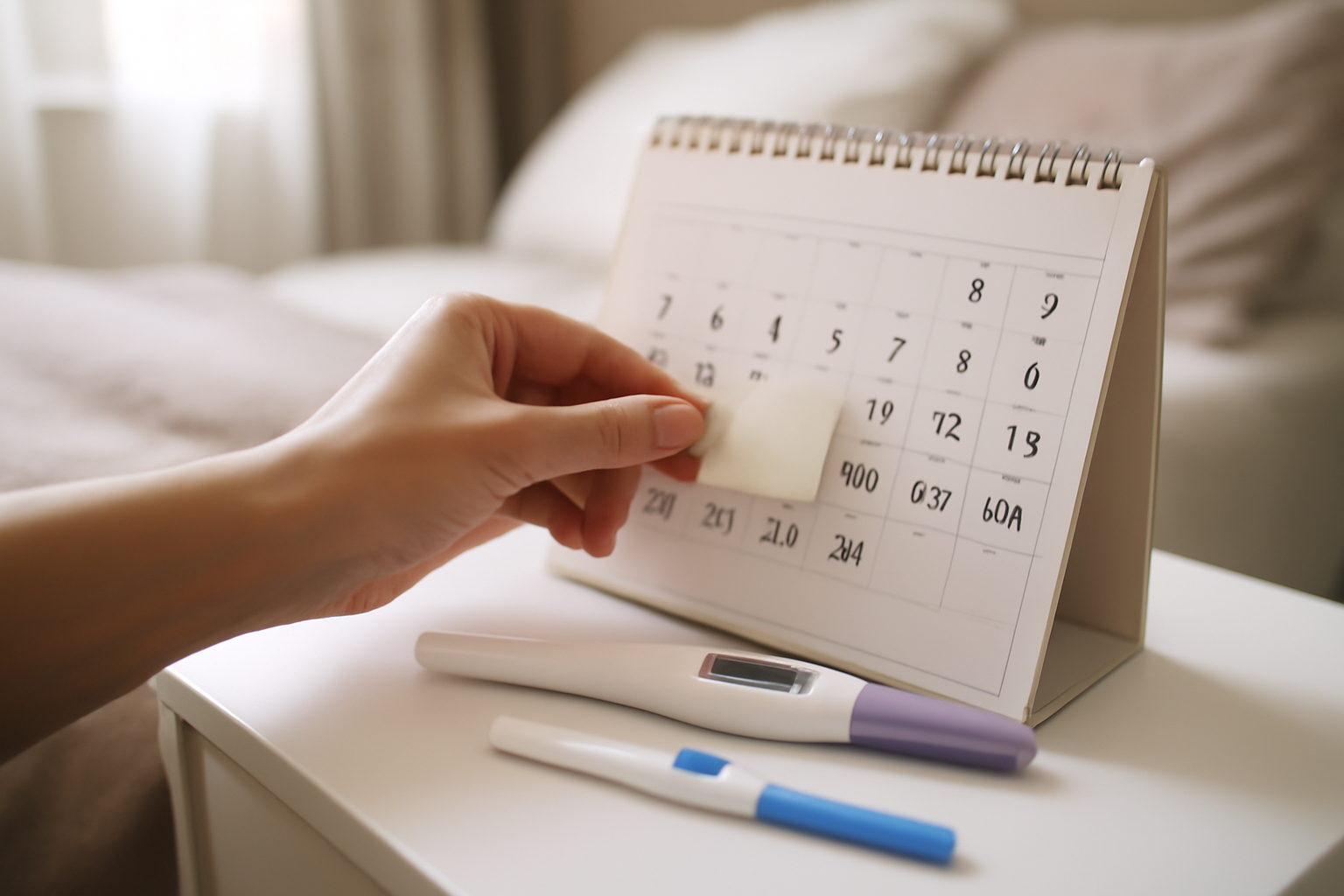
| Typical implantation timing | 6–12 days after ovulation (often day 8–10) |
| Pregnancy dating method | Count weeks from last menstrual period (LMP) |
| Common early signs | Mild cramping, light pink/brown spotting, discharge changes |
| Most reliable home test timing | After missed period or ~14 days after ovulation |
| When to seek urgent care | Severe one-sided pain, fainting, heavy bleeding |
| Key uncertainty | Ovulation date can shift, moving implantation by days |
Implantation timing after ovulation: the typical 6–12 day window
Implantation usually happens about 6–12 days after ovulation (often around day 8–10). Fertilization occurs in the first day or so after ovulation, then the embryo travels to the uterus before it attaches to the uterine lining. Because ovulation timing varies, the answer to “when implantation occurs” can move by several days.
Instead of one exact moment, it helps to picture a sequence: ovulation releases the egg, fertilization happens shortly after if sperm are present, and then the embryo develops while it travels through the reproductive tract. Implantation starts only once it reaches the uterus—when it attaches to the uterine lining.
Clinicians count from ovulation because it’s the most consistent anchor point. Intercourse timing can vary (sperm can survive for several days), and implantation depends on when the egg is actually released and when fertilization occurs.
How to estimate your implantation window
If you know your ovulation date, you can estimate your testing days:
- Mark the ovulation day (based on OPKs, BBT, or cycle history).
- Add 6 days for the earliest typical window.
- Add 12 days for the latest typical window.
- Expect the “most likely” days around day 8–10 after ovulation.
And yes—if ovulation shifts by a few days, implantation often shifts too. Your body doesn’t follow a calendar app.
You can also sanity-check with cycle length. For example, with a 28-day cycle and ovulation around day 14, implantation often falls around days 20–26. With a 32-day cycle, ovulation tends to be later, and implantation usually follows.
How implantation relates to your pregnancy timeline (weeks, missed period, and hCG)
Pregnancy dating is usually based on the first day of your last menstrual period (LMP), not implantation. That’s why implantation typically occurs about 2 weeks into a “pregnancy” counted from LMP. After implantation, the body starts producing human chorionic gonadotropin (hCG), and home tests may stay negative until enough hCG builds up in urine.
This is often the moment people think, “Wait—my timing doesn’t match what I expected.” Your gestational age is counted from LMP, roughly two weeks before ovulation in a typical cycle. So when you see “2 weeks pregnant,” it’s the dating system—not a sign that implantation already happened.
Once implantation occurs, hCG rises. Before that point—and before hCG reaches a detectable level—urine tests can read negative even if implantation did happen. (It’s frustrating, but it’s common.)
Missed period vs implantation day
A missed period is usually a more practical marker than guessing implantation symptoms. Many people implant around day 8–10 after ovulation, but the period itself is driven by hormone changes after ovulation and the length of your luteal phase. If your luteal phase is shorter or longer than average, your missed period may arrive earlier or later relative to implantation.
Home pregnancy tests tend to become more reliable after the missed period because hCG has had more time to rise. For official guidance on early pregnancy loss and hCG-related realities, see ACOG’s FAQ on early pregnancy loss.
Early implantation signs: cramping, spotting, and what’s normal
Some people notice mild cramping, light spotting, or discharge changes around implantation. When it happens, implantation bleeding is typically light (often pink or brown) and shorter than a period. Still, many people have no noticeable symptoms at all—no symptoms doesn’t mean implantation didn’t occur.
Common reports include mild uterine cramping (usually less intense than typical period cramps), a small amount of spotting, and subtle discharge changes. These can overlap with normal cycle variation—especially if you already get PMS symptoms.
Here’s the catch: implantation signs are non-specific. Your hormones shift around ovulation and the luteal phase whether or not implantation happens, so the “signal” can be easy to misread.
What symptoms can look like
- Mild cramping: brief twinges or a low, achy feeling.
- Light spotting: a few drops or streaks, usually pink/brown.
- Discharge changes: slightly different texture or color, not necessarily a clear pregnancy marker.
- Breast tenderness: can start early, but it’s also common with PMS.
If you’re tracking symptoms, treat them like clues—not proof. (Your uterus doesn’t send a “case closed” notification.)
Discharge can also change with hydration, stress, and normal hormone fluctuations. That’s why symptom-based guessing often leaves you stuck in uncertainty—testing and timing are more reliable.
Implantation bleeding vs period: how to distinguish the differences
Implantation spotting is often lighter than a period. It may look pink or brown and usually lasts a shorter time. Period bleeding is typically heavier, becomes more consistent, and follows your expected cycle timing. If bleeding is heavy, includes large clots, or comes with severe pain, treat it as a possible period or another cause and get medical advice.
Flow amount and duration are the clearest practical differences. Implantation spotting tends to be scant—enough to notice on toilet paper or a liner, not enough to soak through. Period bleeding usually ramps up, steadies, and lasts several days.
Color can help too. Implantation blood is often described as pink or brown (older blood mixing with discharge). Period blood can start as lighter spotting, but it typically progresses toward a heavier, red flow.
Quick comparison
| Flow | Implantation: light spotting; liner-level |
| Period: heavier flow; may require pads/tampons | |
| Duration | Implantation: often shorter than a typical period |
| Period: follows your usual cycle length | |
| Pain | Implantation: usually mild cramping |
| Period: often more predictable cramping pattern |
Timing matters, too. If the bleeding happens right around your expected period window, it’s more likely to be a period—even if it starts lighter. If it’s clearly off-cycle and very light, implantation is one possibility, not a diagnosis.
For safety, reach out to a clinician if you have severe pain, heavy bleeding, or symptoms that could suggest complications. If you want broader context on early pregnancy issues, you can also review NHS guidance on getting pregnant.
When to take a pregnancy test after ovulation (and when to see a clinician)
For best accuracy, test after the missed period or about 14 days after ovulation. Testing earlier can be negative even if implantation occurred, because hCG may not be high enough in urine yet. If you have persistent bleeding, severe one-sided pain, or symptoms of ectopic pregnancy, contact a clinician urgently rather than waiting.
Testing too early is the most common reason people get a negative result and then feel confused later. Even when ovulation and implantation happen “on schedule,” hCG takes time to rise and concentrate in urine.
Here’s a simple plan you can follow:
- Day 0: ovulation day (estimated or confirmed).
- Day ~12–13: some people test here, but negatives can still be too early.
- Day ~14: a common guidance point for a more meaningful result.
- After missed period: usually the most reliable home-testing window.
If you test early and get a negative, retest 48–72 hours later or after the missed period—especially if you still suspect pregnancy.
When to see a clinician (urgent signs)
Get urgent medical help if you have severe one-sided pelvic pain, shoulder pain, fainting, or heavy bleeding. These can be warning signs of ectopic pregnancy or other conditions that need prompt evaluation.
If you’re dealing with fertility concerns or recurrent issues, resources from CDC infertility and reproductive health information can help you understand next steps and when to seek specialist care.
Tracking implantation chances: cycle tools, ovulation timing, and uncertainty
Since implantation depends on when ovulation actually happens, tracking can sharpen your timing estimates. Use ovulation predictor kits, basal body temperature, and cycle history to narrow your ovulation day. Even with good tracking, implantation timing still varies—so treat symptoms and test results as probabilities, not certainties.
Tracking doesn’t erase uncertainty, but it reduces guesswork. Your “when does implantation occur” question is really about your best estimate of ovulation timing, because implantation usually follows a predictable window relative to ovulation.
Different tools help in different ways. OPKs can show the hormonal surge that often comes before ovulation, BBT can confirm ovulation after the fact, and cycle history helps you anticipate your usual pattern.
Practical tracking methods
- Ovulation predictor kits (OPKs): look for the LH surge; ovulation often follows within about 24–36 hours.
- Basal body temperature (BBT): a sustained temperature rise usually confirms ovulation already happened.
- Calendar method: useful if your cycles are fairly regular; less accurate if they vary.
- Cervical mucus observations: can support timing (but it still isn’t a precise implantation clock).
Even with accurate tracking, implantation can happen earlier or later within the typical 6–12 day window. That’s why the best approach blends tracking with testing instead of relying on symptoms alone.
If you want a high-level overview of implantation biology, Implantation (pregnancy) provides a readable summary of the process and timing concepts.
How can I tell when implantation happens after ovulation?
Implantation most often occurs 6–12 days after ovulation, commonly around day 8–10. If you know your ovulation date from OPKs or BBT, add 6 days for the earliest typical window and 12 days for the latest. Because ovulation timing can shift, treat this as an estimate, not an exact day.
What is the most common time between ovulation and implantation?
The most common clinical estimate places implantation around 8–10 days after ovulation, with a typical range of 6–12 days. If ovulation is off by a few days, implantation timing usually shifts by a similar amount.
When can a urine pregnancy test detect pregnancy after implantation?
Most people get the most reliable urine test result after the missed period or about 14 days after ovulation. Testing earlier can be negative even if implantation occurred, because hCG may not yet be high enough in urine.
Why am I having light spotting—could it be implantation or my period?
Light pink/brown spotting that lasts a shorter time than your usual period can fit implantation bleeding, but it can also be PMS or other cycle changes. Period bleeding is typically heavier, more consistent, and matches expected cycle timing. Heavy bleeding, large clots, or severe pain are not typical of implantation and deserve medical advice.
How long does implantation bleeding usually last?
Implantation bleeding is usually brief—often shorter than a typical period—and tends to be light spotting rather than full-flow menstrual bleeding. Exact duration varies person to person.
Does having no symptoms mean implantation didn’t happen?
No. Many people have no noticeable symptoms at implantation. Absence of cramping or spotting does not mean implantation didn’t occur; timing and testing are more reliable than symptoms alone.
Key takeaways
- Implantation most often occurs 6–12 days after ovulation, commonly around days 8–10.
- Pregnancy weeks are counted from your last menstrual period, so implantation happens earlier than the “2 weeks pregnant” label suggests.
- Light spotting and mild cramping can happen, but many people feel nothing—symptoms are not proof.
- Implantation bleeding is usually lighter and shorter than a period; heavy bleeding or severe pain is not typical.
- For a reliable home test, test after the missed period or about 14 days after ovulation.
- If you have severe one-sided pain, fainting, or heavy bleeding, seek urgent medical care to rule out complications.
- Use ovulation tracking to narrow your window, but remember implantation timing still varies person to person.
When you combine a realistic implantation window with smart testing timing, the uncertainty becomes easier to manage. If you’re still unsure, focus on what you can verify: ovulation estimate, missed period, then hCG detection.
When does implantation occur for you? Most of the time, it lands in that 6–12 day window after ovulation—so plan around it, and let testing confirm what symptoms only hint at.
2 commentaires sur « When Does Implantation Occur? Timing and Early Signs »