
Warm fluids, honey (for adults and children over 1 year), saline gargles, humidified air, and rest usually calm a cough and sore throat within a few days. Hydrate consistently and manage symptoms—but get urgent help if breathing is hard, you drool, you can’t swallow, you have severe pain, high fever, or signs of strep.
Quick Take: Warm fluids, honey (over age 1), saline gargles, humidified air, and rest often ease coughing and throat irritation.
Match your symptoms to the likely cause: viral cold, post-nasal drip, allergies, or reflux.
Strep is more likely with fever and little/no cough—testing helps decide whether antibiotics are needed.
Go for urgent care if you have breathing trouble, drooling, inability to swallow, severe dehydration, or symptoms that worsen fast.
| Best first step at home | Warm fluids, honey (age > 1), saline gargles, humidified air, rest |
| Strep clues | Sudden severe throat pain, fever, swollen tender neck nodes, no cough |
| Common non-strep drivers | Viral colds, post-nasal drip, allergies, reflux |
| Urgent warning signs | Breathing trouble, drooling, inability to swallow, severe dehydration, rapid worsening |
| OTC safety rule | Follow label dosing; avoid doubling ingredients from multi-symptom cold products |
| When to reassess | If symptoms last beyond ~7 days without improvement or you’re high-risk |
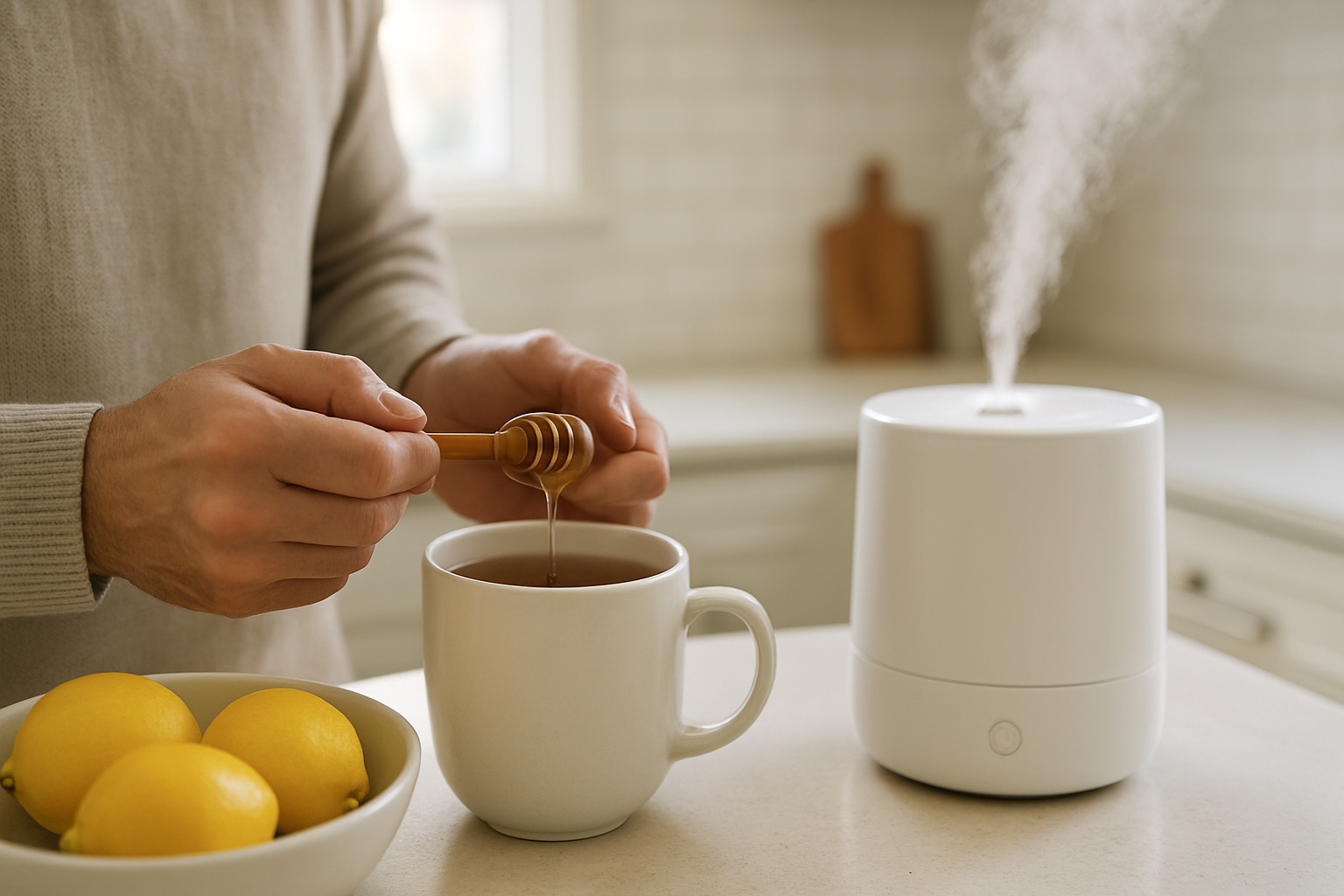
Quick symptom relief for a cough and throat pain at home
If your throat hurts and you’re coughing, try warm liquids, honey (for adults and children over 1 year), saline gargles, and a humidifier or steamy shower. Rest your voice, drink enough to stay comfortable, and use OTC pain relief only if it’s safe for you. Skip smoking and avoid very dry air—both can keep the cough going.
Target throat pain and irritation
Warm tea, broth, or water with honey can reduce the “scratchy” feeling that triggers more coughing. Saline gargles (about half a teaspoon of salt in warm water) can calm throat inflammation, especially after coughing fits.
If you keep waking up with a raw throat, check your room humidity—dry air can quietly make everything worse.
Reduce cough triggers
Hydration helps thin mucus and supports normal throat moisture. Rest gives your immune system time to catch up, and it also limits voice strain that can prolong soreness.
- Use a humidifier or take a steamy shower to add moisture to inhaled air.
- Sleep with your head slightly elevated if coughing gets worse when you lie flat.
- Avoid smoke, vaping, and strong fragrances until symptoms settle.
Consider OTC pain relief safely
If you have fever or significant discomfort, many adults can use acetaminophen or ibuprofen if they have no contraindications. For children, dosing must match age and weight, and some products aren’t appropriate for younger ages—follow the label or ask a clinician.
Common causes: viral colds, post-nasal drip, allergies, and reflux
A cough with a sore throat often follows a viral infection, where throat irritation comes after inflammation. Post-nasal drip from allergies or sinus irritation can lead to throat clearing and coughing. Reflux can also cause sore throat and cough that keeps coming back, especially after meals or when you lie down. Spotting patterns makes home care easier to choose.
Viral colds: irritation after a respiratory infection
Viral colds usually come with a runny or blocked nose, fatigue, and gradual improvement over several days. The cough can linger because airways stay sensitive even after the worst inflammation passes.
When symptoms follow a typical “cold timeline,” home care (fluids, honey, humidified air, rest) is usually the safest first move.
Post-nasal drip: mucus that irritates the throat
Allergies often bring itchy eyes, sneezing, and mucus dripping down the throat. That drip can feel like something stuck in your throat, leading to frequent clearing and a persistent cough.
Sinus irritation can look similar—especially if you bend over or wake up with a throat that feels coated.
Reflux: throat burning, hoarseness, cough after meals
Reflux symptoms often flare after eating or at night. Some people notice throat burning, a sour taste, hoarseness, or a cough that’s worse when lying flat. If this pattern repeats, it changes what you should try at home.
- Try smaller meals and avoid late eating.
- Limit trigger foods that worsen reflux for you (common examples include alcohol, peppermint, and high-fat meals).
- Stay upright for at least 2–3 hours after meals.
Strep throat vs. viral sore throat: signs that need testing
Strep throat is more likely when sore throat pain is sudden and severe, fever is present, and there’s no cough. Swollen, tender lymph nodes in the neck and tonsillar exudate can also point to strep. Since antibiotics help strep but not viruses, clinicians may recommend a rapid test or throat culture when symptoms fit.
More suggestive of strep
Clinical decision rules often weigh fever, absence of cough, and tender anterior cervical nodes to estimate strep probability. Tonsillar pus or exudate and a “sudden” onset also raise suspicion.
Rapid strep tests can guide whether antibiotics are needed. If a rapid test is negative but suspicion stays high, a throat culture may follow.
More consistent with viral illness
Viral sore throats often include cough, runny nose, and a gradual onset. Even when the throat hurts a lot, cough and nasal symptoms make strep less likely.
So what should you look for—pain alone, or the full pattern? Testing matters because a severe throat can still be viral.
External reference for strep testing and symptoms: CDC overview of strep throat symptoms and diagnosis and NHS guidance on strep throat.
When to see a doctor urgently (and when to book a visit)
Get urgent care if you have trouble breathing, chest pain, drooling or inability to swallow liquids, severe dehydration, a stiff neck, a new rash, or symptoms that rapidly worsen. Get prompt evaluation if fever is high or lasting, you suspect strep, symptoms last beyond about a week without improvement, or you’re at higher risk (pregnancy, immunocompromise, serious chronic illness).
Urgent red flags
Breathing and swallowing problems are the main emergencies. Drooling or inability to drink can lead to dehydration quickly. A stiff neck or a new rash with fever also calls for faster assessment.
- Trouble breathing, noisy breathing, or chest pain
- Drooling or inability to swallow liquids
- Severe dehydration (very little urine, dizziness, extreme weakness)
- Rapid worsening over hours to a day
Book a visit (not necessarily ER)
If fever persists, strep seems likely, or you’re not improving after roughly 7 days, arrange a medical evaluation. Earlier assessment may be needed for people with weakened immune systems, since infections can progress faster.
Persistent fever is a common reason clinicians reassess treatment and consider testing for strep or other causes.
Safe OTC options and what to avoid with a cough and sore throat
For pain and fever, many people can use acetaminophen or ibuprofen if they have no contraindications. For cough, pick products based on whether you have a dry cough or a mucus-producing cough, and follow label dosing. Avoid doubling up on multi-symptom cold medicines to prevent accidental overdose of ingredients. For children, use age-appropriate products only and ask a clinician when you’re unsure.
Pick OTC options based on symptoms
When your throat hurts, start with pain control. If you have fever, treat it if it’s uncomfortable. For cough, the goal depends on whether you’re dealing with dryness or mucus.
- Dry, tickly cough: cough-suppressing products may help at night (follow label guidance).
- Mucus-producing cough: choose options that help loosen mucus or improve comfort rather than fully suppressing the urge to clear.
- Congestion: saline spray, nasal rinses, and humidification can reduce throat irritation from post-nasal drip.
Avoid common OTC mistakes
Multi-symptom cold and flu products often include overlapping ingredients. That makes it easy to take too much of the same medicine without realizing it (for example, repeated acetaminophen from multiple products).
Use one product at a time when possible, and read the active ingredients list. For detailed patient safety guidance, see CDC patient safety on antibiotic use and medication precautions.
Children: follow age rules closely
Many cough/cold OTC products have age restrictions. If you’re unsure, ask a pediatric clinician or pharmacist instead of guessing. Dose accuracy matters even more when children are involved.
Prevention and recovery: how to reduce repeat episodes
To prevent recurrence, reduce exposure to respiratory viruses (hand hygiene, avoiding close contact when sick), manage allergies with trigger control and clinician-guided treatment, and address reflux triggers like late meals, alcohol, and lying down soon after eating. During recovery, keep fluids up, use humidified air if your environment is dry, and return to normal activity gradually to avoid prolonged irritation.
Prevent spread during cold and flu season
Respiratory viruses spread through close contact and contaminated hands. Basic hygiene still works: wash hands, don’t share drinks, and limit close contact when you’re sick.
Seasonal respiratory virus activity often peaks in colder months in many regions, so prevention matters more when you’re spending more time indoors.
Control allergies and indoor triggers
Allergy symptoms can flare with seasonal pollen or indoor triggers like dust mites. If you notice sneezing, itchy eyes, or a recurring post-nasal drip pattern, work with a clinician to choose an effective plan.
Reduce reflux-related throat irritation
Reflux symptoms often flare after late meals and certain dietary triggers. Late dinners, alcohol, and lying down soon after eating can keep your throat irritated—turning a short episode into a repeating cycle.
- Set a “last meal” time before bedtime.
- Elevate your head during sleep if night symptoms persist.
- Track triggers so you can focus on what matters most for you.
For general cold prevention guidance, see WHO on the common cold.
FAQ
How can I relieve a cough and sore throat quickly at home?
Use warm fluids, honey (for adults and children over 1 year), saline gargles, and humidified air. Rest your voice, drink enough to keep your throat comfortable, and consider OTC pain relief only if it’s safe for you. Avoid smoking and very dry air, which can worsen coughing.
What fever or pain signs suggest strep throat instead of a cold?
Strep is more likely when sore throat pain is sudden and severe, fever is present, and there is no cough, especially with tender swollen neck nodes or tonsillar exudate. Because antibiotics help strep but not viral colds, testing guides treatment.
Why can the cough last longer than the sore throat after a cold?
Cough can linger because the airways stay irritated and hypersensitive after the main throat inflammation improves. Post-nasal drip, dry indoor air, and mucus lingering in the throat can prolong coughing even when the sore throat feels better.
When should I see a doctor for a cough and sore throat that aren’t improving?
Seek medical evaluation if symptoms last beyond about a week without improvement, fever stays high or persists, strep seems likely, or you are high-risk (pregnancy, immunocompromise, serious chronic illness). Go urgently for breathing trouble, drooling, inability to swallow liquids, severe dehydration, or rapid worsening.
How long is a cough with a sore throat usually normal after a virus?
After a viral infection, throat pain often improves sooner than cough. Many people notice cough lingering for several days to a couple of weeks, while the sore throat typically settles earlier. If you’re not improving after roughly 7 days, reassessment is reasonable.
Is honey safe for children with a cough and sore throat?
Honey is generally safe for children age 1 year and older, and it’s commonly recommended to ease cough. Do not give honey to infants under 1 year due to the risk of botulism. For younger children, use clinician-guided options.
Key takeaways
- Start with soothing home care: honey (over age 1), warm fluids, saline gargles, hydration, and humidified air.
- Look for cause patterns: cough plus runny nose often points to viral illness; no cough plus fever can suggest strep.
- Strep needs testing because antibiotics help strep but not viruses.
- Get urgent care for breathing trouble, drooling, inability to swallow, severe dehydration, or rapid worsening.
- Avoid OTC mistakes: don’t double up on ingredients from multi-symptom cold products.
- If symptoms last beyond about a week or you’re high-risk, arrange prompt medical evaluation.
- Prevent repeats by managing allergies and reflux triggers and reducing viral exposure.
When you combine the right home steps with smart cause-checking, coughing and sore throat episodes often settle quickly—and you avoid the common traps that drag symptoms out.