
Quick Take: Body odor in women usually starts when sweat mixes with skin bacteria. Sweat by itself is mostly odorless—bacteria break down sweat and dead skin into compounds you can smell.
Hormones (cycle, pregnancy, perimenopause/menopause) and stress can shift sweat and skin conditions. Diet, alcohol, friction from clothing, and trapped moisture often make the smell stronger.
If the odor is sudden, unusually strong, or comes with itching, pain, discharge, fever, or skin changes, think infection or another medical cause.
| Most common cause | Sweat + skin bacteria (odor compounds form after bacterial breakdown) |
| Top odor hotspots | Underarms, feet, and skin folds like under the breasts or groin |
| Big life-stage triggers | Menstrual cycle, pregnancy, perimenopause/menopause, stress |
| Diet pattern | Garlic/onion, spicy foods, alcohol, and some high-sulfur foods |
| When to get checked | Sudden, very strong odor or odor with itching, pain, discharge, fever, or skin changes |
| Fastest routine | Night antiperspirant + gentle cleansing + thorough drying + breathable clothing for 2–4 weeks |
Body odor in women can feel like a mystery until you connect the dots: it’s rarely “just sweat.” It’s usually sweat mixing with skin bacteria, then getting intensified by friction, moisture, hormones, and even what you eat. The good news is that most cases improve with targeted changes—while sudden or persistent shifts can sometimes point to something medical. (And yes, you can do everything “right” and still notice a change when your routine or hormones shift.)
So what’s actually happening under the surface?
Sweat vs. bacteria: how underarm and body odor really forms
Body odor usually starts when sweat mixes with skin bacteria. Sweat itself is mostly odorless, but bacteria break down components in sweat and dead skin, producing smelly compounds. Areas with friction—underarms, feet, under the breasts, groin—trap moisture and heat, so odor can intensify even with normal hygiene.
Your skin microbiome is always active. Bacterial enzymes help convert sweat-related compounds into the odor you notice. That’s also why good hygiene helps but doesn’t always fix everything: if moisture stays trapped or bacteria aren’t reduced consistently, odor can come back quickly.
Odor hotspots often include underarms (warmth plus clothing contact), feet (thicker skin and enclosed shoes), and skin folds like under the breasts or in the groin (humidity plus friction). Warm months can make these areas smell stronger, especially with occlusive fabrics that hold sweat close to the skin. Some “clean but still smelly” days happen when humidity is high—your skin just can’t dry out as fast.
To connect the dots, think in cause-and-effect chains:
- Moisture increases bacterial activity and helps odor compounds linger.
- Friction irritates skin and can increase micro-inflammation, which may worsen odor.
- Clothing fit and fabric affect airflow; tight or synthetic options can increase trapped sweat.
Hormonal changes and life stages: periods, pregnancy, menopause, and stress
Hormones can change sweat composition and the skin environment, which may alter body odor. Many women notice shifts around puberty, the menstrual cycle, pregnancy, perimenopause/menopause, and during stress. These changes don’t automatically mean illness, but a sudden, persistent, or noticeably different smell deserves attention.
Estrogen and progesterone influence temperature regulation and how your skin supports its microbiome. When hormone levels shift, sweat chemistry can change, and the skin environment may become more favorable for odor-causing bacterial activity. That’s why the same person can smell “normal” one week and noticeably different another week.
Typical life-stage triggers include:
- Menstrual cycle: many people report cycle-related changes in sweat and body odor around certain phases (a common clinical observation).
- Pregnancy: increased sweating and changes in skin chemistry can affect odor (standard obstetric/dermatology guidance).
- Perimenopause/menopause: hot flashes and night sweats can increase sweating, which can intensify odor (menopause clinical guidance).
- Stress: stress can raise sweating and may indirectly worsen odor by changing skin conditions and habits.
If you’re also noticing night sweats, sudden changes in sweating patterns, or odor that doesn’t respond to hygiene, it’s worth discussing with a clinician—especially during perimenopause/menopause or if symptoms are new.
Diet, supplements, and alcohol: foods that can make odor stronger
Certain foods and drinks can change how your body processes compounds that later come out through sweat and breath, affecting body odor. Common culprits include garlic/onion, spicy foods, alcohol, and some high-sulfur foods. Supplements can contribute too. If odor changes line up with meals or new supplements, adjusting intake often helps.
Diet can influence odor because aromatic and sulfur-containing compounds enter your bloodstream and can be released through sweat. Garlic and onions are frequently cited dietary contributors to body odor changes. Alcohol intake can also increase sweating and may intensify odor for some women. Timing matters: if the smell appears a few hours after specific meals, you’re likely seeing a timing-linked trigger.
A practical approach is an elimination-and-reintroduction test:
- Pick one suspected change (for example, garlic/onion or alcohol).
- Stop it for 1–2 weeks while keeping hygiene consistent.
- Reintroduce it and watch for a similar timing pattern.
If odor changes track closely with meals, you’ll often learn a lot quickly. Also review supplements: some vitamins or herbal products can alter sweat chemistry even when the rest of your routine stays the same.
Clothing, shaving, and skin care: friction, occlusion, and trapped bacteria
Even with good hygiene, odor can persist if moisture stays trapped or bacteria aren’t fully removed. Tight or synthetic clothing, infrequent washing of bras/underwear, and occlusive fabrics can worsen odor. Shaving can also irritate skin and create micro-inflammation. Switching to breathable fabrics and using targeted antiperspirants can reduce odor more reliably.
Fabric and fit influence how long sweat stays on your skin. Breathable options like cotton can reduce trapped moisture compared with fully occlusive materials. Moisture-wicking athletic wear can help too, but only if it’s washed regularly and dries well between uses. If workout clothes stay damp in a bag, odor can build fast.
Here’s what to adjust first:
- Wash frequency: bras and underwear can retain odor with repeated wear; washing after each wear is often recommended when odor is an issue.
- Product choice: antiperspirants reduce sweat by blocking sweat ducts; deodorants mainly reduce odor-causing bacteria.
- Drying: dry thoroughly after bathing, especially in folds (under breasts, groin, between toes).
- Shaving effects: shaving or waxing can irritate skin and create tiny breaks that may increase sensitivity and odor.
When you combine moisture control with bacterial reduction, odor usually improves within weeks. If you rely on deodorant only, consider switching to an antiperspirant (or using both) while you work on moisture and fabric habits.
When it’s more than « normal »: infections, metabolic issues, and medication effects
If body odor is sudden, unusually strong, or comes with itching, discharge, pain, fever, or skin changes, it may be related to infection or another medical condition. Examples include bacterial overgrowth, fungal infections in folds, uncontrolled diabetes, thyroid disorders, or certain medications. Persistent changes should be assessed by a clinician to rule out underlying causes.
Red flags often point beyond routine sweat-and-bacteria. Fungal infections are common in moist skin folds and can cause persistent odor, especially with redness, itching, or a rash. Bacterial infections or skin conditions may also change odor along with tenderness, swelling, or oozing. If you notice these symptoms, hygiene alone may not be enough.
Metabolic and endocrine issues can also affect sweating and skin chemistry. Hyperthyroidism, for example, can be associated with increased sweating and body odor changes. Uncontrolled diabetes can contribute to infections and altered body chemistry that may change odor. Some medications can shift sweat output or skin flora, changing how odor develops—and how quickly it returns.
If you suspect a medical cause, ask a clinician about targeted testing. Reliable references you can review include:
A practical plan: how to reduce odor fast and when to seek medical help
Start with a simple two-step routine: reduce sweat (antiperspirant at night) and reduce bacteria (gentle cleansing, dry thoroughly, breathable clothing). Track triggers like cycle phase, diet, alcohol days, and new products. If odor persists beyond 2–4 weeks despite consistent changes, or if it’s sudden with other symptoms, book a medical visit for targeted testing.
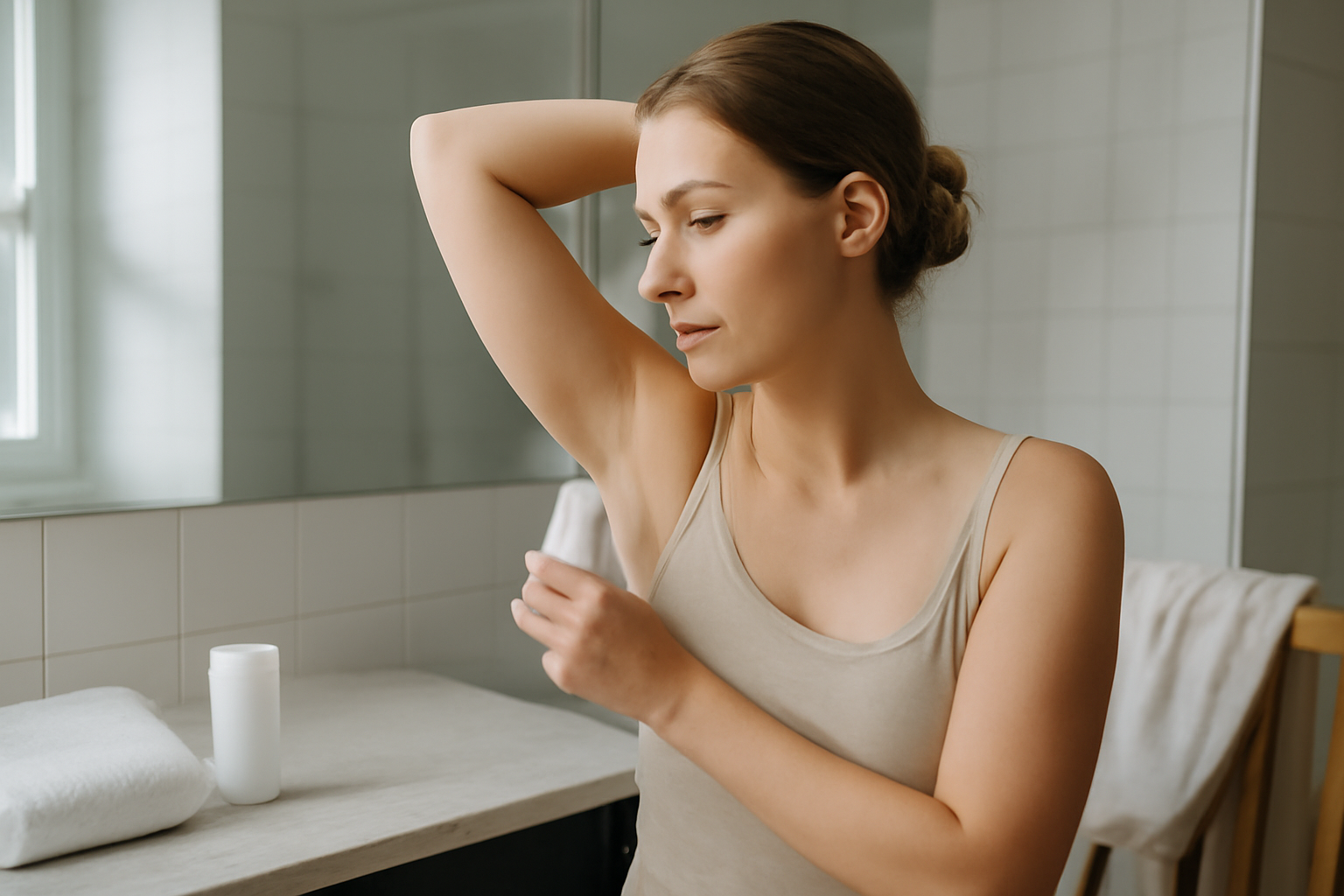
Step one is sweat control. Apply an antiperspirant at night so it can work while sweat ducts are less active (a widely recommended dermatology best practice). In the morning, cleanse gently and use deodorant if you prefer the feel or fragrance—just don’t rely on deodorant alone when sweating is the main driver.
Step two is bacteria and moisture control. Wash the area gently, then dry thoroughly. Choose breathable fabrics and change out of damp clothing quickly. For odor hotspots, pay special attention to folds and feet. If you shave, consider soothing skin after hair removal to reduce irritation.
Simple 14–28 day routine
- Night: apply antiperspirant to clean, dry underarms (and other sweaty areas if appropriate).
- Daily: gentle cleansing; rinse well; pat dry completely.
- Clothing: breathable fabrics; wash bras/underwear after each wear when odor is an issue.
- Tracking: note cycle timing, diet changes, alcohol days, and new products.
Judge results after 2–4 weeks of consistent changes. If odor improves, keep the routine. If it doesn’t—or if it becomes sudden, very strong, or comes with symptoms like itching, discharge, pain, fever, or skin changes—seek medical care sooner rather than later. That’s how you protect yourself and avoid guessing.
FAQ
How can I tell if my body odor comes more from bacteria or from sweating?
Sweat is usually mostly odorless; odor typically increases when bacteria break down sweat and dead skin. If the smell returns quickly after sweating, or improves when you use an antiperspirant at night plus thorough drying, bacteria-and-moisture interaction is likely the main driver.
What hormonal change can cause stronger body odor in women?
Hormonal shifts around the menstrual cycle, pregnancy, and perimenopause/menopause can change sweat composition and skin conditions. Many women notice stronger odor during phases associated with increased sweating, like hot flashes or night sweats.
Why does my body odor suddenly smell different with no obvious reason?
A sudden change can come from a new product, clothing fabric or fit, humidity changes, diet/alcohol timing, or an infection. If the odor is abrupt and very strong or comes with itching, rash, pain, or discharge, it’s important to get checked for infection or another medical cause.
When should I see a clinician for persistent or unusual body odor?
Consider a clinician visit if odor persists beyond 2–4 weeks despite consistent antiperspirant use, cleansing, drying, and clothing changes, or if it’s sudden and paired with symptoms like fever, pain, itching, skin changes, or discharge.
How long does it take for antiperspirant and hygiene changes to reduce odor?
With consistent use, many people notice improvement within 1–2 weeks, but a solid judgment window is 2–4 weeks. Antiperspirant works best when applied at night to clean, dry skin, combined with thorough drying and breathable clothing.
Can certain foods or drinks make body odor worse for women?
Yes. Garlic/onion, spicy foods, alcohol, and some high-sulfur foods are common triggers. A practical method is to test one change at a time for 1–2 weeks and track whether odor worsens after specific meals or drinks.
Key takeaways
- Body odor usually comes from sweat mixing with skin bacteria—not from sweat alone.
- Hormonal shifts (cycle, pregnancy, perimenopause/menopause) and stress can change odor by increasing sweating and altering skin conditions.
- Diet and alcohol can intensify odor for some women; test changes one at a time and track timing.
- Clothing and moisture control matter: choose breathable fabrics, wash regularly, and dry thoroughly after bathing.
- If odor is sudden, very strong, or comes with symptoms (itching, discharge, pain, fever, skin changes), consider infection or a medical cause.
- Use a targeted routine: antiperspirant at night + gentle cleansing + breathable clothing for 2–4 weeks before judging results.
- Seek medical advice sooner if red flags appear or if the odor persists despite consistent self-care.
When you’re trying to answer what causes body odor in women, the fastest path is usually the same: reduce moisture, reduce bacterial breakdown, and account for hormone and lifestyle triggers. Do that consistently, and most “mystery odor” cases improve—while the red flags guide you to the right medical evaluation.