
First response evap line examples can look like a colorless or gray streak once the urine has fully dried in the window.
A faint positive is different: it usually shows dye color (pink/red) and appears within the read time listed on your instructions.
Use the exact read-time, set a timer, and if anything still feels off, retest 48 hours later.
If you have severe symptoms, reach out to a clinician for confirmation.
| Evap line look | Colorless or grayish streak that shows after urine dries |
| Faint positive look | Light but definite pink/red dye within the read window |
| Best rule | Read at the package-specified time; ignore later lines |
| Next step if unclear | Retest with a fresh test about 48 hours later (often around a missed period) |
| Safety | Severe pain, heavy bleeding, dizziness, shoulder pain → urgent medical care |
Seeing a second line can feel like a roller coaster—especially when you’re staring at a first response evap line that looks “almost” like a positive. This guide breaks down first response evap line examples, how to tell an evap line from a faint positive, and what to do next so you can breathe again.
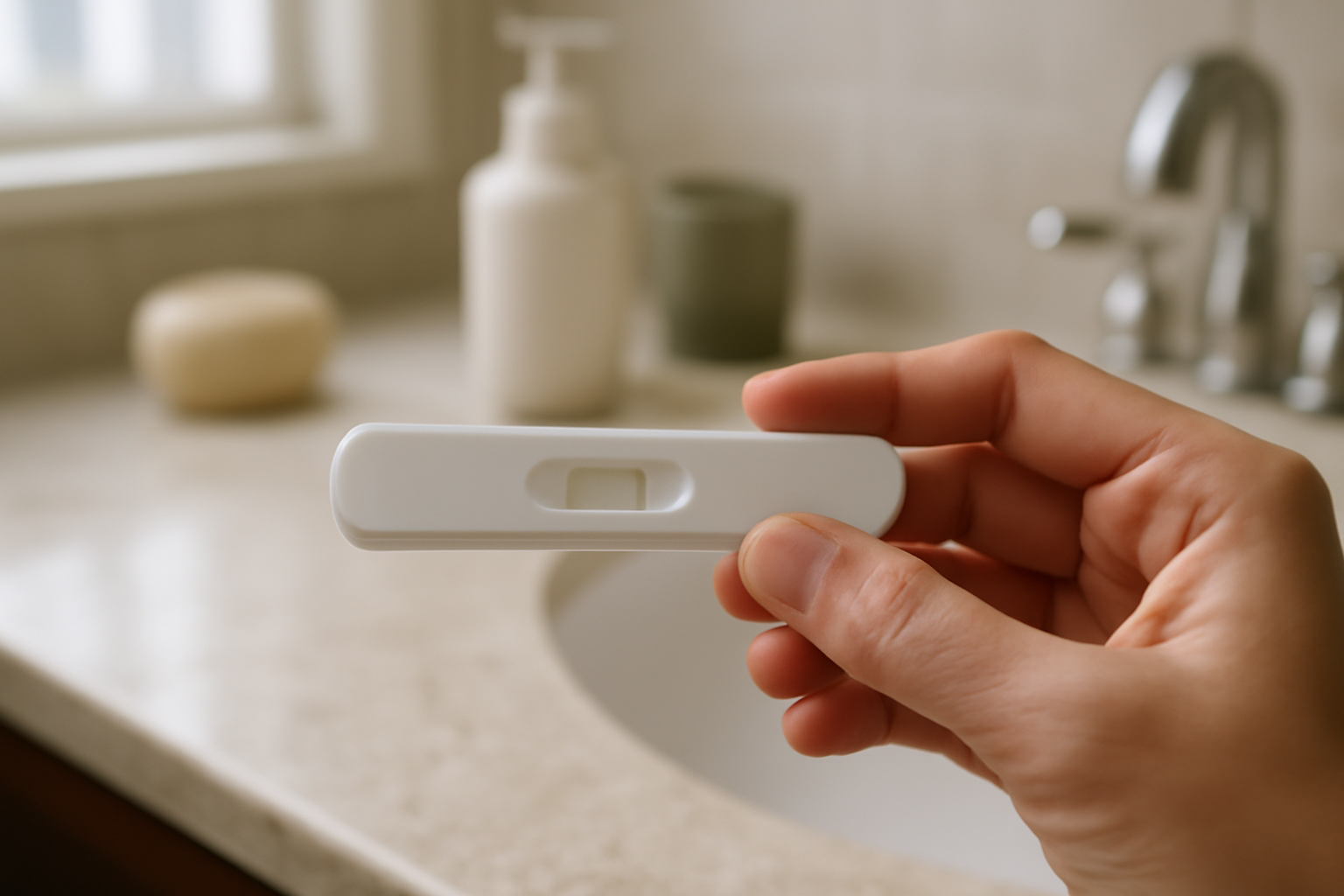
Timing matters as much as appearance. You’ll get simple rules you can use right away (and yes—set a timer).
First Response evap line vs faint positive: what you’re actually seeing
An evap line is a colorless or grayish mark that shows up after the test window dries, often without the pink/red dye you’d expect from a true positive. A faint positive usually appears within the read time and has dye color (even if it’s very light). Timing and color are the two biggest clues.
On First Response tests, the test-line area is designed to show a dye-colored line if hCG is present. An evap line is an artifact from urine drying in the window. That’s why two people can look at the same photo and disagree—lighting and drying stage can change what you notice.
In real life, separate the two like this: check for dye color (pink/red) and confirm when the line appeared. If it shows only after the test has sat longer than the instructions recommend, treat it as invalid/negative and retest.
- Evap line: often colorless or gray, may look thin or smeared
- Faint positive: light but definite colored line, within the read window
- Don’t rely on darkness: a very faint true positive can still be colored
How long to wait: the exact read-time rules that prevent evap-line mistakes
To avoid evap-line confusion, check the test at the exact time the instructions specify, then ignore anything that appears later. If you see a faint line after the read window, treat it as invalid/negative and retest with a fresh test. Always follow the specific First Response package directions, not a generic rule.
Most home pregnancy tests include a short read-time (often a few minutes) and warn that results after that window may be misleading. With First Response, people sometimes re-check hours later—then the “line” can look darker as the urine dries further.
Feeling tempted to keep checking? Set a timer when you finish, place the test on a flat surface, and read once. If it’s unclear at that point, plan a retest instead of trying to interpret a late artifact.
What evap lines look like on First Response tests (common visual patterns)
Evap lines on First Response often look like a thin, colorless streak or a faint gray line in the test area. They may be uneven, lack dye saturation, and appear only after the urine has dried. A true faint positive usually shows a light but definite colored line (pink/red) within the read window.
People commonly describe evap lines as a faint gray shadow, a line that seems to “miss” dye, or a mark that only shows after the test surface dries. Sometimes it looks streaky instead of uniformly colored.
Also check the position. The line should appear in the test’s defined result area. Marks outside the marked region aren’t reliable. If you’re comparing first response evap line examples, focus on color and timing more than thickness.
Common visual patterns to watch for
- Colorless/gray streak: looks like a shadow, not a dyed line
- Appears late: you notice it after the instructed read-time
- Uneven drying: the “line” may be patchy, smeared, or inconsistent
- No dye saturation: it doesn’t have the typical pink/red tone of a positive
When to retest after a possible evap line: timing based on missed period and hCG
If you get a line that might be an evap line, retest with a fresh First Response test. Retest when hCG is more likely to be detectable—around the day of a missed period, or about 48 hours later if you tested early. If your period still doesn’t come, repeat again after another 48 hours.
In early pregnancy, hCG generally rises quickly. Many sources describe hCG doubling times around 48–72 hours (it varies by person), which is why retesting after about 48 hours often clarifies an unclear result.
If you tested early and got a borderline-looking mark, retesting can help because hCG concentration in urine may increase enough to produce a clearly colored line. If you’re already near or past your missed period, retesting sooner can reduce uncertainty.
Practical retest plan
- Retest with a fresh test (don’t reuse the same cassette)
- Use first-morning urine for better concentration
- Keep timing consistent so results are comparable
- Read once at the package time, then stop
False negatives and user errors: why a « negative » might not be the end
A negative test can happen if you tested too early, used diluted urine, or didn’t follow timing/collection steps. Even if you think you saw an evap line before, you can still get a true positive later. Use first-morning urine, follow the soak/hold time, and read within the specified window to reduce mistakes.
Home pregnancy tests are helpful, but they’re not perfect. A true negative early on can turn into a positive later as hCG rises. That’s why a “negative” doesn’t always end the story if your period stays absent.
Common user errors include reading too late, holding the test in urine for too short/long, using very diluted urine, or checking results under inconsistent lighting. If you suspect a testing mistake, repeating the test correctly usually gives clearer information.
Quick checklist to reduce false negatives
- Test at the right time relative to your cycle and ovulation
- Use first-morning urine when you’re trying to detect early pregnancy
- Follow the exact soak/hold time from the First Response instructions
- Read only within the specified read window
- Retest if your period is late or symptoms persist
When to contact a clinician: safety signs and confirmation options
Contact a healthcare professional if you have severe pain, heavy bleeding, dizziness, or shoulder pain, or if results remain unclear after repeat testing. A clinician can confirm pregnancy with a blood hCG test and, if needed, ultrasound. This matters even more if you’re at risk for ectopic pregnancy or you have concerning symptoms.
Most pregnancies are normal, but warning signs deserve attention. Ectopic pregnancy can be life-threatening and may show up with symptoms like one-sided pelvic pain and shoulder pain. If your symptoms are severe or getting worse, don’t wait for a home test to “settle it.”
If your home results stay ambiguous despite retesting, confirmation options include serial blood hCG measurements (tracking rise over time) and ultrasound depending on gestational age and hCG level. For general guidance on pregnancy testing and next steps, see NHS: when to take a pregnancy test and MedlinePlus: pregnancy test.
For broader health context, you can also review CDC: you are pregnant and WHO: pregnancy. (They won’t tell you exactly how to interpret an evap line, but they help you understand next steps and safety.)
FAQ
How can I recognize an evap line on a First Response test versus a faint positive?
An evap line is usually colorless or gray and appears after the read window, while a faint positive has dye color (pink/red) and shows within the time specified by the First Response instructions.
What read-time should I follow for a First Response pregnancy test to avoid evap-line confusion?
Read at the exact time stated on your specific First Response package (often a short interval after testing). Ignore anything that appears later, even if it looks darker.
Why does a gray or colorless line show up after the read time on a First Response test?
Urine can evaporate and dry inside the test window, leaving a faint mark. This is an evap line artifact, not a reliable indication of pregnancy.
When should I retest after seeing a very pale line or a possible evap line?
Retest with a new First Response test about 48 hours later, especially if you tested early or if your period is due/late. Use first-morning urine and read only within the specified window.
How long can an evap line take to become visible after I take the test?
Evap lines often become more noticeable as the test dries, which can be after the recommended read-time. That’s why you should check once at the instructed time and then stop.
Can an evap line on First Response still be a true positive?
Usually, if the line appears after the read window and lacks dye color, it’s an evap line. A true faint positive should show colored dye within the read time. If you’re unsure, retest after 48 hours.
Key takeaways
- Use the test’s official read-time—ignore anything that appears after it.
- A true faint positive usually has dye color (pink/red), while an evap line is often colorless or gray.
- Timing and color beat line darkness for distinguishing evap lines from faint positives.
- If it’s unclear, retest 48 hours later (especially around a missed period).
- Use first-morning urine and follow collection/handling steps to reduce false negatives and artifacts.
- If you have severe pain, heavy bleeding, dizziness, or shoulder pain, seek medical care promptly.
- When home results stay ambiguous, ask a clinician about blood hCG confirmation and next steps.
When you’re searching for first response evap line examples, remember the goal isn’t to “guess” from a photo—it’s to interpret the test correctly at the right time. If you follow the read-time rules and watch for dye color, you’ll avoid most of the confusion. And if you’re still unsure, retesting with a fresh test (or confirming with a clinician) is the calm, reliable path forward.