
If you get sore throats often, the usual suspects are viral infections, allergies with post-nasal drip, acid reflux (GERD/LPR), and irritants like dry air, smoke, or mouth breathing. Less often, it’s strep throat or chronic tonsillitis. The fastest way to narrow it down is to track timing, symptoms (fever, cough, heartburn), and exposures.
Quick Take: Recurrent sore throats typically come from a repeatable mix of causes: viruses, allergies/post-nasal drip, reflux (GERD/LPR), or irritants like dry air and smoke.
Strep is less common in adults, but testing matters when symptoms fit.
A simple 7-day log (timing, fever, cough/runny nose, heartburn/sour taste, nasal symptoms, exposures) often points to the trigger faster than guessing.
| Most common pattern | Viruses, allergies/post-nasal drip, reflux, or irritants |
| More suggestive of strep | Sudden severe throat pain + fever + tender swollen neck nodes (often no cough) |
| Morning-worse clue | Nighttime drainage or dry air aggravation |
| After meals/lying down clue | Reflux/LPR irritation |
| Structural/ENT clue | Frequent episodes with enlarged tonsils or tonsil stones |
Recurrent infections vs. frequent strep: how to tell what’s driving the pattern
Repeated sore throats often trace back to viral upper-respiratory infections, which can pop up again during high-transmission seasons. Strep throat is less common in adults. It’s more likely when you have sudden, severe throat pain plus fever and tender swollen neck nodes—often without cough. Testing confirms strep and helps guide antibiotics.
If you’re trying to sort “virus vs strep” quickly, start with viral clues: cough, runny nose, hoarseness, and a gradual onset. Viral symptoms usually build over a day or two, then improve. Many viral sore throats get better within about 1 week, even without antibiotics.
When the pattern shifts toward strep, the story changes. Sudden severe throat pain, fever, and tender swollen lymph nodes in the front of the neck—especially with no cough—fit the classic presentation. Strep accounts for roughly 10% of sore throats in adults and about 30% in children (commonly cited clinical estimates).
- More “viral”: cough, runny nose, hoarseness, gradual onset
- More “possible strep”: sudden severe pain, fever, tender swollen nodes, no cough
- Best next step: rapid strep testing or throat culture when symptoms fit
Have you had several sore throats back-to-back? It’s tempting to assume “strep again,” but timing and the accompanying symptoms usually point elsewhere.
Allergies, post-nasal drip, and chronic nasal congestion as a sore-throat trigger
Allergies can irritate your throat through post-nasal drip, leading to a scratchy, burning, or dry-feeling throat—often worse in the morning or during allergy season. Look for sneezing, itchy eyes, chronic congestion, and frequent throat clearing. Treating allergies and nasal inflammation can reduce how often it comes back.
Post-nasal drip doesn’t always feel like mucus running down your throat. Many people notice a mucus sensation, repeated throat clearing, a dry or burning throat, and symptoms that worsen after lying down. Morning-worse discomfort often points to nighttime drainage or dry air irritating the airway.
Common triggers include pollen, dust mites, pets, mold, and indoor irritants. Workplace exposure—cleaning chemicals, dry HVAC air, or crowded, poorly ventilated spaces—can also keep nasal inflammation going and keep your throat irritated.
What to try for your nose (to protect your throat)
- Use saline rinses or a saline spray to reduce mucus and irritants.
- Consider appropriate allergy therapy (talk with a clinician or pharmacist based on your history).
- Reduce exposure where possible: wash bedding, manage humidity, and address dust or pet triggers.
If your throat symptoms track with allergy seasons or indoor exposures, treat the nose first. (Your throat often calms down when drainage improves.)
Acid reflux (GERD/LPR): why throat pain can recur without “classic” heartburn
Reflux can irritate the throat even when you don’t feel typical heartburn. Laryngopharyngeal reflux (LPR) may cause hoarseness, a lump-in-throat sensation, chronic throat clearing, cough, or burning—often after meals or when lying down. If your sore throats cluster around late meals, alcohol, or spicy/fatty foods, reflux is a strong suspect.
LPR is easy to miss because classic heartburn isn’t required. Instead, you may notice throat symptoms that come and go with eating patterns. Watch for sore throat after dinner, symptoms that wake you up at night, or a sour or bitter taste.
Throat-specific reflux signs often include hoarseness, chronic cough, globus (lump-in-throat feeling), and persistent throat clearing. Nighttime reflux risk rises when meals are close to bedtime and when you lie down soon after eating—timing is the clue.
Pattern-check: when does your throat flare?
- After meals: more likely reflux-related irritation
- When lying down: supports LPR/GERD effect
- With sour taste: strengthens the reflux link
If symptoms persist despite basic lifestyle changes, it’s reasonable to discuss evaluation with a clinician so you don’t keep treating the wrong cause.
Irritants and dry air: mouth breathing, smoke, pollution, and workplace exposures
Dry air and irritants can repeatedly inflame the throat lining. Mouth breathing (especially during sleep), HVAC dryness, smoking/vaping, wildfire smoke, air pollution, and chemical fumes can all trigger recurring soreness. Clues include a dry, scratchy throat, worsening with speaking or in certain environments, and improvement when you’re away from the trigger.
Start with your environment. Is your home humidity low during winter? Are you running the heater or AC all night? Do you work near dust, fumes, cleaning agents, or strong fragrances? Air quality spikes—wildfire smoke or high-pollution days—are well-known triggers for upper-airway irritation.
Next, look at breathing habits. Mouth breathing and heavy snoring can dry the throat. If you wake with dryness, a “cotton mouth” feeling, or a scratchy throat, dry-air irritation is often the driver. (It’s also why some people feel worse after sleeping with a fan blowing directly on their face.)
Protect the airway
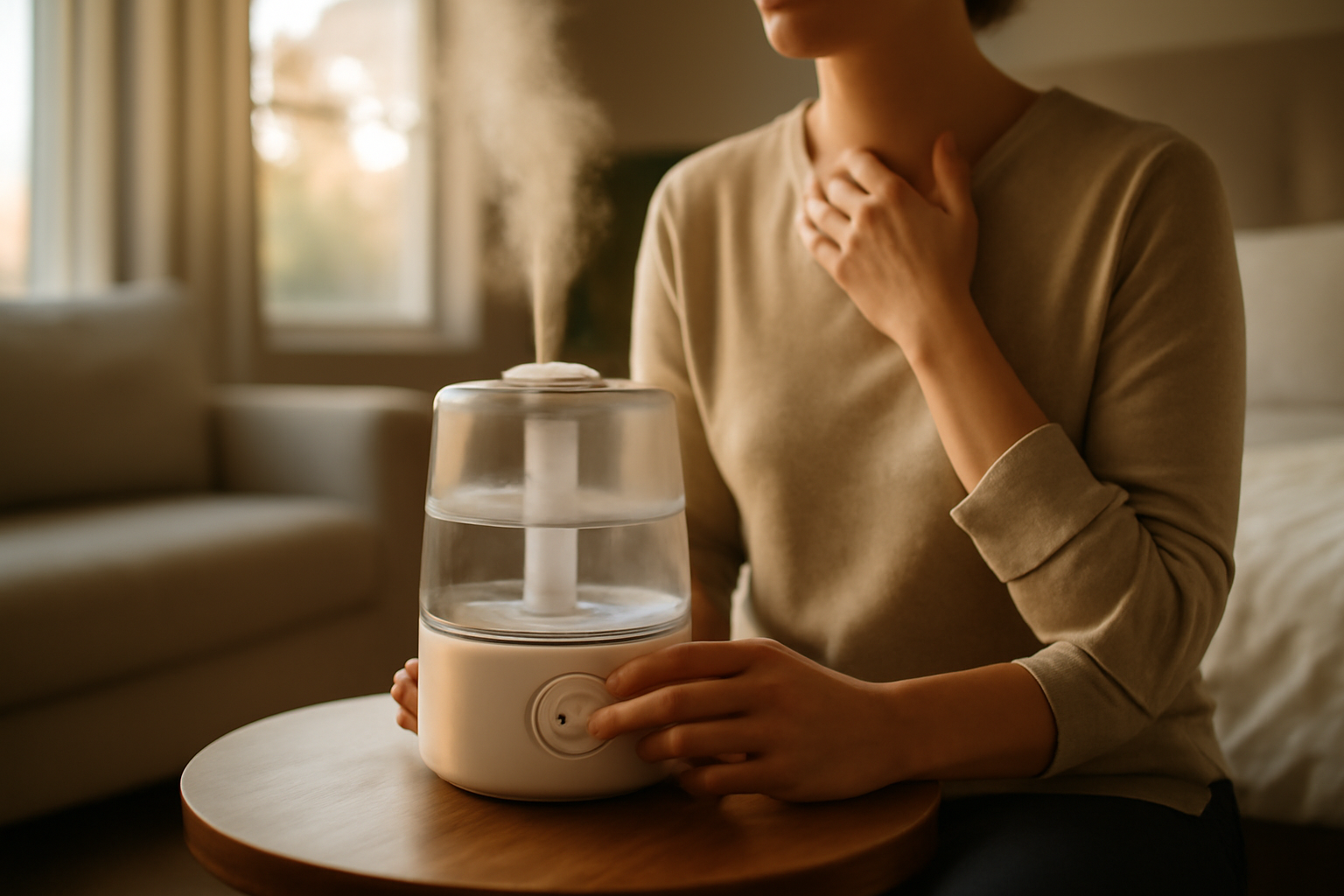
- Use humidification when indoor air is dry.
- Hydrate through the day and consider a bedside water option.
- Avoid smoke/vaping and reduce exposure to fumes and strong chemicals.
- If you suspect mouth breathing, address the underlying cause (nasal blockage, sleep-position habits, or sleep-disordered breathing—best discussed with a clinician).
Chronic tonsillitis, enlarged tonsils, and when “constant” throat pain suggests a structural issue
If sore throats keep returning with similar symptoms and you have enlarged or chronically inflamed tonsils, chronic tonsillitis may be involved. Some people also develop tonsil stones (tonsilloliths) that cause bad breath and persistent irritation. Red flags include frequent severe episodes, difficulty swallowing, or symptoms that don’t respond to treating infections, allergies, or reflux.
When infections aren’t the whole story, the tonsils themselves can become a long-term source of irritation. Recurrent bad breath, visible white/yellow debris in the tonsil area, and a persistent “something stuck” feeling can point toward tonsil stones—even between infections.
Repeated episodes with consistent severity and duration matter. If each sore throat follows the same pattern and the usual triggers (viral illness, allergies, reflux, dry air) don’t explain it, an ENT evaluation is often worth considering. ENT specialists can assess tonsil size, check for stones, and discuss whether further treatment is appropriate.
When to consider ENT input
- Episodes are frequent or severe
- Symptoms persist despite standard care for allergies, reflux, and infections
- Swallowing feels difficult or painful
- You suspect tonsil stones and want confirmation
Tonsil stones can recur and keep the throat irritated even when you’re not actively battling an infection.
A practical self-check: symptom timeline + triggers to narrow the cause in 7 days
Use a 7-day log to match your pattern to likely causes. Track: time of day (morning vs evening), fever, cough/runny nose, heartburn or sour taste, nasal symptoms (itching/sneezing), and exposures (allergens, smoke, dry air, late meals). The pattern usually points to infection, allergy/post-nasal drip, reflux, or irritants—then you can choose targeted steps.
A short, structured diary beats memory. Write down when the sore throat starts, how long it lasts, and what else is happening at the same time. You’re looking for repetition across weeks, not just one unlucky illness day.
Use the timeline to separate common categories:
- Morning-worse → think drainage or dry air.
- After meals or when lying down → think reflux/LPR.
- With cough/runny nose and gradual onset → think viral.
- Sudden severe pain + fever + tender neck nodes, no cough → consider strep testing.
- Persistent “something stuck,” bad breath, visible debris → consider tonsil stones/tonsil issues.
Bring your log to a clinician and you’ll usually get a more targeted plan. That can mean rapid strep testing, allergy-focused treatment, reflux evaluation, or an ENT referral—depending on what your pattern shows.
FAQ
How do I know if my sore throat is from allergies or an infection?
Allergies often come with sneezing, itchy eyes, chronic nasal congestion, and frequent throat clearing, with symptoms that can be worse in the morning. Infections more often include fever, sudden worsening, cough/runny nose (especially with gradual onset), and a sore throat that improves over several days.
Why do I keep getting sore throats at night or when I wake up?
Night or morning flares commonly reflect post-nasal drip, dry air, or mouth breathing during sleep. Reflux (GERD/LPR) can also irritate the throat when you lie down, especially if symptoms follow late meals.
When should I get a strep test if I get sore throats often?
Consider testing when your episodes match strep-style symptoms: sudden severe throat pain, fever, and tender swollen neck lymph nodes, especially when there’s no cough. If you have repeated episodes, a clinician can decide whether rapid strep testing or throat culture is appropriate.
Can acid reflux cause sore throat without heartburn?
Yes. Laryngopharyngeal reflux (LPR) can cause hoarseness, chronic throat clearing, cough, or a lump-in-throat feeling with little or no classic heartburn. Timing (after meals or when lying down) and symptoms like sour taste help confirm the pattern.
How long should a sore throat last before I see a doctor?
Many viral sore throats improve within about a week. Seek medical advice sooner if pain is severe, you have trouble swallowing fluids, you develop high fever, symptoms keep recurring, or the pattern doesn’t match viral illness, allergies, reflux, or environmental irritation.
What home remedies actually help recurrent sore throat from dryness or irritants?
Focus on hydration and humidification, especially at night. Saline sprays or rinses can reduce irritation. Avoid smoke/vaping and reduce exposure to pollution or chemical fumes. If mouth breathing is part of the problem, addressing nasal blockage and improving sleep environment can help.
Key takeaways
- Track timing and associated symptoms—your pattern usually reveals the cause faster than guessing.
- Strep is possible but less common than viral sore throats, especially in adults; testing helps when symptoms fit.
- Allergies and post-nasal drip often cause morning-worse throat irritation and frequent throat clearing.
- Reflux can irritate the throat even without classic heartburn, especially after late meals or when lying down.
- Dry air, mouth breathing, smoke, and pollution can keep the throat inflamed—reduce exposure and improve humidity.
- If episodes are frequent, severe, or persistent, consider ENT evaluation for chronic tonsillitis or tonsil stones.
- Seek urgent care for trouble breathing, drooling, inability to swallow fluids, or rapidly worsening pain.
If you’re asking why you get sore throats so often, start with what you can observe: timing, fever, cough/runny nose, heartburn or sour taste, nasal symptoms, and environmental exposures. That turns “random” throat pain into a solvable pattern—and helps you choose the right next step.
Sources: CDC on strep throat, Mayo Clinic on sore throat causes, NHS guidance on sore throat, WHO fact sheets.
1 commentaire sur « Why Do I Get Sore Throats So Often? Common Causes »