
Spotting after ovulation is often normal—especially 1–3 days after ovulation—because progesterone and small cervical changes can cause light pink or brown spotting.
Implantation bleeding usually shows up later (often 6–12 days after ovulation), but the timing can overlap with other causes.
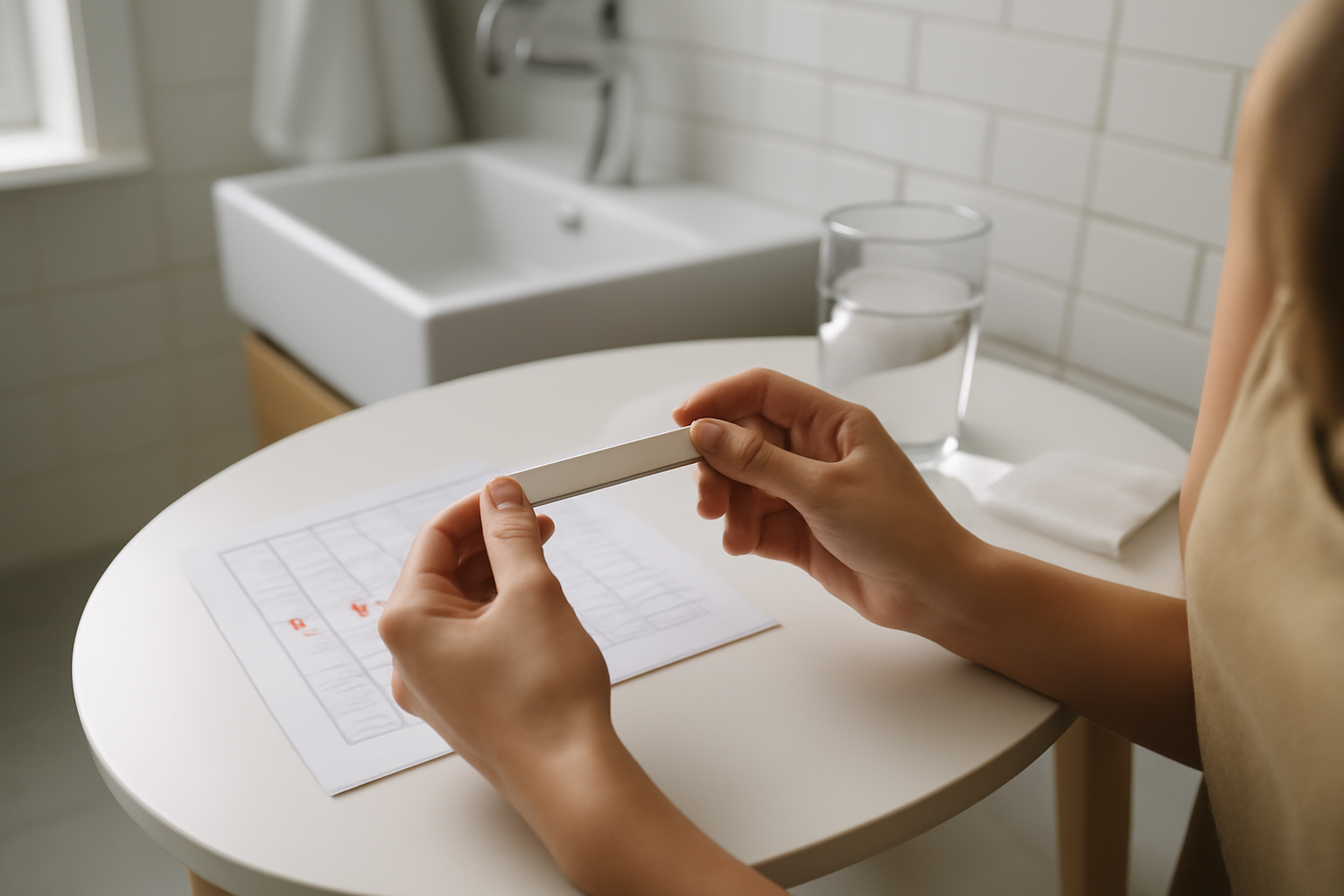
For the most reliable answer, test on/after your missed period and repeat in about 48 hours if the result is negative.
| Common timing | Light spotting 1–3 days after ovulation is often luteal-phase hormone change |
| Implantation window | Often ~6–12 days after ovulation, but can overlap with other causes |
| Best test time | On/after the day your period is due; repeat in ~48 hours if negative |
| Typical spotting look | Pink or brown, light amount, short-lived, minimal clots |
| Urgent signs | Heavy bleeding, severe one-sided pain, fainting, fever, foul-smelling discharge |
Spotting 1–3 Days After Ovulation: When It’s Usually Normal
Spotting 1–3 days after ovulation often comes from normal hormonal shifts (especially progesterone) or mild cervical irritation. It’s usually light (pink/brown), brief, and not paired with heavy bleeding or strong pain. If you’re tracking ovulation, this timing fits post-ovulation changes more than it fits a confirmed pregnancy.
After ovulation, your body moves into the luteal phase. Progesterone rises to support the uterine lining, and that transition can make the lining a bit less stable. The result is often a small amount of spotting—more like a “wiping” stain than a real flow.
Some people also notice spotting after using ovulation tools (LH strips or basal body temperature). Once ovulation is detected, the days right after can bring subtle changes in discharge, cervical sensitivity, and uterine blood flow. (And yes, it’s a common question: “Why am I spotting when my period isn’t here yet?”)
What “normal” looks like
- Light amount: a few drops or only when wiping
- Color: pink, light red, or brown
- Short duration: often less than 1–2 days
- Minimal clots: usually none or very small specks
Ovulation typically happens about 12–16 days before the next period in a typical cycle (it varies by person). Spotting that matches the early post-ovulation window is often just cycle variation rather than a clear sign of pregnancy.
Still, “normal” has limits. If bleeding becomes heavy (like a period), includes severe cramps, or keeps getting worse, treat it as a medical question—not something to wait out.
Implantation Bleeding vs Post-Ovulation Spotting: How to Tell the Difference
Implantation bleeding is classically light spotting that can appear around 6–12 days after ovulation, when a fertilized egg may implant. Compared with earlier post-ovulation spotting, it’s often lighter, shorter, and not like a period. Timing overlaps with other causes, though—so it can’t confirm pregnancy on its own.
Think of implantation bleeding as a possible clue, not proof. A commonly cited implantation window is about 6–12 days after ovulation. If your spotting shows up much earlier (like day 1–3 after ovulation), progesterone-related changes are more likely than implantation.
Pattern matters. Implantation bleeding is often described as lighter and less “period-like”—fewer spots, less volume, and a shorter duration. Some people also report mild cramping or discharge changes, but symptoms vary a lot.
Quick comparison: spotting patterns
| Timing relative to ovulation | Implantation: ~6–12 days after ovulation; early luteal spotting: ~1–3 days |
| Amount | Implantation: usually very light; post-ovulation spotting: also often light, but earlier |
| Color | Both can be pink/brown; implantation often stays subtle |
| Duration | Implantation: often short; persistent mid-luteal bleeding needs evaluation |
| Can it diagnose pregnancy? | No—spotting alone can’t confirm pregnancy |
If you’re tempted to treat spotting as a yes/no signal, pause. Pregnancy tests are more reliable after a missed period or later in the luteal phase because hCG rises over time.
When to Take a Pregnancy Test After Ovulation (Best Timing for Accuracy)
For most people, the most accurate home pregnancy test timing is after a missed period. Test earlier and you can get a false negative. A simple plan: test around the day your period is due, and if it’s negative but spotting continues (or you still feel pregnant), repeat in 48 hours. First-morning urine can improve accuracy.
Early testing can miss rising hCG. Even if implantation happened, hCG may still be too low to detect right away. That’s why many guidelines focus on testing around when your period is expected.
Here’s a schedule you can follow:
- Day your period is due: take a urine test (first-morning urine if possible).
- If negative but spotting continues or you still suspect pregnancy: repeat in 48 hours.
- If still negative and your period never arrives: consider another test a few days later or contact a clinician for blood testing.
Urine tests estimate hCG in urine; blood tests can detect it earlier and more precisely. For broader guidance on test accuracy, see NHS pregnancy tests: how and when to test and MedlinePlus: pregnancy test basics.
Causes of Spotting After Ovulation That Aren’t Pregnancy
Not all spotting after ovulation means pregnancy. Common non-pregnancy causes include hormonal fluctuations, breakthrough bleeding, ovulation-related cervical sensitivity, stress, thyroid or prolactin issues, and medication effects. Less common causes include infections or uterine/cervical conditions. If bleeding is frequent, heavy, or paired with unusual discharge or pain, it’s time to get checked.
Spotting in the luteal phase can happen even when you’re not pregnant. Hormones don’t always shift like a perfect clock, and small changes can show up as light bleeding. Breakthrough bleeding can also occur if progesterone levels fluctuate or if your cycle timing shifts.
Sometimes the source is local rather than hormonal. Cervical irritation from sex or a pelvic exam can cause light spotting in some people. (Yes, the cervix can be that sensitive.) Stress and disrupted sleep can also affect cycle regularity, which may make spotting more likely.
Common non-pregnancy reasons
- Hormonal variability in the luteal phase (progesterone shifts)
- Breakthrough bleeding between cycles
- Cervical irritation (sex, speculum exam, sometimes vigorous activity)
- Stress and changes in routine
- Endocrine factors like thyroid imbalance or prolactin issues
- Medication effects (some hormonal methods, emergency contraception, or other drugs)
Endocrine disorders like thyroid imbalance can affect cycle regularity and bleeding patterns—even when the cause isn’t obvious. If you have recurring mid-luteal bleeding, irregular cycles, or other symptoms (fatigue, temperature changes, hair/skin changes), ask a clinician about thyroid and related labs.
Persistent or recurrent bleeding also deserves attention for structural or infectious causes. If you notice unusual discharge, itching, burning, pelvic tenderness, or bleeding that keeps returning each cycle, don’t assume it’s “just spotting.”
Red Flags: When Spotting After Ovulation Needs Urgent Care
Get urgent medical care if spotting becomes heavy (soaking pads), is paired with severe one-sided pelvic pain, dizziness/fainting, shoulder pain, fever, or foul-smelling discharge. These can point to problems that need prompt evaluation, such as ectopic pregnancy or infection. Also contact a clinician if you have bleeding plus a positive pregnancy test or if bleeding keeps recurring each cycle.
Some conditions can’t wait for “maybe it will pass.” Ectopic pregnancy is time-sensitive, and symptoms like severe pain and faintness need immediate care. If you’ve taken a test and it’s positive but you have concerning symptoms, don’t delay—get assessed.
Practical threshold: if you’re soaking pads quickly, passing large clots, or feeling weak/lightheaded, that’s urgent. Fever or foul-smelling discharge can align with infection and should be evaluated quickly.
Go now or call urgent services if you have
- Heavy bleeding (rapid pad saturation)
- Severe one-sided pelvic/abdominal pain
- Dizziness, fainting, or feeling like you might pass out
- Shoulder pain (especially with suspected pregnancy)
- Fever or foul-smelling discharge
If you’re unsure whether your symptoms count as “urgent,” it’s still reasonable to contact a clinician for triage. Better to be reassured than to miss something serious.
Tracking Your Cycle: How Ovulation Timing Changes the Meaning of Spotting
Your interpretation depends on how accurately you know when ovulation happened. If ovulation is earlier or later than expected, the same spotting day can shift from “normal luteal spotting” to a “possible implantation window.” Use one or more methods—LH tests, basal body temperature, and cycle history—to estimate timing, then interpret spotting relative to that window instead of relying on calendar dates alone.
Cycle variability is why this can feel so confusing. Even if your periods are “usually regular,” ovulation can drift by several days. That drift moves the luteal phase, so spotting that looks early on a calendar might actually fall inside an implantation window based on your true ovulation date.
Basal body temperature usually rises after ovulation and stays elevated through the luteal phase. LH surge detection helps estimate ovulation, but ovulation may occur within a window after the surge. Using more than one method reduces guesswork.
A relative-timing approach that works
- Estimate ovulation using LH strips (surge) and/or basal body temperature shift.
- Count days after ovulation (day 0 = ovulation day estimate).
- Compare your spotting day to the windows: 1–3 days (often normal luteal spotting) vs ~6–12 days (possible implantation).
- Test at the right time (on/after the day your period is due).
If you track cycles, you already know how valuable the data can be. If you don’t, you can still use this approach—just treat “days after ovulation” as an estimate and rely on test timing for confirmation.
FAQ
How soon after ovulation can spotting mean pregnancy?
Spotting can happen in early pregnancy, but implantation bleeding is classically later—often around 6–12 days after ovulation. Spotting 1–3 days after ovulation is more commonly linked to normal luteal-phase changes.
What color is implantation bleeding, and how long does it last?
Implantation bleeding is usually light and often pink or brown. It typically lasts a short time—often less than a couple of days—though experiences vary.
Can I get a negative pregnancy test and still be pregnant after spotting?
Yes. Testing too early can produce a false negative. If you test before your missed period, repeat testing around the day your period is due and again in 48 hours if spotting continues or you still suspect pregnancy.
Why am I spotting after ovulation but my period is not here yet?
Common reasons include normal progesterone-related luteal changes, mild cervical irritation, stress, or hormonal variability. It can also overlap with implantation timing, so the most reliable next step is pregnancy testing at the right time.
When should I see a doctor for spotting after ovulation?
Contact a clinician if bleeding is heavy, recurrent each cycle, lasts longer than expected, or comes with unusual discharge or pain. Seek urgent care if you have severe one-sided pain, fainting/dizziness, fever, foul-smelling discharge, or heavy bleeding.
Is spotting after ovulation ever a sign of an ectopic pregnancy?
Yes, spotting can occur with an ectopic pregnancy. Because ectopic pregnancy can be dangerous, urgent evaluation is needed if you have severe pain (often one-sided), dizziness/fainting, shoulder pain, or a positive pregnancy test.
Key takeaways
- Light, brief spotting 1–3 days after ovulation is often due to normal luteal-phase hormone changes.
- Implantation bleeding is usually later—commonly around 6–12 days after ovulation—but spotting alone can’t confirm pregnancy.
- Test most reliably on/after the day your period is due; repeat in about 48 hours if results are negative but symptoms persist.
- Non-pregnancy causes include hormonal fluctuations, cervical irritation, stress, and some endocrine or medication-related factors.
- Get urgent care for heavy bleeding, severe one-sided pain, fainting, fever, or foul-smelling discharge.
- Interpret spotting using relative timing to ovulation, not just calendar days, especially if your cycle varies.
- If you have a positive test with bleeding or recurrent spotting each cycle, contact a healthcare professional.
If you’re searching “spotting after ovulation am i pregnant,” treat spotting as a clue and use timing plus a well-timed test to get the clearest answer. When symptoms feel intense or unusual, trust your instincts and get medical guidance.
For reputable background information, you can also review ACOG on early pregnancy loss and WHO health topics related to infertility.