
White, milky discharge after ovulation can happen in early pregnancy—but it’s not proof on its own. After ovulation, progesterone often makes cervical mucus thicker and whiter (sometimes milky or sticky). The most reliable way to confirm pregnancy is a properly timed pregnancy test (often after a missed period).
Quick Take: White, milky post-ovulation discharge is usually progesterone-driven luteal mucus.
Early pregnancy can look similar, so timing matters more than appearance.
Most accurate home test results come around a missed period (about 14 days after ovulation for many people).
Itching, burning, or a strong odor points more toward infection—get medical advice.
| Most common cause of milky white discharge after ovulation | Progesterone-driven luteal-phase cervical mucus |
| When implantation-related discharge may start | Often ~6–12 days after ovulation |
| Best time for a reliable home pregnancy test | Around a missed period (~14 days after ovulation for many) |
| Red flags for infection | Itching, burning, fishy/foul odor, pain, bleeding |
| Next step if home tests stay negative | Repeat testing + consider clinician evaluation (blood hCG) |
Why white, milky discharge after ovulation is common (luteal phase)
After ovulation, progesterone rises and changes cervical mucus. It often becomes thicker, whiter, or more opaque. That can be totally normal—even when you’re not pregnant. Many people notice mild odor (or no strong smell), no burning, and mucus that shifts gradually over days until their period or a pregnancy test becomes informative.
In a typical cycle, ovulation happens about 14 days before the next period. During the luteal phase, progesterone slows and thickens secretions, so discharge can turn stickier or milkier. For many people, these changes are most noticeable in the first 5–10 days after ovulation.
Color and texture can vary day to day without meaning pregnancy. A creamy white or slightly opaque look is common. If discharge comes with itching, burning, or a strong odor, treat it as a possible infection—not “just normal” luteal mucus. (It’s your body sending a signal.)
- Usually normal: milky/creamy white mucus, mild scent, no irritation
- More concerning: itching, burning, foul smell, or pain
- Timing cue: luteal-phase changes often peak in the first week after ovulation
Practical tip: track the days after ovulation. Once you know your timeline, it’s easier to tell whether changes fit your usual luteal pattern or a possible pregnancy window.
Can white discharge be an early pregnancy sign? What timing to expect
White discharge can show up in early pregnancy because hormone levels shift after implantation and cervical mucus may thicken or turn milky. The problem is that this overlaps heavily with normal luteal-phase discharge. So the appearance alone can’t tell you much.
Timing helps. Implantation often occurs between 6 and 12 days after ovulation. If implantation happens, some people notice increased discharge afterward—often described as creamy or milky. But progesterone stays elevated in non-pregnant cycles too, so the same look can happen anyway.
Want the real answer? Take a pregnancy test. For many people, a home test becomes more informative around the missed period (often about 14 days after ovulation). Early pregnancy symptoms vary a lot, so treat discharge as one clue, not a diagnosis.
If you’re trying to match symptoms to timing, start with your ovulation date (from an LH test, basal body temperature shift, or provider guidance). Then the question becomes measurable: “Does this fit my timeline?”
How to distinguish pregnancy-like discharge from infection (yeast, BV, STIs)
Infection-related discharge usually comes with symptoms. Yeast often brings itching or burning. Bacterial vaginosis (BV) often causes a fishy odor and thin gray/white discharge. STIs can cause unusual discharge along with pain, bleeding, or discomfort during urination or sex. Pregnancy-related discharge is usually not strongly smelly and typically doesn’t cause irritation.
Start with sensory clues. Normal luteal mucus can be milky and thicker, but it usually isn’t intensely smelly and doesn’t cause burning. Yeast infections often bring noticeable itching and irritation, and discharge may be thick and clumpy—sometimes described as “cottage cheese.”
BV more often involves a strong fishy smell (especially after sex) plus watery or thin discharge that can look gray or white. STIs may cause unusual discharge with pain, bleeding, or urinary symptoms. If you have a new partner risk or symptoms that don’t match your usual cycle mucus, testing is the safest move.
Quick comparison checklist
- Yeast: itching/burning + thick clumpy discharge
- BV: fishy smell + thin watery gray/white discharge
- STIs: unusual discharge + pain, bleeding, or urinary symptoms
- Pregnancy/luteal: milky or sticky mucus without strong odor or irritation
Recurring or persistent symptoms shouldn’t be treated repeatedly on your own. A clinician can check pH, do swabs, and recommend the right treatment—especially important if you might be pregnant.
For background on sexually transmitted infections and why screening matters, see WHO guidance on sexually transmitted infections.
When to take a pregnancy test after ovulation (and which type)
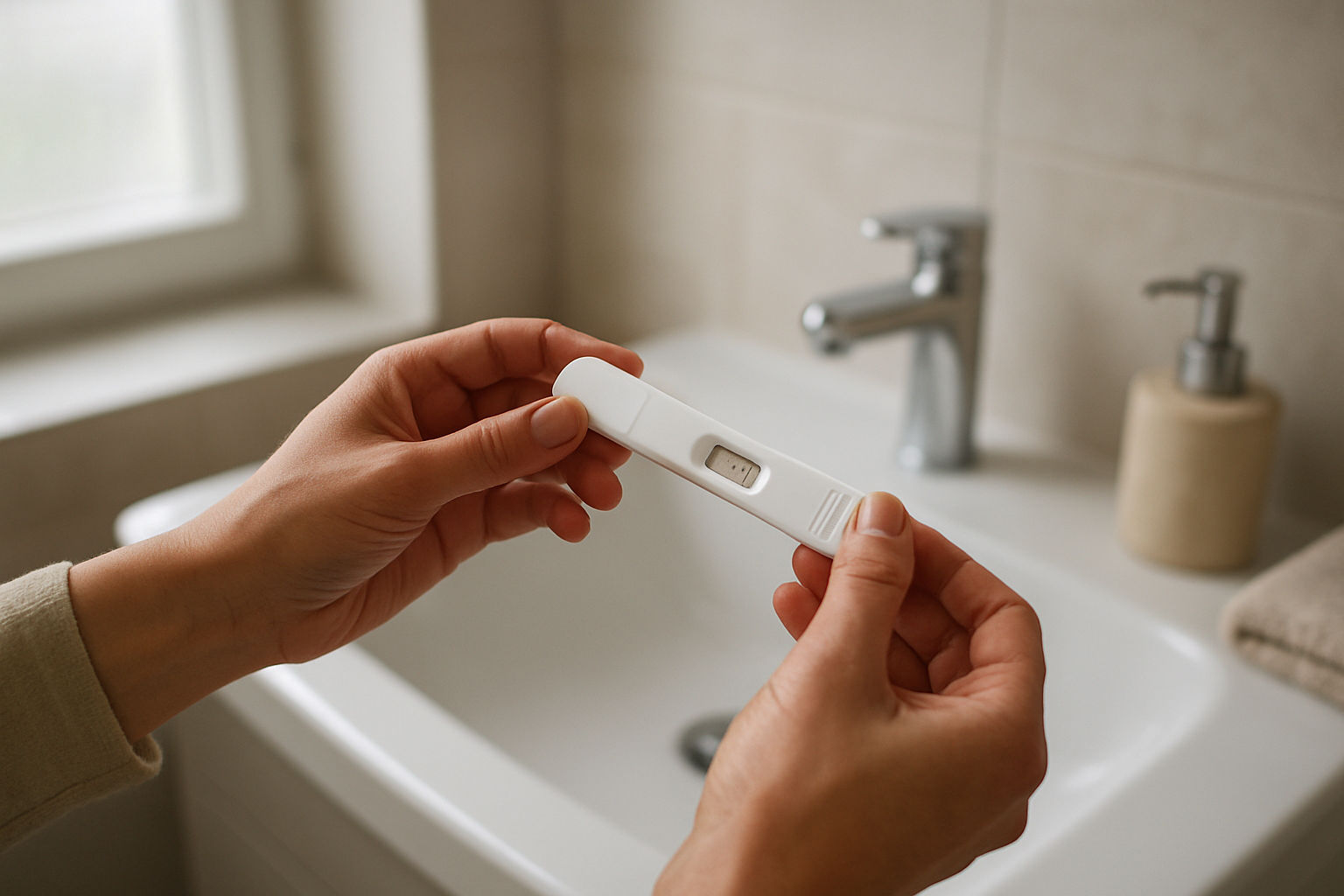
For most people, testing about 14 days after ovulation (around the missed period) gives the most reliable home result. Test earlier and you may get a false negative. Use first-morning urine for better sensitivity, and repeat in 48 hours if negative but your period still hasn’t arrived.
Home pregnancy tests detect hCG, which rises after implantation. Many tests work best once hCG has had time to build—often around a missed period. If your cycles are irregular, base timing on your ovulation date (or use a longer testing window).
First-morning urine is your best bet. If you get a negative result but your period still hasn’t come, repeat in 48 hours. That short gap can matter because hCG often increases quickly early on.
Which test to choose
- Urine strip or midstream test: convenient; best when timed to the missed period
- Digital test: easier to read; still depends on timing
- Clinician blood hCG: can detect earlier when home tests are unclear
For official test timing details, review NHS pregnancy test guidance and ACOG FAQ: pregnancy tests.
What to do if discharge changes but the test is negative
A negative test doesn’t always mean you’re not pregnant—especially if it was taken too early. If discharge changes keep happening, retest 48 hours later and keep tracking cycle timing. If you develop itching, burning, strong odor, pain, or bleeding, focus on evaluating infection or other causes instead of assuming pregnancy.
Discharge can shift for many reasons: progesterone changes, mild irritation, stress, or infections. If your test was taken before hCG rose enough, the result can be falsely negative. Timing is the key variable here.
hCG typically rises over the early weeks of pregnancy, so a repeat test can turn negative into positive. If symptoms persist beyond a few days—especially irritation or odor—get checked. If your period is late by more than a week, it’s reasonable to contact a clinician.
What to track during the waiting window
- Days since ovulation (not just calendar dates)
- Discharge changes (color, thickness, odor, irritation)
- New symptoms (cramps, spotting, urinary discomfort)
- Test dates and times (first morning urine vs later)
(If you’re charting anyway, you’ll likely feel more in control—because you’re working with dates and patterns, not vibes.)
When to see a doctor (red flags and best next steps)
Get urgent care if you have severe pelvic pain, fever, fainting, or heavy bleeding. Arrange a prompt visit if discharge comes with significant itching, burning, foul odor, or pain during urination or sex. If you keep getting negative tests but your period is missing, ask about blood hCG testing and evaluation for other causes.
Some symptoms need urgent evaluation because they can point beyond “normal discharge.” If you suspect ectopic pregnancy, seek urgent care for severe one-sided pain, dizziness, or shoulder pain. Blood hCG and ultrasound can clarify pregnancy location and status when urine tests aren’t conclusive.
If you’re at risk for STIs (new partner, unprotected sex, or symptoms like pain or bleeding), clinician testing may be recommended even without obvious discharge changes. The CDC outlines STD prevention and testing resources at CDC STD information.
Best next steps you can take
- Repeat home testing if you’re early, then discuss results if still negative
- Request a pelvic exam and swabs if odor or irritation suggests infection
- Ask about blood hCG when timing is uncertain or symptoms persist
- Go to urgent care for severe pain, fever, fainting, or heavy bleeding
FAQ
Can white discharge after ovulation mean I’m pregnant?
Yes, it can happen in early pregnancy, but it’s not proof. White, milky or sticky mucus is also common after ovulation because progesterone changes cervical mucus. The most reliable confirmation is a pregnancy test at the right time (often after a missed period).
How many days after ovulation should I test if I have white milky discharge?
For many people, testing around 14 days after ovulation (near the missed period) is most informative. If you test earlier, you may see a false negative. If negative and your period still hasn’t arrived, repeat in 48 hours.
Why is my discharge thick and white after ovulation but my pregnancy test is negative?
Thick, white discharge after ovulation often reflects normal luteal-phase mucus driven by progesterone. A negative test can also be timing-related if it was taken too early. Retest in 48 hours and monitor for any irritation or strong odor that could suggest infection.
What does yeast infection discharge look like compared with normal post-ovulation mucus?
Yeast infection discharge often appears thick, clumpy, and “cottage cheese”-like, and it commonly comes with itching or burning. Normal post-ovulation mucus is usually milky or sticky without significant irritation or a strong, foul odor.
When should I worry about smelly or itchy white discharge after ovulation?
Worry if you have itching, burning, pain, or a strong fishy/foul odor. Those symptoms are more consistent with infection (such as yeast or BV) than with normal luteal mucus. Arrange medical advice promptly, especially if symptoms persist or worsen.
Is implantation bleeding or pregnancy discharge always accompanied by white discharge?
No. Implantation bleeding and early pregnancy symptoms vary a lot, and white discharge is not guaranteed. Some people notice creamy mucus, while others have little change. If you’re unsure, use timing-based testing rather than relying on discharge alone.
Key takeaways
- White, milky discharge after ovulation is often normal luteal-phase mucus from progesterone.
- Discharge alone can’t confirm pregnancy because it overlaps with non-pregnant hormonal changes.
- Itching, burning, or a strong odor suggests infection—get medical advice.
- For best accuracy, take a home pregnancy test around the missed period (about 14 days after ovulation for many).
- If negative but your period hasn’t arrived, retest after 48 hours and keep tracking timing.
- Seek urgent care for severe pain, fever, dizziness, or heavy bleeding.
- When tests are unclear, blood hCG and clinician evaluation can provide faster clarity.
If you’re trying to interpret white discharge after ovulation, treat it as a timing clue—not the final answer. A properly timed test (and medical evaluation when symptoms suggest infection) is what brings clarity.
2 commentaires sur « White Discharge After Ovulation Pregnant: What to Know »