
Quick Take: can alcohol affect a pregnancy test? Usually, no. Most home tests look for hCG in urine, and normal drinking doesn’t chemically “turn off” the test.
The real trouble is indirect: hydration, urine dilution, and timing. If you test too early or your urine is diluted, you’re more likely to get a false negative.
A false positive from alcohol is rare. When people see one, it’s more often a reading-time issue (or a specific medical situation).
If your result doesn’t match what you expect, repeat in 48–72 hours or check with a clinician.
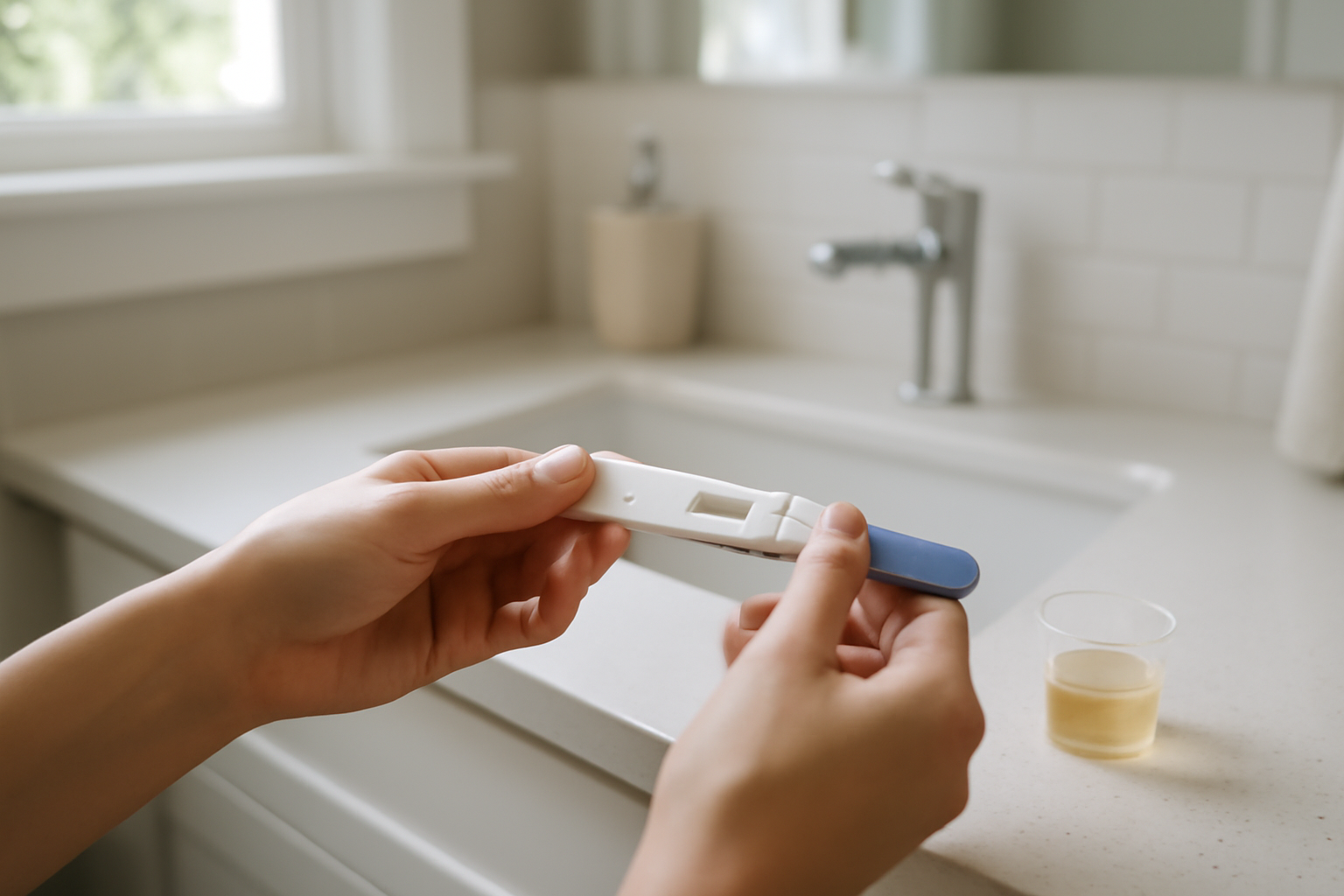
| What the test detects | Urine hCG (human chorionic gonadotropin) |
| Alcohol’s direct effect | Not known to chemically invalidate test antibodies |
| Most common problem after drinking | Diluted urine or testing too early |
| Best sample | First-morning urine for earlier testing |
| If you’re unsure | Repeat in 48–72 hours or contact a clinician |
| Safety red flags | Severe one-sided pain, heavy bleeding, concerning symptoms |
Does alcohol directly interfere with hCG detection on home pregnancy tests?
Home pregnancy tests detect hCG (human chorionic gonadotropin) in urine. Standard alcohol intake doesn’t chemically block the test’s antibodies or “cancel” hCG detection. A true positive or negative result comes down to whether hCG is present at detectable levels and whether the test is used correctly.
So, when you ask can alcohol affect a pregnancy test, the key is what the kit is actually measuring. Most home pregnancy tests use antibodies that bind to hCG once pregnancy has started and hCG is rising in your urine. If hCG is above the test’s sensitivity threshold, you’ll usually see a line.
Alcohol can still throw things off indirectly. If drinking changes your fluid intake, disrupts sleep, or shifts when you test, you may end up with diluted urine—or simply test at the wrong moment. That’s not the same as direct interference with the test chemistry (these tests don’t work that way).
Can drinking alcohol cause a false positive or false negative?
Alcohol itself isn’t a common reason for false positives. Those are more often tied to rare medical situations (like certain hormone conditions) or to reading the test outside the recommended time window. Alcohol can contribute to false negatives indirectly by affecting hydration and test timing, which can dilute urine and lower detectable hCG concentration.
False positives are uncommon. The most frequent “false positive” story is actually a misread test—checking too late and mistaking evaporation lines for true results. If you read within the exact time on the package, you cut that risk a lot.
False negatives are more likely when you test before your body has produced enough hCG. Many FDA-cleared home pregnancy tests are designed to detect hCG around the early pregnancy window, but accuracy drops as you get closer to a missed period. If you drink and test later the same day, diluted urine from fluids may be the bigger factor than alcohol itself.
- False positive (less common): usually reading errors or rare hormone-related causes.
- False negative (more common): early testing and diluted urine after drinking.
- Best safeguard: follow the kit’s timing and repeat if results don’t fit your cycle.
How alcohol may indirectly affect test accuracy: hydration, urine dilution, and timing
Alcohol can change hydration and sleep patterns. If you test with diluted urine, the hCG concentration may be too low to trigger a positive line—especially early on. Timing matters too: hCG rises after implantation, so testing too soon after drinking (or too soon after conception) can miss it.
Many people drink water, juice, or other beverages alongside alcohol. That increases total fluid intake and can dilute urine. Pregnancy tests work best when urine is concentrated enough for hCG to reach the detection threshold—this is why first-morning urine is often recommended, particularly if you’re testing before your missed period. (It’s not magic, just concentration.)
Timing is the other big piece. hCG typically becomes detectable around the time of a missed period, but everyone’s timeline varies. If your cycle runs a little off, you might test “on schedule” while still being early biologically. Heavy or chronic alcohol use can also affect menstrual cycles and ovulation timing, which shifts when hCG starts rising. And yes, that can make your dates feel unreliable.
Best way to test after drinking: step-by-step for reliable results
For the most reliable result after drinking, stick to the kit instructions: use the recommended urine collection method, avoid testing too early, and read the result within the specified time. If you suspect dilution, repeat with first-morning urine or a sample you’ve held for several hours. If you see a faint line, confirm with a second test about 48 hours later.
- Check the packaging first: confirm the test type, sensitivity claims, and the exact read time window (often a few minutes).
- Use the right urine: if you tested after drinking and results are unclear, try first-morning urine next.
- Don’t “wait it out” past the instructions: reading later can create misleading evaporation lines.
- Repeat strategically: if you’re negative but your period is late, retest after 48–72 hours. hCG often rises over that timeframe.
- Confirm faint lines: a faint positive usually still counts, but repeating helps confirm the trend.
Here’s a practical way to handle the “I drank last night” situation. If you tested the same day and got a negative result, don’t assume alcohol “cancelled” anything. More likely, the test was too early or your urine was diluted. Re-test with a more concentrated sample and correct timing.
Also, keep your technique consistent. Use the recommended dip time or urine hold time, and follow the collection method exactly. Small user errors can matter more than alcohol does (for example, dipping too briefly or reading after the maximum window).
When to retest or see a clinician: symptoms, irregular cycles, and safety
Retest if your result is negative but your period is late, or if you have symptoms like unusual bleeding or strong one-sided pelvic pain. Alcohol-related cycle disruption can make dates feel shaky, so a negative test doesn’t always mean “not pregnant.” Get medical advice promptly for severe pain, heavy bleeding, or any concern about ectopic pregnancy.
If your test is negative but you still think you might be pregnant, plan a repeat. A common clinical approach is retesting after about 48–72 hours, especially when your period is late. That timing helps because hCG levels often rise enough to show a clearer change.
Irregular cycles add uncertainty. If you ovulated later than usual (which can happen for many reasons, including alcohol-related cycle changes), you may test too early even if your calendar says otherwise. In that case, a negative result can be premature. If you’ve had irregular periods or you’re unsure when implantation occurred, consider talking with a clinician or using a blood test.
Red flags that should not wait
- Severe one-sided pelvic or abdominal pain (possible ectopic pregnancy)
- Heavy bleeding or bleeding with dizziness/fainting
- Shoulder pain or worsening pain
- Symptoms that feel “not right” even if the test is negative
Ectopic pregnancy is uncommon, but it can be serious. Symptoms can overlap with early pregnancy, and it needs prompt assessment. If you have concerning symptoms, don’t rely on home testing alone.
Other factors that can change pregnancy test outcomes (besides alcohol)
Accuracy is influenced by more than alcohol: testing too early, using an expired test, not following the dip/hold time, reading too late, and using overly diluted urine are common causes of misleading results. Some fertility treatments that contain hCG can also cause positives. If you’re on fertility medication or have hormone-related conditions, confirm with a clinician or a blood test.
Alcohol is only one variable. Expired or poorly stored tests can reduce reliability, so check the expiration date and storage guidance on the packaging. Technique matters too: dip duration, urine volume/collection method, and the exact read time all affect whether you see a clear result.
Medication can also change the picture. If you use fertility treatments that include hCG (for example, a “trigger shot”), your urine may still contain hCG for a period after the injection—leading to a positive test even if pregnancy hasn’t progressed. That’s why clinicians often recommend specific testing timelines when fertility treatment is involved.
If you want a deeper medical overview of what hCG is and how it’s measured, you can review MedlinePlus information on human chorionic gonadotropin (hCG). For general guidance on pregnancy and testing, see FDA guidance on home pregnancy tests and NHS pregnancy test guidance.
FAQ
Can alcohol affect a pregnancy test result?
Standard alcohol intake usually does not directly interfere with home pregnancy test chemistry. The more common indirect effects are hydration changes and timing, which can dilute urine and lead to false negatives.
How long after drinking alcohol can I take a home pregnancy test?
You can take it right away, but for the most reliable result—especially if you’re testing early—use first-morning urine and follow the kit’s instructions. If you test negative but your period is late, repeat in 48–72 hours.
Can drinking alcohol cause a false positive pregnancy test?
Alcohol is not a typical cause of false positives. False positives are more often due to reading the test outside the recommended time window or rare hormone-related conditions. Always read within the exact time stated on the kit.
Can drinking alcohol cause a false negative pregnancy test?
Indirectly, yes. Alcohol can contribute to false negatives by increasing fluid intake and diluting urine, and by shifting timing. Testing too early before hCG rises is another major cause of false negatives.
What should I do if I get a faint line after drinking?
A faint line is often still a positive result. Confirm by repeating the test in about 48 hours (or using first-morning urine) to see if the line becomes clearer.
When should I retest or contact a doctor after a negative pregnancy test?
If your period is late, retest after 48–72 hours. Contact a clinician promptly if you have severe pain, heavy bleeding, or symptoms that could indicate ectopic pregnancy. If you have irregular cycles, a clinician may recommend blood testing.
Key takeaways
- Alcohol does not typically interfere with the test’s ability to detect hCG; timing and technique matter more.
- A false positive is uncommon from alcohol and is more often due to reading errors or specific medical situations.
- False negatives are more likely if you test too early or use diluted urine after drinking.
- Use first-morning urine and read the result within the exact time window on the kit.
- If results don’t match your expectations, retest in 48–72 hours or confirm with a clinician.
- Seek urgent care for severe one-sided pelvic pain, heavy bleeding, or concerning symptoms.
- If you use fertility treatments containing hCG, tell your clinician and confirm with appropriate testing.
So, if you’re wondering can alcohol affect a pregnancy test, the answer is usually no—your result is driven by whether hCG is present and how the test is used. And really, why stress about alcohol when timing and reading the test correctly matter so much?
For broad public health context around pregnancy, you can also review WHO’s pregnancy overview.