
You can test soon after implantation bleeding, but the earliest “positive” depends on when hCG starts rising. Implantation spotting is a timing clue, not a direct hCG measurement.
Test too early and a negative can be completely normal. For the most reliable home-test result, aim for about 10–14 days after ovulation or after a missed period.
| Key idea | Spotting can’t confirm hCG—timing does. |
| Earliest testing | Blood hCG can detect sooner than home urine tests. |
| Most reliable home test | 10–14 days after ovulation or after a missed period. |
| If negative early | Retest in 48–72 hours with first-morning urine. |
| When to seek care | Heavy bleeding, severe pain, or ectopic warning signs. |
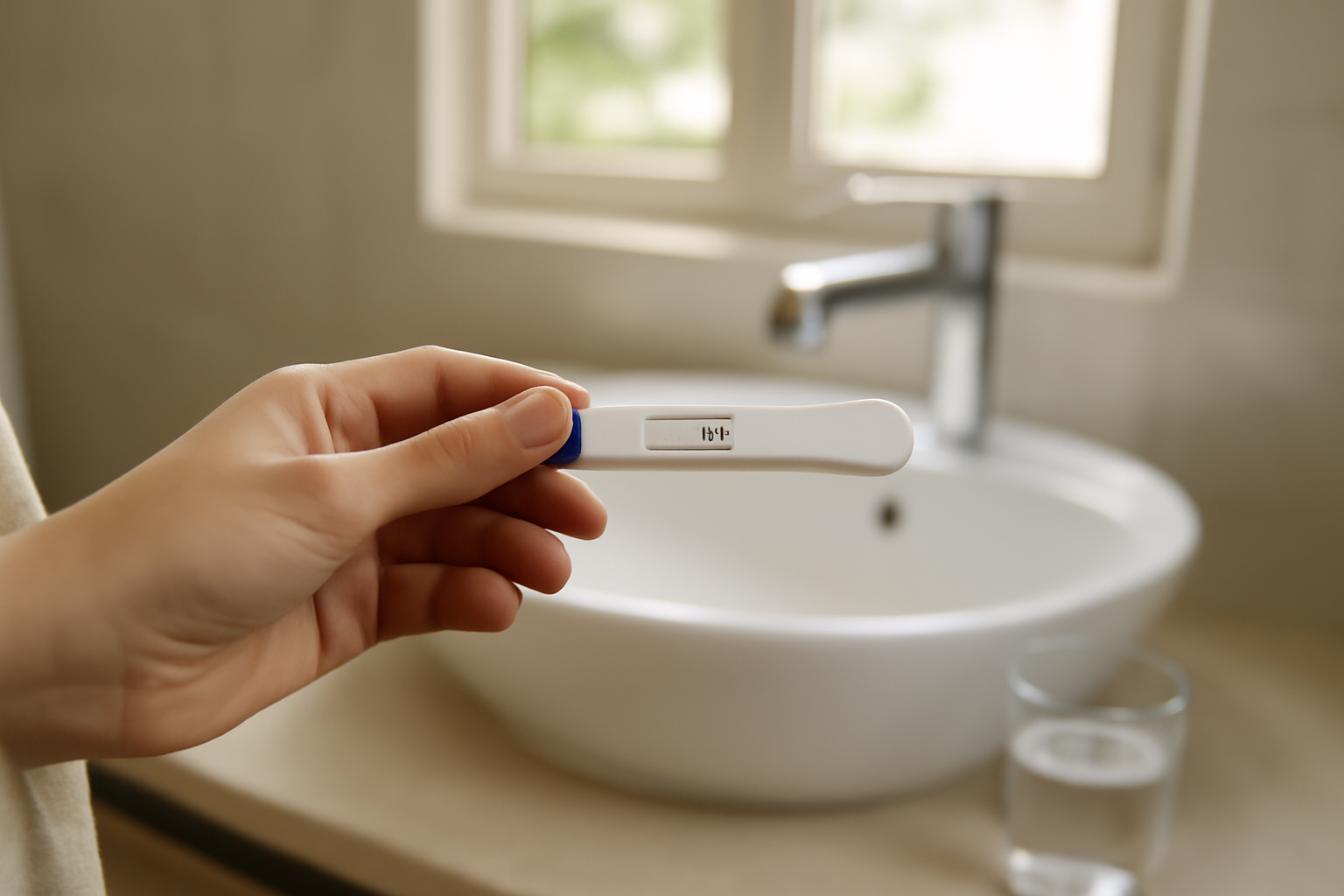
How soon can you test after implantation bleeding depends on when hCG rises, not just the day you noticed spotting. Implantation bleeding can show up about 6–12 days after ovulation, and hCG needs time to climb to detectable levels. If you test too early, you may get a negative result even in a healthy pregnancy (and yes, that’s frustrating).
Implantation bleeding vs. true pregnancy timing: what it really means for hCG
Implantation bleeding can be an early sign that a fertilized egg attached to the uterine lining, but it doesn’t automatically mean hCG is already high enough for a home test. hCG rises after implantation, so the most useful testing plan depends on when implantation likely happened—not just when spotting started.
Spotting is often brief and light. Many people describe it as pink, brown, or light red. The tricky part: that same pattern can come from other causes too (hormone shifts, cervical irritation, stress, or changes around ovulation). So bleeding alone can’t tell you what your pregnancy hormones are doing.
Think of implantation bleeding as a timing clue. A urine pregnancy test detects hCG only after it reaches a threshold in your urine. If you test before hCG is high enough, you can see a negative even if implantation happened and pregnancy is progressing normally.
Clinical estimates place implantation around 6–12 days after ovulation. That’s why early testing can feel like it’s “missing” the answer—you might see spotting, but your test still needs a little more time to catch up.
Earliest day to test after implantation bleeding (urine vs. blood hCG)
If you want the earliest possible answer, a blood hCG test can detect pregnancy sooner than a urine test. Many people can see hCG rise around implantation, but urine tests are more likely to stay negative until hCG increases further. For home testing, the most dependable timing is usually closer to a missed period or about 10–14 days after ovulation.
Blood (serum) hCG is generally more sensitive than home urine tests. Because it’s measured in blood (not diluted urine), it can pick up lower hCG levels earlier.
Home urine tests work best once hCG has had time to rise. If you’re testing at home, use first-morning urine (when possible). It’s more concentrated, which can help if your hCG level is right on the edge.
Here’s a practical approach:
- Earliest: ask a clinician about a blood hCG test if you need an early answer.
- At home, most reliable: test around 10–14 days after ovulation or after a missed period.
- If negative: retest in 48–72 hours rather than assuming the worst.
A clear timeline: ovulation day, implantation day, and when results become trustworthy
Start with ovulation. Implantation often happens 6–12 days after ovulation, and hCG then needs time to rise to detectable levels. Test too early and you can get a false negative even with a viable pregnancy. A negative result is most trustworthy when it’s done after the expected period date or at least 10–14 days post-ovulation.
To make this easier, anchor your dates to ovulation. If you’re not sure when you ovulated, use your best estimate from an ovulation predictor kit, basal body temperature shift, or cycle tracking app. (Even a couple of days can change what “early” really means.)
Step-by-step schedule
- Ovulation day (Day 0): egg release. Fertilization may occur within about a day.
- Implantation window (Day 6–12): spotting may appear here for some people.
- Early hCG rise: hCG begins increasing after implantation, but levels may still be below urine-test detection.
- Home test “trustworthy” window: often 10–14 days after ovulation or after a missed period.
- If negative early: retest after 48–72 hours, since hCG typically rises over time in early pregnancy.
If your implantation bleeding happened later than you expected, your test timing shifts too. That’s how two people can both have “implantation spotting,” yet one sees a positive early and the other doesn’t until days later.
How to interpret negative results after spotting (and when to retest)
A negative pregnancy test after implantation bleeding usually means hCG isn’t high enough yet to detect—not necessarily that pregnancy didn’t happen. If you tested before the expected period, retest using first-morning urine. If you still get negative results after a missed period, or if bleeding becomes heavy or painful, contact a clinician to rule out other causes.
Not every “negative after spotting” situation points to the same answer. An early negative (before your expected period or before ~10–14 days post-ovulation) often reflects low or borderline hCG levels. A late negative (after a missed period) is more likely to mean there’s no detectable pregnancy hormone—or that your dates are off.
When should you retest? A common, practical cadence is:
- Tested early (too soon): retest in 48–72 hours.
- Still uncertain after a missed period: consider a blood hCG test for clarity.
- Bleeding changes: if bleeding becomes heavy (soaking pads) or you develop severe cramps, seek medical advice promptly.
Waiting for results can feel like you’re stuck in limbo—so here’s the question worth asking: are you testing at a point where hCG is actually expected to be detectable?
What a positive test means after implantation bleeding—and what to do next
A positive test after implantation bleeding generally means hCG is present at detectable levels, which supports early pregnancy. Still, early positives should be confirmed with proper follow-up, especially if you have unusual bleeding, significant cramps, or risk factors for ectopic pregnancy. Your next step is to contact a healthcare provider and schedule an appropriate early evaluation.
A positive home test is strong evidence that pregnancy is present. But early pregnancy can vary, and some people have bleeding for reasons unrelated to a healthy intrauterine pregnancy. That’s why follow-up matters.
Your clinician may recommend repeat hCG testing and/or an ultrasound, depending on how many weeks you might be. If you have symptoms that could signal ectopic pregnancy—especially severe one-sided pain, shoulder pain, dizziness, or heavy bleeding—seek urgent care.
For official guidance on pregnancy hormones and testing, see MedlinePlus on human chorionic gonadotropin (hCG) and NHS information on pregnancy tests.
Factors that change test timing: irregular ovulation, test sensitivity, and urine dilution
Your “day to test” can shift if ovulation happened later than you thought, if implantation occurred later, or if you used a less sensitive test. Urine dilution (testing later in the day, high fluid intake) can also delay a positive. Using first-morning urine, checking the test’s sensitivity, and aligning with ovulation-based timing all improve accuracy.
Most timing confusion comes down to one thing: your body may not follow the dates your calendar predicts. If ovulation was delayed, implantation usually follows later too, pushing the hCG rise to later days.
Common timing-shifters
- Irregular ovulation: PCOS, recent stopping/starting contraception, stress, illness, thyroid issues, and breastfeeding can all shift ovulation.
- Less sensitive tests: home tests vary in how low an hCG level they can detect.
- Urine dilution: drinking a lot of water, testing in the afternoon, or using diluted urine can reduce detectability.
- Spotting for other reasons: cervical changes or hormonal shifts can mimic “implantation bleeding.”
To reduce false negatives, use first-morning urine, follow the test instructions exactly (timing matters), and consider testing again after 48–72 hours if you’re still within the early window. If you want broader context on pregnancy and when to seek medical guidance, you can also review WHO’s pregnancy topic page.
FAQ: how soon can you test after implantation bleeding
How soon can you test after implantation bleeding with a home pregnancy test?
You can test as early as the day after spotting, but a negative early result is common. For the most reliable home-test timing, aim for about 10–14 days after ovulation or after a missed period, using first-morning urine.
Can you get a false negative pregnancy test after implantation bleeding?
Yes. If hCG hasn’t risen enough yet, a home urine test can be negative even when implantation and early pregnancy are happening. Retest in 48–72 hours if your period still hasn’t come, and consider a clinician-ordered blood hCG test if you need clarity.
When should you retest after a negative result following spotting?
If you tested before your expected period date, retest with first-morning urine in 48–72 hours. If you still don’t get a positive after a missed period, a blood hCG test and clinician guidance can help rule out timing issues and other causes of bleeding.
How many days after implantation bleeding will a blood hCG test be positive?
Many people may have a detectable rise within a few days, but there’s no single exact number. Blood hCG is generally more sensitive than urine, so it can turn positive earlier—often around the implantation period and afterward as hCG increases. If you’re unsure, ask your clinician about the best day to test based on your ovulation estimate.
What does a positive pregnancy test after implantation bleeding mean?
A positive test means hCG is present at detectable levels, which strongly supports early pregnancy. Follow up with a healthcare provider, especially if you have unusual bleeding or significant cramps, because early evaluation may be needed for safety.
Why is my pregnancy test negative even though I had implantation bleeding?
Common reasons include testing too early, ovulation/implantation happening later than expected, urine dilution, or using a less sensitive test. Spotting can also occur for other reasons besides implantation. If a missed period passes and tests remain negative, consider a blood hCG test and medical advice.
Key takeaways
- Implantation bleeding can be a clue, but it doesn’t tell you the exact hCG level—timing matters.
- Blood hCG tests are typically earlier and more sensitive than home urine tests.
- For the most reliable home-test result, aim for about 10–14 days after ovulation or after a missed period.
- A negative test taken too early can be misleading—retest 48–72 hours later if your period still hasn’t come.
- Use first-morning urine and avoid testing when urine is diluted to reduce false negatives.
- A positive test after spotting usually means pregnancy is present; follow up with a healthcare provider.
- Seek urgent care if you have severe pain, heavy bleeding, or symptoms that could indicate an ectopic pregnancy.
How soon can you test after implantation bleeding? You can test early, but the earliest reliable “yes” depends on when hCG rises. If you test too soon, a negative can be misleading—retest at the right time using first-morning urine, or ask for a blood hCG test if you need earlier confirmation.
For additional clinical context on early pregnancy loss and what to do next, see ACOG: Early Pregnancy Loss.
2 commentaires sur « How Soon Can You Test After Implantation Bleeding? »